The impact of floods on policy
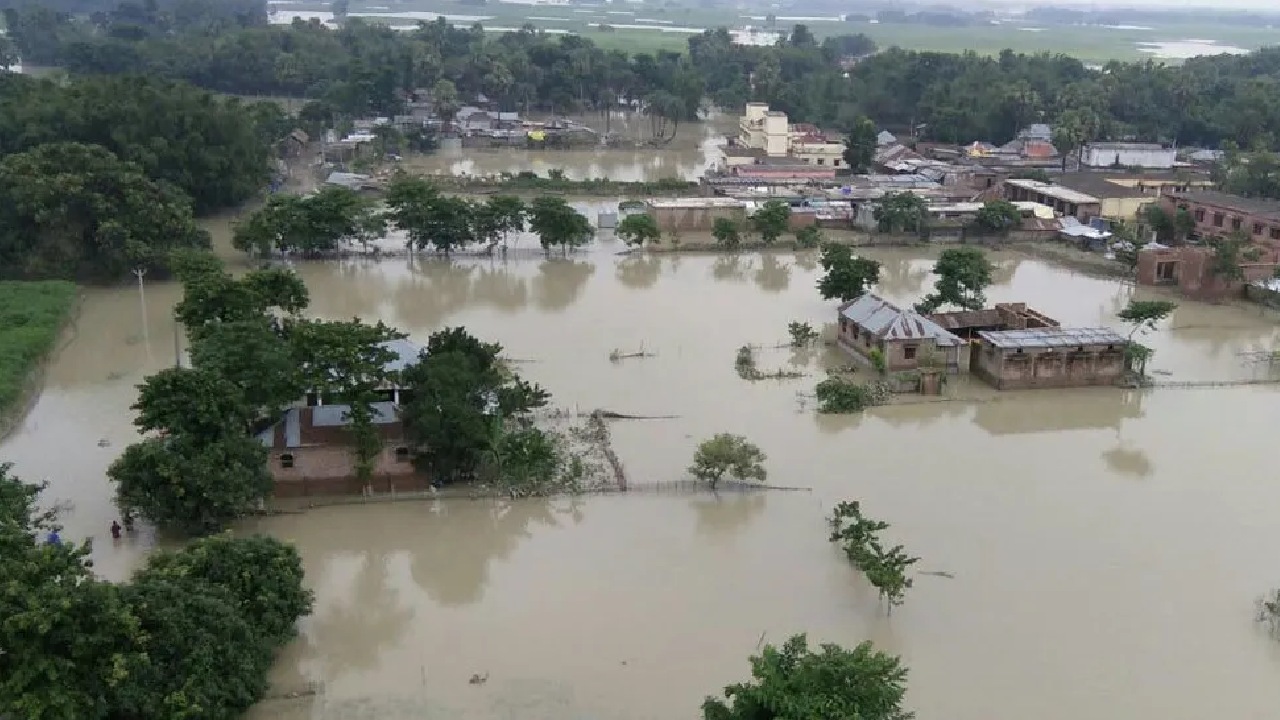
The floods that struck North Bihar in 2024 were not an isolated disaster. They were part of a familiar cycle that continues to shape everyday life in the region. Yet what remains ambiguous is how flood impacts are measured and how this evidence is used for policy. A recent household-level flood loss assessment, conducted by Megh Pyne Abhiyan and supported by Tata Trusts, after the second phase of the 2024 floods, offers important lessons for flood governance in Bihar and other flood-prone regions.
In late September 2024, episodes of very heavy rainfall across North Bihar and the adjoining Nepal region directly and indirectly triggered embankment breaches, elevated river levels, and severe drainage congestion across major river systems, including the Gandak, Bagmati, Kosi, and Mahananda.
The resulting Phase 2 floods caused extensive damage across the region, bringing the total number of flood-affected districts in 2024 to 27. Within this larger disaster, the assessment focused on 2,290 flood-affected households across 134 wards in 21 panchayats of seven districts in North Bihar. By combining household surveys with participatory flood mapping, focus group discussions, key informant interviews, and spatial analysis, the study captures how flood impacts varied across locations, flood typologies, and social dimensions. This level of granular insight is rarely visible in conventional Overall, across the 2,290 households, reported economic losses amounted to approximately INR 126.3 crore. Land damage was the largest component, accounting for nearly half the total, followed by housing repair and reconstruction costs. Housing damage was also the most widespread, reported by nearly two thousand households.
Losses to everyday items - kitchenware, groceries, furniture and sanitation materials - as well as agricultural losses, were extremely common, though their monetary share was comparatively lower. The average loss per household was estimated at INR 5.51 lakh, while the median loss was INR 2.11 lakh — indicating that a smaller number of households suffered very high losses, while many others faced moderate but deeply disruptive damage. Flood typology played a critical role in shaping outcomes. Breach-induced flooding resulted in the highest aggregate losses, while flash flooding between embankments caused very high losses for a smaller number of households. Spatial patterns further complicate prevailing assumptions. Fifty-eight per cent of surveyed households were located in the countryside, including areas between and outside river embankments. Despite flood protection structures, these locations provided limited protection during the 2024 Phase 2 floods. This raises an important policy concern. Structural measures such as embankments may protect certain areas, but they also redistribute flood risk to other locations rather than eliminating it.
One of the most significant insights from the assessment relates to inequality. Households belonging to the general category reported higher monetary losses, while Scheduled Caste and Scheduled Tribe households reported lower absolute losses.
However, smaller losses do not mean lower vulnerability. For many households with limited resources, even modest losses can be difficult to absorb and recover from. The assessment describes this as an assessment-based vulnerability paradox, where monetary loss figures alone fail to reflect the true depth of hardship.
The social costs of flooding become clearer when coping strategies are examined. Most households reported cutting food consumption, relying on stored grains, borrowing from relatives or neighbours, or depending on remittances. Displacement was widespread. Distress asset erosion was common: mortgaging jewellery, selling or mortgaging livestock, and in some cases mortgaging or selling land. Access to
insurance was extremely limited, with most households unaware of or unable to access any flood-related mechanism.
The assessment also highlights gaps in institutional response. Many households reported short warning periods, uneven relief distribution, and limited involvement of local self-government institutions. Yet communities showed strong understanding of flood dynamics and proposed practical solutions — boats, raised and flood-resilient housing, cattle shelters, community-managed water and sanitation systems, grain banks, flood-tolerant crops, mobile health and veterinary services, and locally operated early warning systems. The policy implications are clear: flood governance must move beyond counting damaged houses and crops. It must recognise differentiated vulnerability, invest in preparedness, and integrate household-level evidence and local knowledge into planning and compensation frameworks. Household-level assessments show how floods redistribute risk, deepen inequality, and shape recovery pathways.
For North Bihar, where flooding is recurrent and climate variability is increasing, the message is unmistakable. Flood policy must shift from managing water alone to managing vulnerability. Without grounding decisions in household realities, future floods will continue to overwhelm systems while remaining entirely predictable for the people who live with them.
The writer is Managing Trustee, Megh Pyne Abhiyan. Inputs from Saanjali Verma and Siddharth Patil; views are personal