The humble button that might save the planet
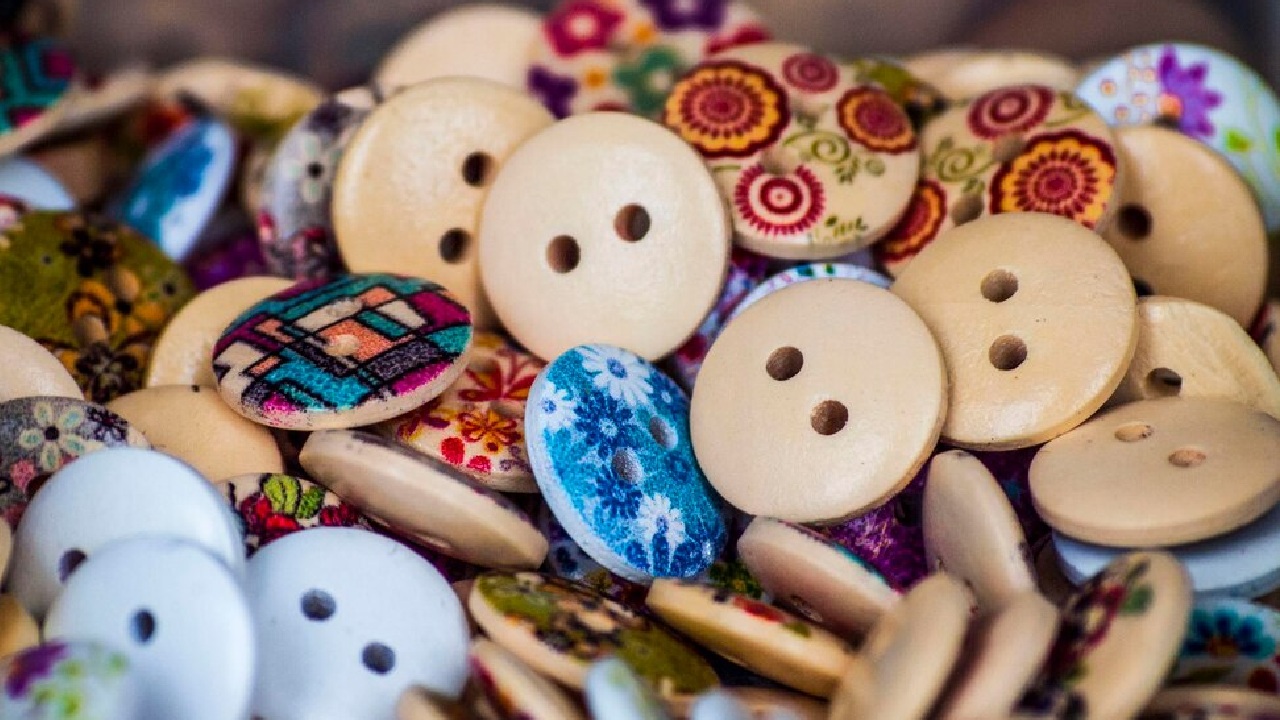
When we think of saving the planet, we imagine sweeping gestures. Solar farms stretching across deserts. Wind turbines pose heroically against sunsets. Electric cars are humming silently down highways. Rarely - if ever - do we picture a button.
Yes, a button. That tiny, often-ignored disk that quietly holds your shirt together, keeps your jacket respectable, and prevents wardrobe malfunctions of global consequence. It turns out that this modest little fastener may have more environmental influence than we give it credit for. Let’s talk about sustainability - and how something as small as a recycled plastic button can make a surprisingly meaningful difference.
At its heart, sustainability is actually quite simple. It means meeting our present needs without compromising the ability of future generations to meet theirs. It is about balance. Thoughtfulness. Responsibility. And if we’re honest, it’s also about paying attention to details. It lives in the everyday choices - what we buy, what we wear, how things are made, and crucially, what they’re made from. And this is where our little hero enters the story. When we speak about buttons, we are not talking about polyester fabric. We are talking about plastic buttons - specifically polyester resin, the material commonly used in button manufacturing. Traditional buttons are made using virgin polyester plastic.
That means fresh petroleum extraction, fossil fuels, and energy-intensive processing. Yet polyester has an important advantage: it can be structured into the required strength in the end product and sustain washes.
Recycled polyester used in buttons is not made by crushing old buttons. Instead, it is typically derived from post-consumer PET - plastic bottles and other materials that have already served a purpose. These are collected, cleaned, processed, crushed into flakes or pellets, and then blended in specific percentages with virgin polyester. For a product to qualify as recycled plastic, at least 30 per cent recycled content is generally required. But manufacturing advancements have pushed that inclusion even further.
Today, many buttons can incorporate up to 50 per cent to almost a 100 per cent recycled material while still maintaining strength, durability, and aesthetic precision, along with meeting the statutory chemical contents requirements prevalent in most continents. Designers demand colour consistency and finish - and modern manufacturing has evolved enough to achieve this even with blended materials. Now you might reasonably ask: “It’s a button. How much difference can it really make?” A typical shirt button weighs approximately 0.35 grams. Ten buttons on a shirt equal 3.5 grams of plastic -ball park. On 100,000 shirts, that becomes 350 kilograms of plastic. If 50 per cent of that material is recycled, 175 kilograms of virgin plastic are avoided. Quietly. Precisely. Intentionally. And remember - the apparel industry produces garments in the millions. Multiply that calculation across brands, uniforms, workwear, school wear, and fashion lines, and the scale grows rapidly. That’s only just the shirt.
Sometimes sustainability isn’t about dramatic reinvention. It is about responsible refinement. One of the most compelling ideas in sustainability is the circular economy - moving from “take-make-dispose” to “make-use-reuse-recycle.” A plastic bottle and other food-grade plastic vessels are used, discarded, collected, processed, and transformed into usable material again. Waste becomes resource.
The lifecycle extends. There is something quietly elegant about that transformation. One of the most overlooked aspects of sustainability is durability. The longer something lasts, the fewer resources are needed to replace it. A well-engineered button made with blended recycled material can withstand daily wear and multiple washes without compromising performance. If a button fails easily, the garment risks being discarded prematurely. One missing button can demote a perfectly good shirt to the back of the cupboard.
Quality components extend garment life. Extended garment life reduces consumption. Reduced consumption lowers environmental impact. It is a chain reaction - and it can begin with something as small as a button.
In Closing: Fastening the Future
The next time you button your shirt, pause for a moment. Consider that what seems insignificant may carry intention within it - a percentage of recycled material, a conscious manufacturing decision, a quiet reduction in virgin plastic use. Sustainability is rarely built on a single grand gesture. It is built through accumulation. 0.35 grams at a time. One shirt at a time. One decision repeated thousands - even millions - of times. Recycled-content buttons may be small, but they represent progress. They represent evolution. They represent a willingness to rethink even the tiniest details. They are a marvel in engineering. They are a reflection of good intention of protecting the earth.
The writer is a freelance writer who writes on wellness, sustainability and development; views are personal