The cross-border linkages of insurgents
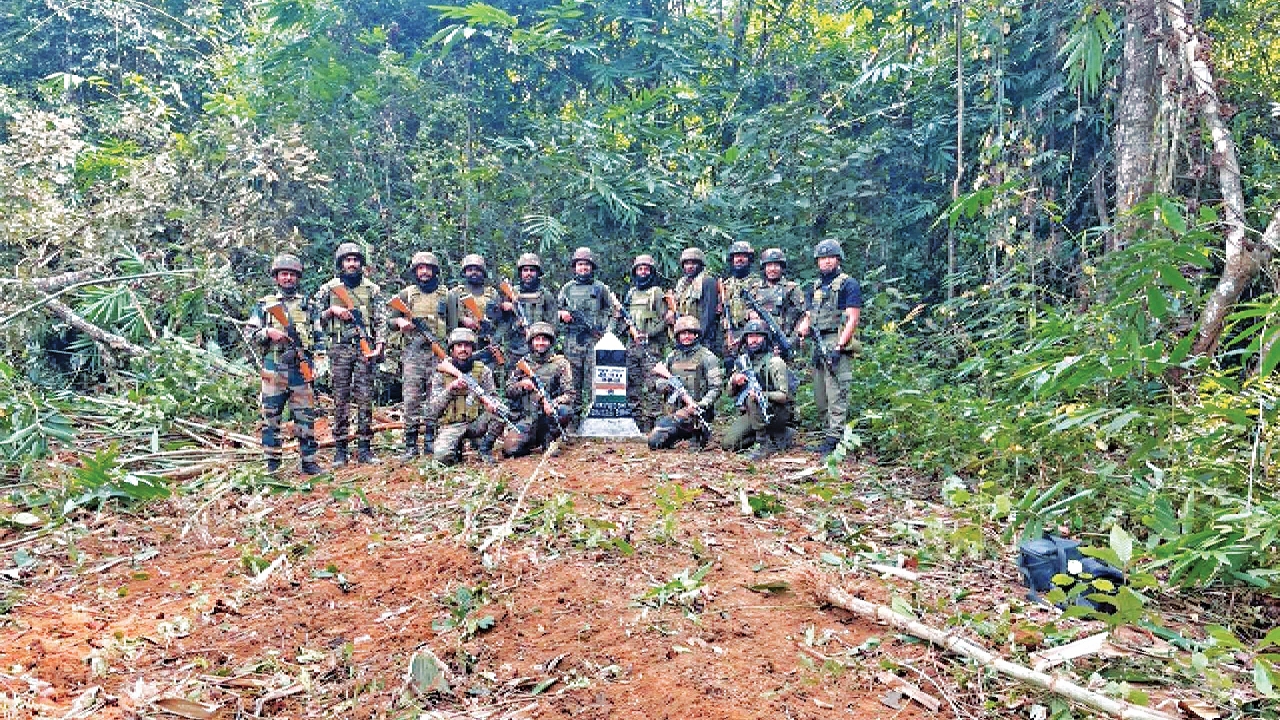
Matthew VanDyke, the filmmaker-turned-mercenary whose Myanmar gambit has just landed him in an Indian jail. His arrest has exposed a new threat to India’s sensitive Northeast region. Matthew Aaron VanDyke is the archetype of the 21st-century self-proclaimed ‘freedom fighter’ who markets himself as a documentarian and activist while quietly building a career as a combatant-for-hire. VanDyke’s trajectory is a textbook evolution from observer to operator. Between 2011 and 2013, he gained fame as a war correspondent in Libya, where he abandoned the camera, joined anti-Gaddafi rebels, was captured, and spent six months in a Tripoli prison. After his release, he surfaced in Syria to advise rebels while still claiming journalistic cover.
In 2014, he formalised the business model by founding Sons of Liberty International (SOLI), a self-described non-profit security firm that offers free military training, tactical advice, and equipment to ‘oppressed’ groups, funded by private donations. Internal security experts say SOLI wraps its operations in the language of humanitarian intervention and anti-authoritarianism. It does not charge governments like public management consultants. By 2025, VanDyke was openly boasting on social media of running covert operations with Venezuelan rebels since 2019, including missions later publicised as “Operation Aurora”. In early 2026, he simply pivoted theatres: from Caracas to the Myanmar civil war. The NIA alleges he and his Ukrainian team had been making repeated trips since 2024, training Ethnic Armed Organisations (EAOs) in drone strikes, weapons handling, and electronic warfare-capabilities that have transformed Myanmar’s battlefield.
Indian investigators further claim the network maintained links with banned Indian insurgent outfits operating in the Northeast.How VanDyke’s Myanmar Presence Directly Undermines India’s Internal Security. This is not abstract foreign adventurism; it is a direct vector into India’s most volatile region. The India-Myanmar border - especially the 510-km Mizoram stretch - is notoriously porous, with free movement regimes, ethnic kinship across the line (Chin, Mizo, Naga communities), and a history of insurgent safe havens. VanDyke’s alleged operation exploited exactly that corridor:
Technology proliferation: Drones and jamming gear routed through Europe, transited via Indian territory, and handed to Myanmar EAOs can easily flow back into Indian insurgent hands. Northeast groups have already begun experimenting with commercial drones for reconnaissance and IED delivery; professional training from ex-Libya, Ukraine, and now Myanmar operators accelerates that lethal learning curve.
Cross-border insurgent linkage: The NIA explicitly states the trainees included “banned outfits operating within India.” Manipur’s ethnic clashes, Assam’s residual ULFA factions, and Naga splinter groups have long drawn ideological and logistical oxygen from Myanmar’s war economy. Training camps just across the border become exportable skill sets - and exportable fighters.
Erosion of border sovereignty: Repeated illegal crossings through Mizoram (a state already grappling with refugee influxes and drug routes) signal intelligence and enforcement gaps. Each undetected transit normalises foreign mercenaries treating Indian soil as a Launchpad.
The Russian tip-off that cracked the case only underscores how external actors (even rival powers) now monitor India’s backyard more effectively than parts of India’s own system.
Strategic destabilisation: Myanmar’s civil war has already spilled refugees, arms, and militancy into India’s Northeast. Adding Western/Ukrainian-trained drone units raise the asymmetry: Indian
security forces face not just AK-47s but precision loitering munitions and EW-denied zones. This directly threatens the Centre’s Act East Policy, infrastructure projects, and the fragile peace accords painstakingly negotiated in Nagaland and Manipur.
In short, VanDyke did not merely film or advise in Myanmar; he allegedly built a deniable pipeline that funnels modern warfare know-how straight into India’s internal fault lines. VanDyke’s defenders will paint him as a romantic idealist empowering the powerless. The evidence emerging from Delhi’s courts suggests something more prosaic and dangerous: a hardened mercenary whose humanitarian brand provides plausible deniability while he professionalises insurgencies on India’s doorstep.
VanDyke’s arrest is a warning. When filmmakers trade cameras for kill lists and non-profits become training academies for the next generation of drones over Manipur or Mizoram, India’s internal security apparatus changes overnight. By arresting a CIA operative, India has sent a curt message that it will no longer tolerate its Northeast being used as a free-fire training ground for foreign mercenaries.
The writer is the Resident Editor of The Pioneer