A 112-year old heritage: Why Delhi cannot afford to lose the Gymkhana Club
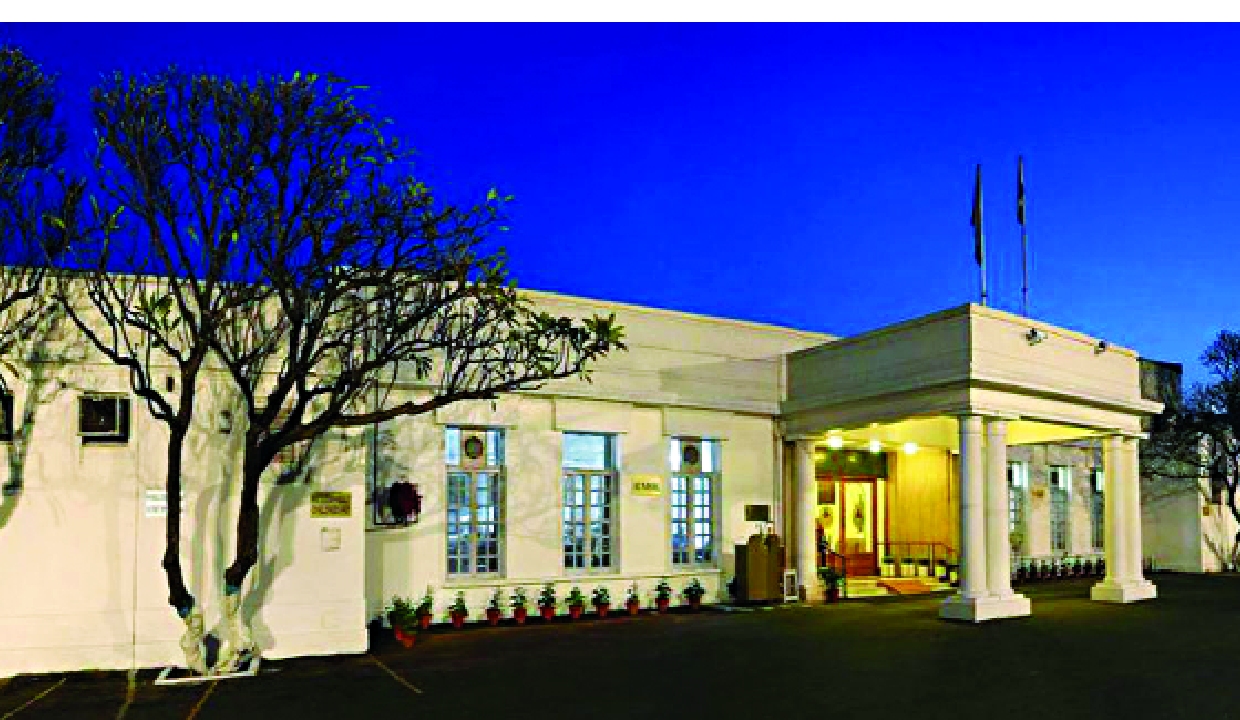
Delhi has never been a city built through erasure. It has always evolved through accumulation. The city’s identity lies not in uniformity, but in layering — in the ability to preserve different historical rhythms simultaneously.
This is why Delhi cannot be understood solely through monuments of state power. Its real autobiography lies equally in the spaces where diplomacy unfolded, where political negotiations occurred informally, where cuisine, sport, etiquette, conversation and governance intersected, and where generations inherited not simply buildings but ways of inhabiting the city. Within this larger historical manuscript of Delhi, the Delhi Gymkhana Club occupies a singular place.
Established in 1913 as the “Imperial Delhi Gymkhana Club”, the institution emerged during the creation of New Delhi itself. Yet, over more than a century, it transcended the politics of its origin and became woven into the civic memory of the capital. Today, the Gymkhana survives not merely as a club, nor merely as a historic structure, but as one of Delhi’s most important living heritage landscapes - a place where diplomacy, governance, sport, cuisine, ecology, sociability, prestige and memory continue to coexist.
Its significance lies precisely in the fact that it remains inhabited history.
Unlike static monuments, the Gymkhana functions as a living civic environment. Its lawns, verandahs, courts, dining halls, kitchens, bars, reading rooms and gardens preserve inherited rituals of gathering and encounter. Its atmosphere has been shaped not only by architecture, but by continuity itself - by the fact that generations have continued to use the space as part of Delhi’s civic life.
Certain institutions become important because they preserve not only structures, but habits of civilisation. Delhi Gymkhana belongs to this category. The political and diplomatic importance of Delhi Gymkhana forms an essential part of its historical significance. The informal political discussions and negotiations that ultimately paved the way for the Gandhi-Irwin Pact of 1931 were notably held within the club’s premises. The pact represented one of the defining moments in India’s freedom movement, symbolising a critical stage in the constitutional negotiations between the nationalist movement and imperial authority.
Delhi during this period was not governed solely through official chambers. The city’s political culture unfolded equally through gardens, residences, salons, clubs and semi-public civic spaces, where relationships, conversations and informal negotiations shaped political outcomes. Mahatma Gandhi, Lord Irwin and Sardar Vallabhbhai Patel belonged to a political era in which the social geography of Delhi formed part of the architecture of governance itself. The Gymkhana evolved into one of Delhi’s principal environments of soft cultural diplomacy.
Long before luxury hotels became diplomatic stages, the Gymkhana functioned as one of the capital’s most important social and diplomatic salons. Situated within the diplomatic geography of New Delhi and surrounded by embassies and state institutions, the Gymkhana continues to function as a softer extension of the capital’s international identity. It represents not simply elite sociability, but the diplomacy of atmosphere - the manner in which a capital projects continuity, hospitality, prestige and institutional memory.
One of the central debates surrounding institutions such as Delhi Gymkhana concerns privilege. Yet privilege itself possesses a history, and cities mature when they learn to preserve the full complexity of their social evolution rather than flattening it into simplistic moral categories.
Every civilisation has historically produced spaces of distinction and curated sociability. Courts, literary salons, diplomatic clubs, academies, coffee houses, guilds, and ceremonial institutions existed across cultures not simply as mechanisms of exclusion, but as environments through which power, refinement, governance, and public culture were organised.
Delhi itself has always contained layered worlds of privilege. Mughal courts, aristocratic havelis, princely salons, colonial institutions, diplomatic enclaves, and post-Independence bureaucratic cultures all formed part of the city’s historical ecology. These spaces reveal how successive eras imagined prestige, etiquette, influence, and public life.
The Gymkhana preserves one such layer within the city’s autobiography.
Its value lies not in celebrating privilege uncritically, but in preserving the historical memory of how Delhi functioned across different political periods. A mature civilisation does not preserve only the heritage of the street and the bazaar; it also preserves the heritage of diplomacy, ceremony, refinement, and institutional culture.
The city’s greatness lies precisely in its coexistence of worlds - common and elite, public and ceremonial, chaotic and refined. To erase every inherited institution associated with prestige would not democratise history; it would impoverish it.
The Meaning of Gymkhana: House, Hospitality, and Sociability
The word Gymkhana itself reflects the layered cultural inheritance of South Asia.
The suffix khana in Persian, Urdu, and Hindustani traditions signifies a chamber, house, or place of gathering. Across the subcontinent, khana appears in words associated with governance, sociability, and culture - kitabkhana, rangkhana, daulatkhana. In the Indian imagination, it also evokes cuisine, hospitality, and conviviality. The Gymkhana historically evolved as precisely such a civic landscape of encounter.
It was never merely a sports club. Its verandahs, tea rooms, kitchens, lawns, dining spaces, and bars created an environment where diplomacy, food, sport, governance, and conversation intersected within the everyday life of the capital. Delhi has long conducted politics not only through formal institutions but through gatherings, salons, dinners, and spaces of sociability where civic culture was negotiated informally. The Gymkhana belongs to this longer urban tradition.
Wimbledon on Delhi’s Lawns: Sporting Prestige, Grass-Court Heritage, and the Continuity of Tennis Tradition
The sporting history of Delhi Gymkhana constitutes one of its most important inheritances.
The club developed some of the capital’s most distinguished sporting facilities for tennis, cricket, squash, swimming, billiards, and equestrian culture. These spaces were never simply recreational amenities; they became part of Delhi’s ceremonial and civic identity. Among these facilities, the historic grass tennis courts possess particular significance.
Delhi Gymkhana’s grass courts are not merely playing surfaces. They preserve one of the last surviving traditions of grass-court tennis in India, a sporting lineage stretching back through Davis Cup-era matches and a culture of tennis now increasingly rare within the subcontinent.
Grass courts survive only through stewardship, patience, continuity, and a protected landscape. Their preservation in a rapidly urbanising capital is remarkable precisely because such environments are difficult to sustain commercially.
Within Indian tennis circles, the Gymkhana lawns achieved legendary status. One observer famously remarked that they were “only next to Wimbledon”, a statement attributed to Om Pathak, Chairman of the Davis Cup Organising Committee, celebrating the extraordinary standard and atmosphere of the courts.
The comparison to Wimbledon is important because Wimbledon is not merely a sports venue; it is revered. It survives as a global symbol because it preserves continuity, etiquette, ritual, atmosphere, and inherited prestige.
Delhi Gymkhana performs a similar role within India’s sporting memory.
Its courts preserve not merely athletics, but an entire civic rhythm: afternoon matches beneath old trees, verandah conversations, post-game dinners, inherited sporting etiquette, and intergenerational traditions that together form part of the city’s lived heritage.
Asian Capitals and the Preservation of Living Heritage
The debate surrounding Delhi Gymkhana must also be understood within a broader Asian and international context. The great capitals of the world recognise that heritage does not survive solely through monuments. It survives equally through living institutions and ceremonial landscapes where memory continues to be inhabited.
London preserves its historic clubs and civic societies as part of its metropolitan identity. Singapore carefully conserves institutions such as the Tanglin Club and Singapore Cricket Club amidst rapid modernisation because it understands that continuity creates prestige. Hong Kong retains historic civic institutions alongside contemporary skyscrapers. Tokyo protects ceremonial gardens and inherited social landscapes despite immense urban density.
These cities recognise that global capitals derive identity not only from economic infrastructure but from continuity of atmosphere and memory.
Singapore offers a particularly important comparison for Delhi. The city-state modernised aggressively while simultaneously preserving heritage clubs, diplomatic precincts, sporting institutions, and ceremonial landscapes because it understood that such institutions anchor civic identity amidst urban transformation.
Similarly, Yangon in Myanmar continues to preserve historic civic institutions and club landscapes because they remain embedded within the emotional architecture of the city.
Delhi too requires this long-view imagination. Great capitals preserve layers. They preserve not only monuments of political authority, but also the softer spaces through which diplomacy, sociability, refinement, and civic continuity are expressed.
Delhi Gymkhana belongs to this larger Asian tradition of living heritage institutions.
Ecology, Air Pollution, and the Green Lungs of the Capital
The ecological importance of Delhi Gymkhana has become increasingly urgent in contemporary Delhi.
The grounds form part of one of the last surviving low-density green lungs of central Delhi. In a city struggling with severe air pollution, shrinking tree cover, rising temperatures, and increasing congestion, these open landscapes possess immense environmental significance extending far beyond private membership.
The lawns, mature trees, gardens, and breathing spaces preserve part of the original ecological logic of New Delhi, a city conceived through permeability, ceremonial greens, tree-lined avenues, and climatic balance. These landscapes were never ornamental luxuries. They formed part of the environmental infrastructure of the capital itself. The preservation of such landscapes therefore becomes a civic necessity.
The relationship between clubs and land is historically inseparable. Clubs across the world derive meaning not merely from architecture, but from the continuity between courts, gardens, lawns, trees, and open urban space. A club without landscape ceases to be a historical institution and becomes merely another commercial structure.
Not everything within a capital city can, or should, be quantified in monetary terms.
Living heritage landscapes accumulate atmosphere across generations. Once dismantled, they cannot simply be reconstructed elsewhere. One may recreate walls and architecture, but not continuity.
Destroying such a place would resemble dismantling a Renaissance theatre and later attempting to reproduce its atmosphere inside a museum. The shell might survive. The choreography of memory would not.
Heritage Recognition, Philately, and the National Memory of the Gymkhana
Delhi Gymkhana has already entered the realm of recognised heritage through the manner in which its grass courts, historic architecture, ceremonial landscapes, and long sporting afterlife have become embedded within Delhi’s civic memory rather than remaining confined to the private history of a club. Over time, the institution has evolved into what may be understood as a living ‘heritagescape’, a historical environment where sport, diplomacy, ecology, architecture, and sociability collectively contribute to the cultural identity of the capital city.
Importantly, the Indian state itself has participated in placing gymkhana culture within the symbolic archive of the republic through philately and commemorative culture. India Post has issued commemorative stamps honouring institutions such as the Bombay Gymkhana, explicitly recognising them as part of India’s sporting and civic legacy and framing philately as a means to “preserve and showcase India’s rich sporting milestones.” Such commemorations are significant because stamps in India have historically functioned not merely as postal instruments, but as state-sanctioned markers of national memory, identifying institutions, landscapes, and personalities considered integral to the story of the republic.
Delhi Gymkhana itself entered this commemorative field through the 2013 India Post stamp issued to mark the club’s centenary. The issuance of a commemorative stamp for the institution demonstrates that the Gymkhana is not viewed solely as an elite recreational space, but as a recognised emblem of historical continuity within the civic and cultural imagination of India. The act of commemoration by the state symbolically acknowledges that the institution forms part of the nation’s urban and historical heritage, woven into the broader narrative of Delhi’s evolution as the capital of India.
The Living Pages of Delhi
Delhi Gymkhana forms part of the city’s diplomatic memory, sporting memory, ecological memory, and civic memory. It belongs to the long continuum through which Delhi has learned to carry power, privilege, refinement, politics, and public life together within the same historical landscape.
Cities lose something irretrievable when every inherited space is measured solely through commercial utility or administrative expediency. Great capitals survive because they preserve continuity, because they allow generations to encounter history not as abstraction, but as a living environment.
Delhi Gymkhana is one such environment. To remove it would not merely alter a parcel of land. It would tear out one of the living pages from the manuscript of Delhi itself.
Navina Jafa is a cultural heritage historian, author, Fulbright Scholar at the Smithsonian Institution, renowned Kathak dancer, and expert on heritage tourism, sustainability, and intangible cultural heritage, with internationally recognised work on performance traditions, urban memory, and the cultural landscapes of South Asia; Views presented are personal.
Leave a Comment
Comments (1)
While the gymkhana may remain, its membership structure needs to be revamped entirely. Since the court notices were not followed, it is a wise decision for the government to take over this land from self-appointed rulers, who found it wise to include the OG dictator Gandhi family among its members.