Legacy of Government takeovers in India
The BJP Government of Uttarakhand in 2018 passed an Act to take over 51 temples in the State, including Kedarnath and Badrinath Temples
The Government’s power to take over property has become a hot topic after the Central Government issued a notice to the Delhi Gymkhana Club. The Government’s power to take over has a long history. Earlier, the ‘Right to Property’ was a Fundamental Right, and the Government faced hardships in road and infrastructure construction. In 1971, Indira Gandhi removed the Right to Property from the Fundamental Rights and changed the rule that, by paying a price, the Government can take over any property. The price decided by the Government and the people challenging it in the courts were curtailed.
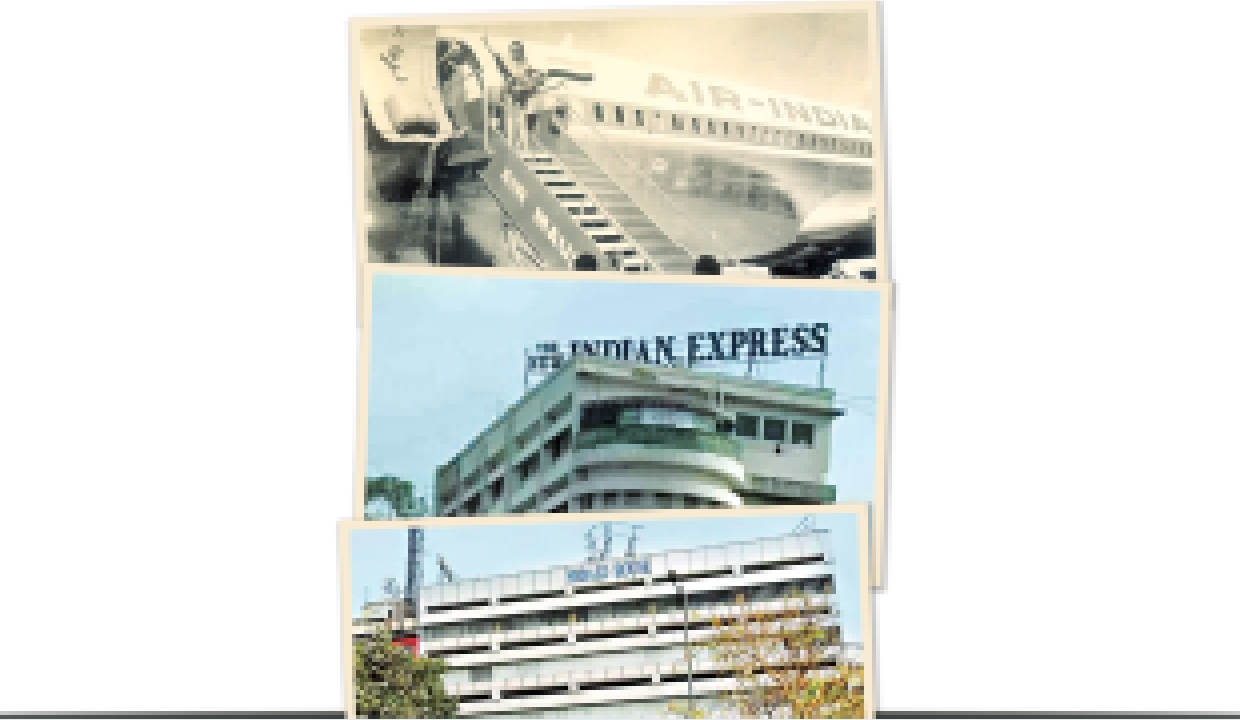
This power of the Government was changed by the Janata Party Government in 1978 by making the Right to Property a Legal Right, and the prices of compensation were increased, and people could challenge the takeover in courts. Basically, the Government has to declare the reason or purpose for taking over a property. This was not seen in the Gymkhana Club eviction notice. The matter is now before the Delhi High Court, and this case will go on for many years, and both parties will go up to the Supreme Court. Many such high-profile takeover cases are now in court. During the initial days of the arguments, the Club cited the landmark judgment on Indian Express. When Indian Express was battling the Rajiv Gandhi Government, citing some changes made inside the building as a violation of land allotment, the Government issued a takeover notice. In the end, Indian Express won the case. Citing a series of violations, the Government has issued orders to take over the nearby Link House and Herald House. These two cases are still pending in different courts.
The Link House case has been pending in the Delhi High Court for the past six years. The Government won the case in the erstwhile National Herald newspaper’s publishing office, Herald House, takeover. Now the matter has been pending in the Supreme Court since 2019. Meanwhile, the Enforcement Directorate (ED), in 2025, provisionally attached National Herald’s properties in Delhi, Mumbai and Lucknow.
Recently, the Gujarat Government has taken over the land allotted to Asaram Bapu. The reason cited for the takeover was to construct a new stadium for the Commonwealth Games 2030. The High Court also ratified the Government’s decision. Now the case is pending in the Supreme Court.
Not only properties, but the Government can attach anything. Indira Gandhi, during the Emergency period, appointed five directors in the Indian Express newspaper company in a bid to take over from Ram Nath Goenka. But the Government’s attempt failed due to Goenka’s objections at the very first board meeting. He picked a fight with one of the Government-appointed directors, Congress leader Kamal Nath, and got the board meeting called off. Details of this incident are described verbatim in Arun Shourie’s recent book, The Commissioner For Lost Causes. The Times of India was managed by a committee headed by Bombay High Court judges for more than 10 years when the promoters were arrested for financial violations, and Indira Gandhi, in the mid-1970s, returned the newspaper to the promoters.
India’s famous takeover was in 1953 when Jawaharlal Nehru ordered the acquisition of Air India from the Tata Group. Another was the nationalisation of banks by Indira Gandhi in 1969, citing financial violations by private bankers. Many educational institutions were also taken over by the Government, citing mismanagement and corruption.
In South India, many temples were taken over by the Government by creating a board to run the administration of temples. In Tamil Nadu, during the DMK regime, many temples were taken over, citing mismanagement. In 2014, the Supreme Court passed a landmark judgment on the takeover of a temple in a case filed by Subramanian Swamy. The apex court ordered that if there is any mismanagement in temple administration, the Government can take over and appoint a new management to rectify the problem, and it must be handed back to believers/priests within three years. The BJP Government of Uttarakhand, in 2018, passed an Act to take over 51 temples in the state, including Kedarnath and Badrinath Temples. The Government never explained why this Act was brought in. Due to huge protests from people and priests, after two years the Government withdrew the Act to save its skin from public anger.
The writer is Associate Editor, The Pioneer; Views presented are personal.