The burden of selective outrage
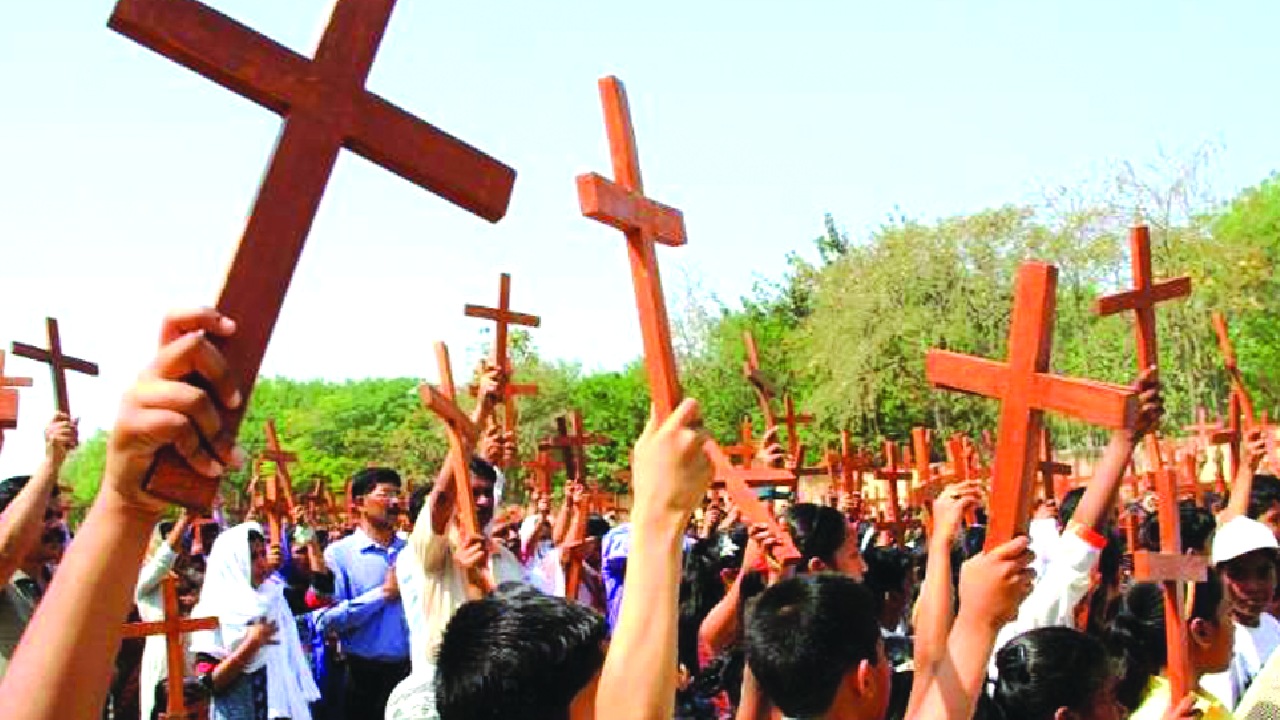
A very happy New Year to all readers! Time is a fascinating tapestry in which the past, present, and future intertwine seamlessly, each influencing the others in complex ways. Interestingly, this column has subtly become a sequel to the previous one, carrying forward the controversies, hopes, and expectations for 2025 into the new year.
In response to ‘A season under siege: When festivity gives way to fear’ — published last Thursday — a retired IAS friend wrote, “I wish, however, you had at least in passing rapped the VHP’s continuing stance against Christmas celebrations, particularly those involving Hindu participation, proclaimed as a threat to Hindu culture and religious purity. The recent happenings are completely at variance with the way the IAS officer trainees at the National Academy of Administration sing Christmas carols (minus any religious connotation), which is how a tolerant society ought to behave.”
While her concern for interfaith harmony is touching, her observations reveal a deeper imbalance that plagues Indian society. It’s hard to imagine a similar level of institutional enthusiasm for festivals like Krishna Janmashtami, Hanuman Jayanti, Ram Navami, or Gurpurabs.
Does the Academy organise bhajans and shabad kirtans for the birthdays of Hindu deities or Sikh Gurus? More often than not, silence or deliberate indifference prevails in the face of such glaring contradictions in our attitudes, calling for reflection rather than resentment.
The issue is not opposition to the Christian sacred narrative itself. It concerns broader questions of cultural confidence and civilisational self-perception, reflecting how societies view their core identities. When a majority community becomes hesitant, even apologetic, about publicly acknowledging its own sacred traditions, the imbalance is not imposed externally; it is also internalised within the community’s collective mindset.
Such silence is not genuine pluralism; it is self-effacement that undermines the vibrancy of timeless cultural heritage.
Despite double standards in public life regarding inter-community relations, recent incidents targeting Christmas celebrations in parts of the country call for serious introspection within the Hindu community.
Any act of vandalism or intimidation carried out in the name of Hinduism does grave injustice to a civilisation whose defining strength has always been its capacity for acceptance of diversity. Any boorish conduct in the name of Hinduism is not an assertion of faith but a betrayal of it.
At the same time, sections of Christian clergy and self-styled left-liberal commentators — who rushed to project these episodes as proof of an allegedly intolerant Hindu society and a persecutory Indian state — would also do well to pause and reflect.
Selective outrage has consequences. It is no coincidence that an online Wikipedia page titled ‘2025 Christmas violence in India’ appeared within days, aggregating unrelated and geographically dispersed incidents into a single, ominous narrative.
Such hurried compilation, devoid of historical proportion or comparative context, serves less to inform and more to tarnish India’s image and caricature the Hindu community.
Prime Minister Narendra Modi’s participation in a Christmas service at Delhi’s Cathedral Church of the Redemption on December 25, carried symbolic weight. He spoke of love, peace, and compassion, hoping the Christmas spirit would inspire harmony and goodwill.
This was not an isolated gesture — recently, he addressed a Catholic Bishops’ Conference celebration, attended an Easter event at Sacred Heart Cathedral, and hosted Christmas programmes at his residence.
Such initiatives are consistent with India’s civilisational ethos. The land that welcomed Jews fleeing Roman persecution, Zoroastrians escaping Islamic conquest, Syrian Christians arriving centuries before European colonialism, and early Muslim traders — allowing them to practise their faiths freely — has no cultural space for hostility towards Christmas.
Perspective, however, is essential. In my last column, I had pointed out how, amid rising jihadist threats, several Christian-majority countries in Europe curtailed or cancelled Christmas and New Year celebrations. No such situation exists in India, despite the subcontinent having endured centuries of jihadist violence. The atrocities committed by the Catholic Church against Hindus in Goa were no less horrendous. After the East India Company’s takeover of India, the Anglican Church joined hands with the colonists, vilified Hinduism, and sought to convert Hindus through deceit and allurement. Christianity’s presence in India unfolded in three distinct phases. The earliest phase dates to St Thomas the Apostle, believed to have arrived on the Malabar Coast around 52 CE, giving rise to the Syrian Christians of Kerala. This community remained culturally Indian, socially integrated, and theologically Eastern, coexisting peacefully without political power or coercion.
A sharp rupture came with Vasco da Gama’s arrival in 1498, when Christianity fused with Portuguese imperial expansion. Under Francis Xavier and through the Goa Inquisition (1560-1812), missionary activity involved coercion, destruction of temples, and forced conversions. As historians Heta Pandit and Annabelle Mascarenhas note in their book Houses of Goa, churches rose where temples once stood, Hindu priests were banished, festivals were prohibited, and social interaction between Hindus and converts was criminalised.
Under British rule, Christianity was imposed on India through a strategic alliance between the Anglican Church and the colonial administration. Through relentless evangelism, the Church rallied Indians to support the British Empire. During the 1857 uprising, the only Indian community that wholeheartedly sided with the British was the newly converted Christians. The British rulers reciprocated generously. It’s hard to miss that the Church still holds some of the most valuable pieces of real estate in major cities across India — a disproportionate share given the Christian population.
The Anglican Church and British imperialists perpetuated a dangerous narrative, claiming that Gandhiji’s freedom movement was a disguise for establishing a ‘Brahmin Raj’ where other castes would be excluded.
Shockingly, the Church even supported the 1919 Jallianwala Bagh massacre in Amritsar and played a role in facilitating General Dyer. In short, they tried to denationalise Indians — or kill the Indian in Indians. The sins of the Church are too vast to be discussed in a newspaper article.
Certainly, clinging to past baggage offers little value. Those who have erred can at least apologise, commit to change, and open the door to renewal.
The writer is an eminent columnist, former Chairman of the Indian Institute of Mass Communication (IIMC), and the author of ‘Tryst with Ayodhya: Decolonisation of India’ and ‘Narrative ka Mayajaal’; views are personal