The 11 year legacy of digital India
By ensuring that technology acts as a tool for inclusion, accessibility, and sovereign strength, Digital India is quietly architecting the Viksit Bharat we envision for 2047
Just over a decade ago, a farmer in a remote village in Uttar Pradesh had to navigate a maze of paperwork to receive subsidies or seek advisories to improve his yield. It was an era when waiting in line was the norm. Today, the same farmer can access support for his crops, and subsidies are deposited directly into his bank account without middlemen.
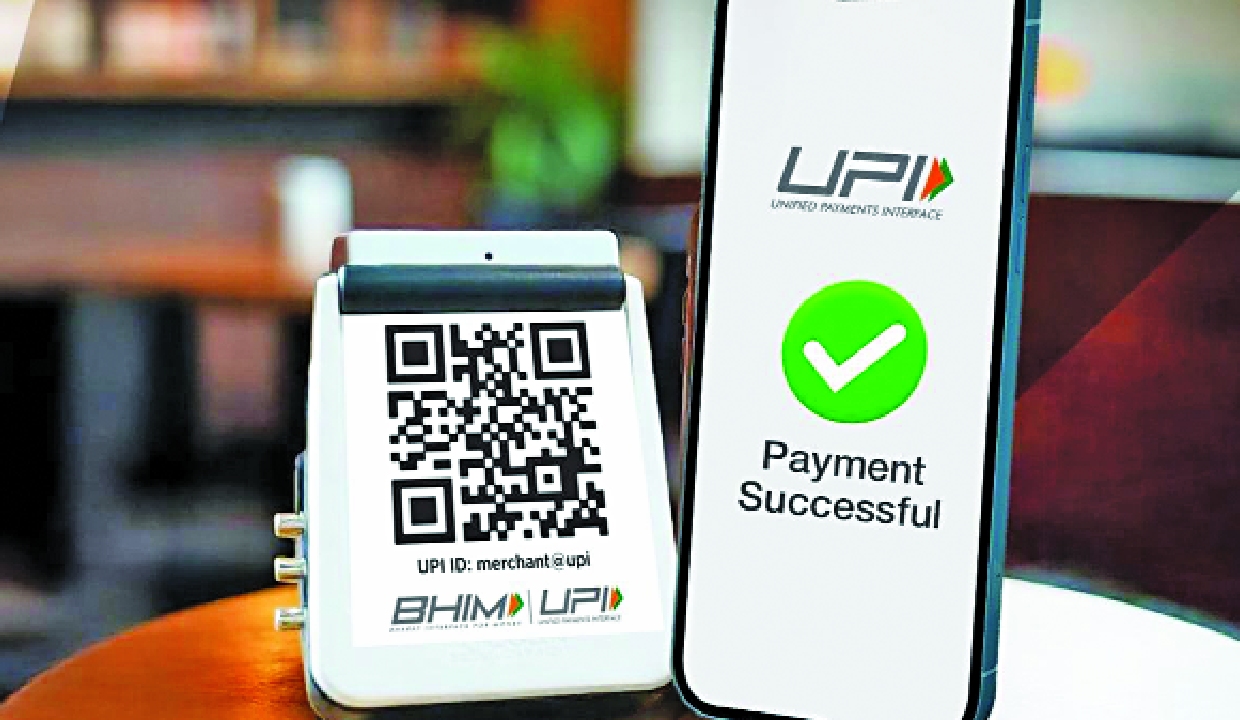
Walk down any street and you will witness another quiet revolution, one that has fundamentally redefined the ease of living. A local fruit seller or an autorickshaw driver who once relied entirely on the physical exchange of cash now proudly points to a QR code hanging from his cart/autorickshaw.
India today stands empowered by a staggering 102.86 Crore connected citizens, supported by a massive broadband subscriber base of 99.56 Crore. With the cost of mobile data at an ultra-affordable Rs 8 to Rs 10 per GB, individual monthly data usage has scaled to an extraordinary 24.01 GB. This digital foundation has completely reimagined the relationship between the citizen and the state, anchoring it in trust, transparency, and digital autonomy.
Under the leadership of Hon’ble Prime Minister Shri Narendra Modi, Digital India has proven that technology must act as a democratic equalizer for citizens, bringing them ease of living and ease of doing business.
Bridging the Divide
The first step in this revolution was democratizing access and building a robust, indigenous digital identity framework that guarantees technological self-reliance. The BharatNet initiative was deployed at scale, successfully connecting nearly 2.2 Lakh Gram Panchayats with high-speed broadband, ensuring that geography is no longer a barrier to economic opportunity.
This infrastructural leap, coupled with the generation of 144+ Crore Aadhaar identities, powered the Jan Dhan, Aadhaar, and Mobile (JAM) Trinity. By utilizing this sovereign digital identity framework, the government has successfully transferred Rs 51.5 Lakh Crore directly to citizens through Direct Benefit Transfer (DBT). This system has effectively eliminated leakage, removed middlemen, and dramatically improved the ease of living for millions of households by putting financial autonomy directly into their hands.
The DPI Phenomenon
Once the foundation was laid, India’s Digital Public Infrastructure (DPI) changed the everyday lives of citizens by creating solutions to solve real-world problems. Platforms like DigiLocker have radically streamlined processes for citizens and businesses alike. Boasting 70+ Crore registered users holding over 900+ Crore documents, it has eliminated the friction of physical paperwork, making KYC processes and document verification instantaneous. For enterprises, this has translated into a tangible reduction in the cost and time of onboarding banks, telecom operators, and fintechs now verify a customer in seconds rather than days.
Through the Government e-Marketplace (GeM), the government has conducted over Rs 19.51 Lakh Crore worth of procurement. For a small manufacturer or a first-time vendor, this has translated into a business opportunity to win government contracts without having to navigate layers of intermediaries.
For accessing public services remotely, the UMANG application has brought central and state government services directly to the citizens’ palms. It now serves 11.6+ Crore registered users, offering access to 2,572 government services and facilitating 797.84 crore transactions to date.
The crown jewel of this ecosystem is the Unified Payments Interface (UPI). What empowers that street-side fruit seller’s QR code is a sovereign payment rail that now processes a staggering 75 Crore transactions daily. Today, India accounts for nearly half of all real-time digital payments on the planet, with the IMF recognising UPI as the world’s largest real-time payment system.
It has become an anchor of indispensability for the 24 Nations with which India has formally signed Memorandums of Understanding (MoUs) for the replication and adoption of its digital governance platforms. Furthermore, UPI is now LIVE in 9 Countries, including the UAE, Singapore, and France.
This philosophy of treating technology as a public good extends directly to health equity, facilitating ease of living. Through the eSanjeevani platform, India has delivered over 48+ Crore free tele-consultations, allowing patients in remote, underserved areas to consult specialists. Similarly, the world’s largest vaccination drive was powered by an indigenous platform. Over 220 crore COVID-19 vaccine doses were administered and tracked transparently through CoWIN, establishing a robust digital backbone that healthcare systems across the globe studied.
Looking at the Horizon
As Digital India completes its 11th year, the mission is firmly pivoting toward frontier technologies, ensuring they are harnessed as public goods to solve challenges for India and the Global South.
For years, the massive cost of computing power kept brilliant young innovators in smaller towns away from advanced technology. Under the IndiaAI Mission, India is systematically dismantling this barrier to boost the ease of doing business for startups. The government has established a massive, shared compute facility to democratize access. By offering world-class computing capacity to homegrown startups and students at just Rs 65 per hour, the aim is to spark grassroots innovation. The goal is to make India the AI Applications capital of the world with our talented workforce transforming service delivery and boosting productivity in enterprises in all sectors at home and abroad.
Simultaneously, India is securing its hardware future. Under the Semicon India Programme, 12 Semiconductor manufacturing and packaging projects with an investment of Rs 1.65 Lakh Crore have now been approved across the country. Building on this momentum, the Union Budget 2026-27 announced the India Semiconductor Mission (ISM) 2.0.
This new phase goes beyond manufacturing by focusing on semiconductor equipment and materials, designing full-stack Indian Intellectual Property (IP), and fortifying global supply chains. With 24 semiconductor design startups approved under the scheme, India is rapidly translating its capacity creation into deep technological depth, nurturing a vibrant domestic fabless ecosystem that designs the very chips powering the modern world.
The true legacy of this initiative is in the mindset of a nation that now expects innovation, seamless business operations, and governance to be at its fingertips. By ensuring that technology acts as a tool for inclusion, accessibility, and sovereign strength, Digital India is quietly architecting the Viksit Bharat we envision for 2047.
Today, India accounts for nearly half of all real-time digital payments on the planet, with the IMF recognising UPI as the world’s largest real-time payment system
The writer is Secretary of the Ministry of Electronics and Information Technology (MeitY); Views presented are personal.