The 100 metre death warrant for Aravali mountain range
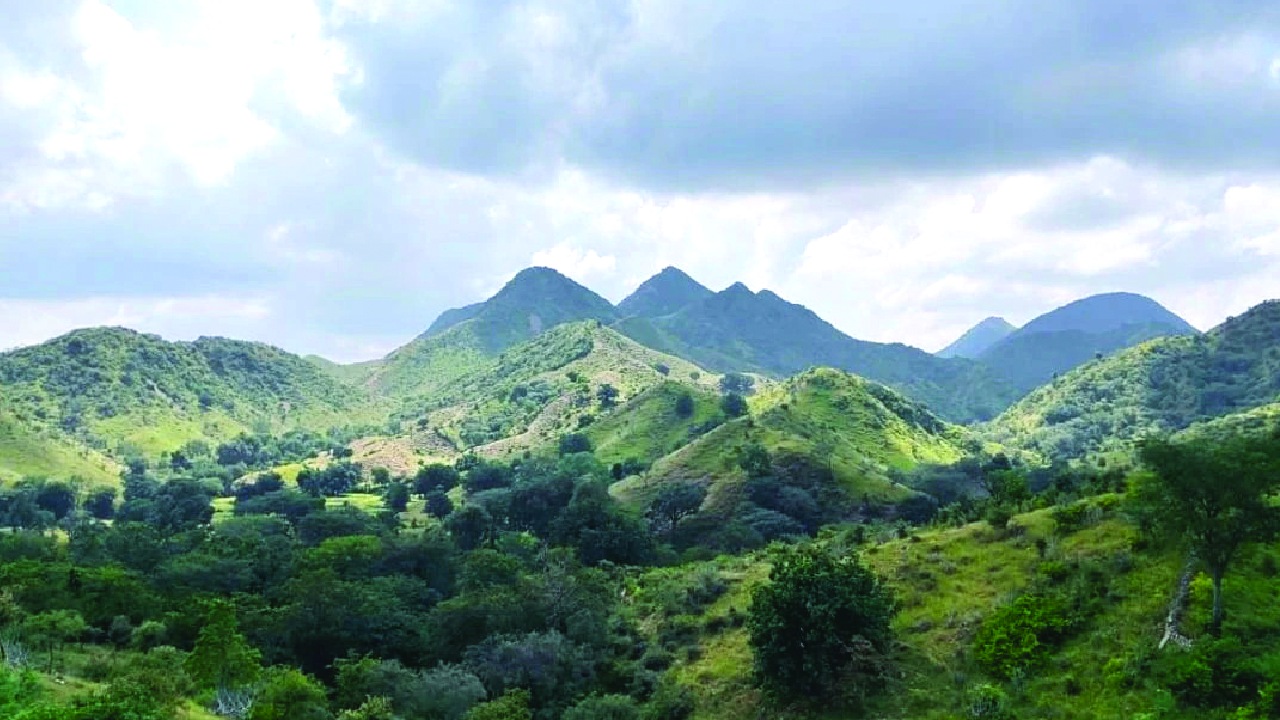
A big controversy has erupted in the country on the recent order of the Supreme Court delivered on 20th November 2025 on the definition of the Aravali mountain range based on 100-metre height as a limiting factor to define the mountain range and set some conditions for mining. While reading the judgement it is quite clear that the report of the experts and the Ministry of Environment, Forest and Climate Change was vociferously criticised by the Amicus Curiae, Mr K. Parmeshwar, during his presentation, who inter alia said that the 100-metre criteria to define the Aravali will seriously impact the ecology of the entire region. The Additional Solicitor General, on behalf of the Central Government, dismissed it as more an emotional opposition and argued that Rajasthan is already using the 100-metre height in defining this mountain range and said it is necessary to have a common criterion for the entire mountain system. The Court, therefore, decided to accept the report of the government and issued this order which has caused an unprecedented backlash.
An appeal has been filed in the Supreme Court against this order, which will be taken up appropriately by a new Bench. I have also heard the debate on TV between the Republic Editor, Mr Arnab Goswami, and the former Chief Justice of India, Justice Gavai, who wrote the decision. I have also gone through the statement of Mr Bhupender Yadav, Forest and Environment Minister, who claimed that 90 per cent of the Aravali will be better protected with this order. This author was engaged by the Supreme Court in the year 2011 as Director-General of the Indian Council of Forestry Research and Education (ICFRE) to inquire into and conduct EIA on the Karnataka mining scandal, which was a big emotional issue there due to allegations of illegal mining, and I know for sure how different lobbies in the State operate and how emotional people were for and against mining, including allegedly some foreign hands. This case is still far more serious than the Karnataka and Goa cases because of repeated instances of illegal mining and illegal construction by the real-estate builders and miners in cohort with powerful political powers over the years in the States of Haryana and Rajasthan. The Secretary-led committee failed to gauge the seriousness of the situation, especially on its mandate of first protecting the environment. Now let us passionately, in a neutral manner, examine the current controversy.
First of all, on the positive side, but for this defining Aravali over 100-metre height, which effectively means that a 30-storey building’s size of hill will not be named as Aravali, the Supreme Court’s operative part of the order to prepare a sustainable mining strategy through ICFRE will definitely help check rampant mining, illegal mining and other constructions if implemented judiciously, and will definitely check illegal mining.
Now let us focus on how and why this extension of the 100-metre criterion of Rajasthan was brought to all States of the Aravali range and why it is a flawed concept in the midst of strong public opinion about damages to the Aravali by mining and buildings. The Supreme Court had therefore fallen on the wrong side when it first set up a committee under the Chairmanship of the Secretary of the Environment Ministry while at the same time it has an expert body as CEC and FSI at its beck and call. However, the Forest Survey of India as well as the Central Empowered Committee (CEC) was included as its member, but finally their views were not taken into account as FSI reportedly opposed this 100-metre criterion, arguing that if this definition is accepted, 91 per cent of Aravali hills will not be Aravali. This is because the FSI conducted a mapping exercise of Aravali to assist the Central Empowered Committee (CEC) and the Supreme Court. The FSI mapped 12,081 hills in the Aravali region. Their analysis revealed that only 1,048 — just 8.7 per cent — met the strict “100-metre above local relief” criterion. The Union Environment Ministry has not disputed these numbers. Instead, they have disputed the interpretation, arguing that the new definition effectively protects the entire hill complex (including slopes and clusters) even if individual peaks do not meet the 100-metre height threshold. The Supreme Court, while accepting the expert committee report, ordered a freeze on all new mining leases until the Ministry and the Indian Council of Forestry Research and Education (ICFRE) finalise a sustainable mining plan, like it did in Karnataka and other States. The CEC has been acting as a watchdog for the Supreme Court, but in this case the Court did not accept its advice. CEC should have filed an affidavit in the Court, unlike the FSI which is under the Ministry and cannot per se oppose the government.
The Supreme Court has been engaged for long on Aravali cases and on several occasions prevented damage to the Aravali by ordering demolition of buildings etc.
The outrage of people is more on account of loss of protection due to the combined clout of greedy mining and builders’ lobby and the resultant spread of desert further eastward towards Delhi, biodiversity/wildlife corridor loss and drying up of water resources for Delhi and its adjoining areas.
One of the points administrators, business tycoons and many politicians miss is the fact that the Aravali is not a solid wall but a series of ridges and gaps and is already degraded. Further, in districts like Sikar and Jhunjhunu in Rajasthan, many ridges are only 40 to 60 metres high. Under the 100-metre rule, these are no longer hills. These low ridges are the primary barrier against the Thar Desert’s eastward drift, as the wind tunnels created by mining will carry the sand eastwards to Delhi. It is also true that hills in Mahendragarh and Alwar are being degraded and lowered by mining. The Alwar-Bhiwadi Belt is a vital wildlife corridor for leopards and other wildlife moving from Sariska. Many “transit hillocks” here are low-lying, and they will all be lost with this definition. Under the 100-metre definition, many of these mineral-rich but low-elevation blocks in Chittorgarh and Udaipur will now be legally classified as plain.
This writer thinks that all these facts are known to CEC and the Court and to the public. The geomorphology should have been the criterion rather than the geometry in order to save this two-billion-year-old ancient mountain range.
The fundamental flaw this time with all actors was ignoring the landscape intricacies and adopting an artificial way of Rajasthan to define the landscape. It was simply a case of ignoring common sense. The Expert Committee adopted the Rajasthan example in a bureaucratic manner to have a uniform criterion across all States, conveniently ignoring the possibility of backlash.
This writer is a firm supporter of development and scientifically and environmentally sustainable mining. Mining and real estate are necessary for social and economic criteria without damaging nature. Had the Supreme Court agreed with the 3-degree slope recommendation of CEC, the order dated 20th November would have been a landmark decision on the future planned developmental activities in Aravali.
Considering the backlash the government had to face, on 24th December 2025 the government stopped all mining activities in Aravali. To ensure modification in the Supreme Court order, the Ministry should file an affidavit in the Court to agree with the CEC recommendation for treating Aravali hills beyond 3-degree slope. The sustainable management plan should be not only for mining but all developmental activities in the Aravali range. A minor correction in the Court order will save people, the economy and the Aravali.