Terror commander nabbed after 16 years
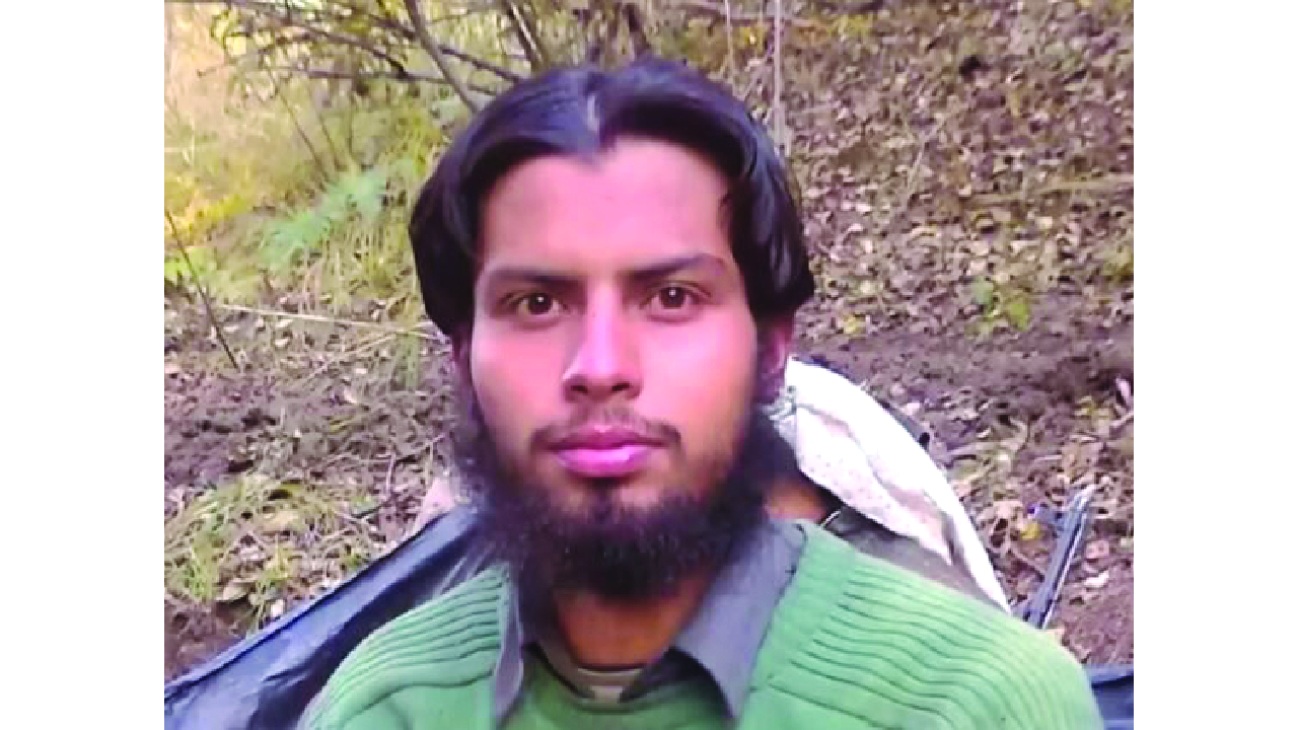
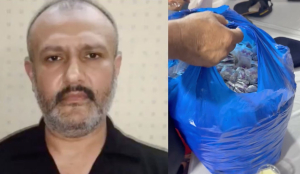
A senior Pakistani terror commander, who evaded arrests in India for over 16 years, was finally arrested last week. Abu Hureira, a senior commander of terrorist outfit Lashkar-e-Tayyeba (LeT), who entered India sometime in 2010, lived in Kashmir valley by masking his identity and operated openly, expanding the terror organisation’s network beyond J&K, including being involved in dozens of terrorist attacks.
He was located and arrested from a hideout in Malerkotla, Punjab alongwith another Pakistani terrorist Usman aka Khubaib on Tuesday, April 7 in an operation launched by the Special Operations Group (SOG) of J&K Police and multi state counter
intelligence units.
Investigations by the multiple agencies revealed that Hureira masked his Pakistani origin primarily through forged Indian identity documents. There were local facilitators in the valley who arranged documents to conceal his Pakistani identity. Reports indicate he and associates used fake Aadhaar cards, PAN cards and other IDs with addresses in states including Rajasthan and Punjab. These documents allowed him to move freely, establish safe hideouts and even facilitate travel outside India for other LeT operatives.
At least in one instance, a foreign terrorist reportedly fled to Indonesia using a forged passport arranged via a Jaipur-based network with the help of Abu Hureira, sources said.
Abu Hureira maintained low profile and kept shifting his bases in Malerkotla, Punjab to avoid detection. Mohammad Naqeeb Bhat, Adil Rashid Bhat and Ghulam Mohammad Mir, the local over ground operatives of LeT provided shelter, food, logistics and arms. They provided high quality documents and it helped Hureira to go off the radar of the security agencies and he continued to carry out LeT activities.
Abu Hureira’s arrest was made possible by the sustained, layered intelligence work involving human intelligence (HUMINT), technical surveillance and inter-state coordination. The operation began around March 31, 2026 after a specific intelligence input was received. The seriousness of this input could be judged by the fact that the J&K Director General of Police Nalin Prabhat personally supervised the operation.
It started with the arrest of local associate Mohammad Naqeeb Bhat from the Pandach area on the outskirts of Srinagar. He was caught with a pistol and other incriminating material. During interrogation, Naqeeb disclosed his role in the LeT module, arms procurement links to Adil Rashid Bhat and support provided to foreign terrorists. This led police to Ghulam Mohammad Mir. Mir’s questioning helped further unravelled the terrorist network.
Human intelligence and technical surveillance pinpointed the hideout in Malerkotla, Punjab. A SOG team of J&K Police with central agency support, arrested Abu Hureira and Usman and they were later brought to Srinagar for further questioning.
These raids confirmed the interstate nature of the network, which handled logistics, funding, and fake IDs. The probe also connected to a prior white-collar LeT cell busted six months earlier at Faridabad’s Al Falah University, showing deeper linkages.
The success in 2026 reflects improved multi-agency coordination, persistent technical and human intelligence, and the cascading effect of interrogations. Once the local module cracked with Naqeeb Bhat’s arrest, the chain of disclosures quickly led to Abu Hureira’s hideout in Punjab.
Police officials have described this as a major blow to LeT’s residual infrastructure in the region, exposing how foreign terrorists rely on Indian documents and local enablers to operate long-term. This case underscores both the challenges of hybrid terrorism and the effectiveness of sustained, coordinated counter-terror efforts.
Leave a Comment
Comments (1)
now dhurandhar-3 to uproot these paki operatives in Bharat.