Tamil Nadu polls: Three-way battle on the cards
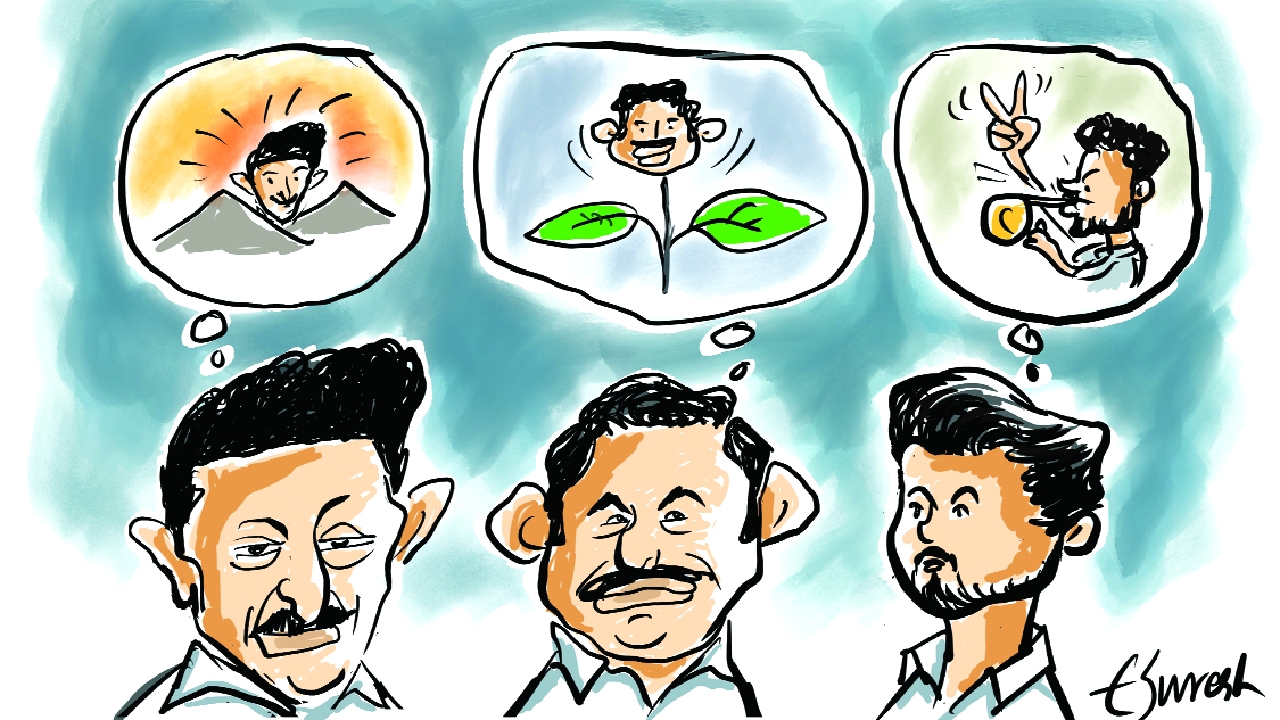
Tamil Nadu is poised for a competitive three-way contest in the upcoming Assembly elections scheduled for April 23. This election has significant implications for the state and its leaders.
The ruling DMK aims to make history by securing a second consecutive term in power. Meanwhile, the AIADMK, the main opposition party, is working to restore its former prominence and regain control. The BJP, which has been trying to perform well, is aligning itself with the AIADMK. Meanwhile, Vijay’s new political venture is emerging as a significant force in the region.
The AIADMK’s influence in Tamil Nadu has weakened without a charismatic leader like Jayalalithaa. About 70 per cent of the population belongs to Other Backward Classes (OBC), with key communities such as the Gounders, Thevars, and Vanniyars impacting elections. Voter awareness among these groups is essential, especially with the internal divisions among the Thevars and the rise of new parties like the Tamil Valvur Katchi (TVK).
In the upcoming elections, about 6.17 crore eligible voters will decide the outcome.
This election is particularly significant because of the emergence of film star Vijay’s new party, dubbed the “X factor”, though its influence remains uncertain.
For decades, Tamil Nadu’s political scene has been dominated by bipolar politics, primarily represented by the DMK and AIADMK.
A victory for Chief Minister Stalin would establish him as one of Tamil Nadu’s most significant leaders, being the first DMK Chief Minister to serve a full five-year term and return to power.
For E Palaniswamy, this election is crucial for his political survival after defeats since J Jayalalithaa’s death. The RSS-BJP coalition has leveraged its financial resources and media presence to suggest they can win. Key issues like rising crimes against women, unfulfilled campaign promises, and the debt crisis are expected to dominate the election.
The DMK alliance’s careful expansion and new programmes aim to boost voter confidence, demonstrating that strategic planning can drive positive change.
At the start of a new term, a ruling party often struggles with a leader who remains respected but a fatigued team. This situation emphasises the need for generational change within the DMK. Senior ministers are reluctant to retire and want to secure positions for their successors. Retaining too many long-serving members could alienate local voters, while pushing them out risks internal conflict before the elections.
The Congress party has not regained power since 1967 and relies on the Dravidian party’s support. Recently, it won 28 seats and a Rajya Sabha berth, but the DMK rejected its power-sharing request. The CPI, CPI(M), VCK, and other groups are also negotiating their allocations. Overall, their position appears strong.
The NDA’s chances of ruling appear weak despite the BJP’s support. Iconic leaders like MG Ramachandran, M Karunanidhi, and J Jayalalithaa have traditionally driven Tamil Nadu’s politics. Currently, the state lacks a strong leader, and Vijay could effectively fill this role.
The Opposition believes the DMK should be vulnerable after five years, but that does not guarantee a power shift. Analysts highlight that public dissatisfaction alone will not necessarily help the AIADMK regain power. Edappadi K. Palaniswami aims to show the alliance’s stability and refute rumours of conflict with BJP leaders. The key challenge is whether voters see the AIADMK as a viable alternative rather than just an anti-DMK platform.
Vijay sees the current situation as a chance to gain support from women and young voters. If the polls are accurate, this election could enhance his reputation for the 2029 elections. His two-year-old party aims to attract the 18-30 age group, which comprises about 1.12 crore of the 5.67 crore total voters, as well as many minority voters due to his Christian faith.
Vijay’s party is causing uncertainty for established parties and pollsters. As a newcomer to Tamil Nadu politics, TVK has no polling history, and his party is untested.
Vijay’s entry is expected to affect the DMK by drawing votes from minorities and Dalits, who have supported the alliance since 2019. Reports suggest the BJP has offered him 80 seats and the Deputy Chief Minister position to join the NDA, but Vijay has reportedly turned it down. The key question is whether he can turn his fan base into votes, as MGR and NTR did.
Smaller parties like Vaiko’s Marumalarchi Dravida Munnetra Kazhagam, Dr S. Ramadoss’ Pattali Makkal Katchi, and Seeman’s Naam Tamilar Katchi have historically aligned with major Dravidian parties. Sasikala, a former associate of Jayalalithaa, has formed her own party but has yet to contest elections. Her alliance with S Ramadoss may affect youth and minority votes, complicating the electoral landscape.
Political parties in the state are offering incentives such as cash transfers and expanded welfare programmes to attract women voters, a crucial demographic they cannot afford to ignore.
Overall, despite the frictions within and across the lower castes, the ideological basis of the Dravidian movement continues and is further strengthened.
The writer is a popular columnist; views are personal