Subhas Chandra Bose: The man who refused to wait for freedom
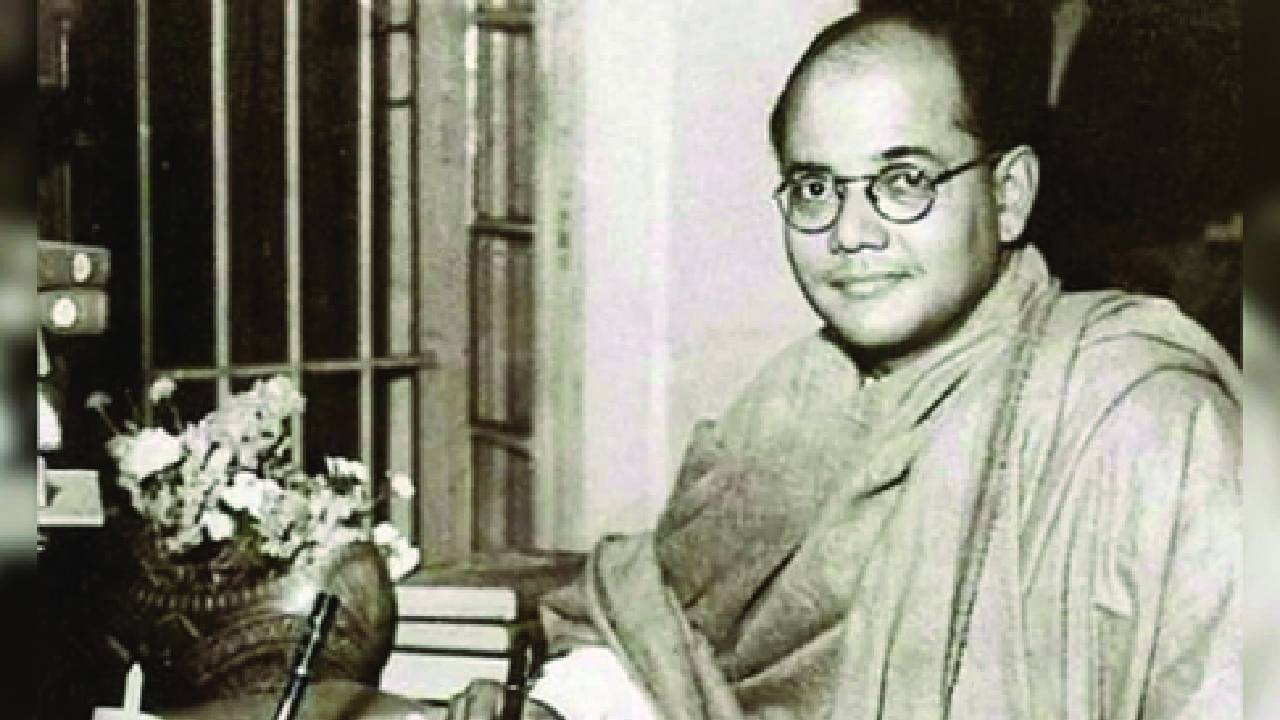
Some memories endure not because they are precise, but because they capture a deeper truth.In my school days, a play was staged on Independence Day. The boy playing Subhas Chandra Bose wore NCC khakis and a Gurkha cap. He looked nothing like the calendar portraits of Netaji, yet when he raised his finger and thundered, ‘Comrades! Let your battle cry be-To Delhi! To Delhi!’ something irreversible entered the imagination.
The play ended with Jai Hind — not merely a slogan, but a salutation that distilled India's diversity into a single ethical address. Long before I understood geopolitics or war, I understood this much: Subhas Chandra Bose was a man who spoke as if time itself could be compelled to move.That refusal to wait defines both his greatness and his tragedy.
Unlike most nationalist leaders, Bose did not see history as a moral appeal to the oppressor. He saw it as a balance of forces. By the late 1930s, as Europe slid towards war, he had concluded that Britain would never voluntarily relinquish India during a global conflict. Freedom, he believed, would have to be seized when imperial power was weakest-and that moment would be brief.
This conviction set him apart from the Congress mainstream. While he admired Gandhi's moral authority, Bose rejected the assumption that non-violence alone could dismantle an armed empire. He followed international developments closely and interpreted each through a single lens: What does this mean for India's freedom?
Arrested in Calcutta in July 1940, Bose refused to settle into the familiar rhythm of imprisonment. He went on a hunger strike, knowing the colonial state feared another martyr. Released under surveillance, he escaped in January 1941, travelling through Kabul, reaching Moscow, and finally arriving in Berlin in April.
He sought help wherever power resided, without illusion and without surrender. In Germany, he made it clear that he was not a supplicant for fascism. He challenged Hitler's racial views of Indians, rejected any ornamental role, and pressed relentlessly for concrete support. His aim was singular: to reach East Asia, raise an Indian force, and strike when Britain was vulnerable.
History moved faster than diplomacy. Japan's victories in Southeast Asia shattered the myth of British invincibility. Singapore fell in February 1942; British armies surrendered in Malaya and Burma with astonishing speed. For colonised peoples across Asia, the psychological impact was electric. For Indian soldiers taken prisoner, a choice appeared where none had existed before.
The Indian Independence League and the Indian National Army took shape from this moment. Hindus, Muslims, Sikhs, Christians, Buddhists, Jews-soldiers and civilians alike-came together under the idea of India. Women stepped forward in unprecedented numbers, invoking Gandhi's name, the Congress legacy, and the promise of freedom.
Yet leadership was fractured. Captain Mohan Singh had raised the first INA, Rash Behari Bose headed the League, but Japanese control was heavy-handed and strategic decisions lay elsewhere. The Indians needed a leader whose authority could unify a dispersed and wounded community.They needed Subhas Chandra Bose.
Yet even this urgency was blunted by delay. Germany and Japan-nominal allies-worked at cross purposes. Berlin hesitated to antagonise Britain by openly backing colonial revolts; Tokyo treated Indian freedom as a bargaining chip rather than a strategic conviction. Bose's departure from Europe was postponed again and again, and with each month lost, the moment he had calculated with such precision slipped further away.
After a perilous submarine journey, Bose reached Sumatra in July 1943. Within weeks, he took command of the INA. On October 21, 1943, he proclaimed the Arzi Hukumat-e-Azad Hind, taking oath in the name of 38 crore Indians. On December 30, 1943, he unfurled the tricolour at Port Blair-the first Indian territory liberated from British rule.It was the high point of his political life.
But history had already turned. Japan was retreating in the Pacific. Germany was overextended. The Quit India movement of August 1942 — the greatest mass uprising since 1857 — had already been crushed. The moment Bose had waited for had come and passed, almost simultaneously.
He reorganised the INA with extraordinary energy and faith, giving it a creed, a salutation, a vision. Yet courage alone does not sustain armies. Supply lines failed, strategic unity was absent, and the geopolitical tide ran decisively against him. Bose was ready. His soldiers were ready. The world was not.That does not diminish his importance — it clarifies it.
Subhas Chandra Bose represents the other Indian freedom struggle: one that refused to rely on moral inevitability alone. He reminds us that independence was not the gift of a single method or philosophy, but the result of cumulative pressures-mass movements, global war, rebellion within the armed forces, and imperial fear. The British understood this. The INA trials shook the foundations of colonial loyalty within the Indian armed forces. Bose's failure on the battlefield succeeded in the courtroom of history.He did not live to see independence. He did not march into Delhi. But he forced the empire to imagine that possibility sooner than it wished.
On his anniversary, Subhas Chandra Bose should be remembered not as a romantic rebel, but as a man who believed that freedom was not a patient request, but a historical opportunity-brief, dangerous, and worth everything.Jai Hind.
The writer is a historian; views are personal