Stability at the top, uncertainty below: The test before Modi 3.0
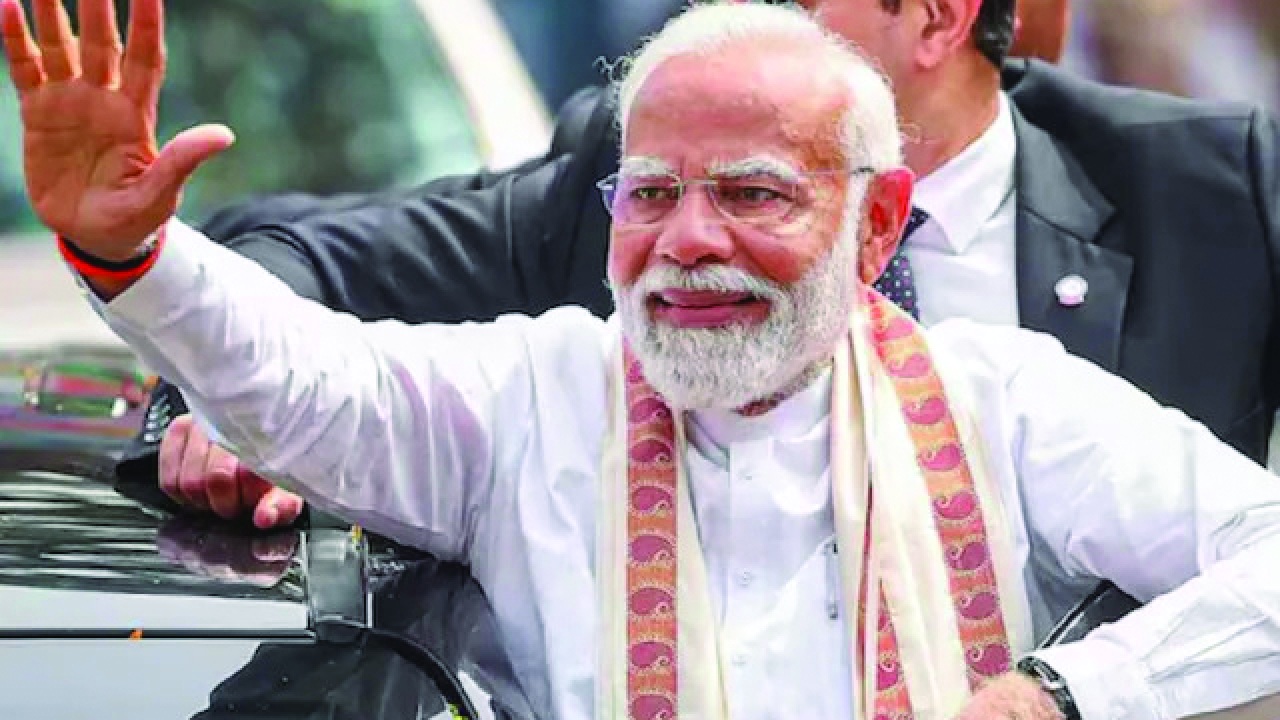
A strong, dominant leader, Prime Minister Mr Narendra Modi is in the midst of his third term as Prime Minister. The BJP’s failure to secure even a simple majority in the 2024 Lok Sabha polls has not affected the stability of its coalition government.
With Mr Nitish Kumar in the Bihar chief minister’s seat, notwithstanding his oft-repeated health issues, and Telugu Desam Party (TDP) chief and Andhra Pradesh chief minister, Mr N Chandrababu Naidu rushing every week to Delhi with fresh set of demands and returning satisfied, the Modi Government-03 has sailed smoothly so far, resting on the crutches of TDP and Janata Dal (u).
This is one dimension of the political stability which, of course, is directly related to a stable government at the Centre. Full marks to Mr Modi and his strategists for deftly managing the National Democratic Alliance’s (NDA’s) internal dynamics. Does it imply questioning the tools of statecraft used to achieve this stability? Yes, it does if the strategy overwhelmingly rests on weakening the pillars on which rests the edifice of democracy, using constitutional bodies and government wings to corner political rivals, and silencing opponents.
What must worry the nation, and more so Mr Modi is the uncertainty prevailing elsewhere outside the NDA arena? Beginning from Parliament, the uncertainty runs down to the lowest level of political and administrative structures. And equally or more worrying is the manner in which the foundations of the society, based on brotherhood and harmony, are systematically sought to be shaken in the name of religion, colour and cast with a political purpose
Everyone knew that the Indo-US trade agreement was on its way and unstoppable. Even as its fine print is still to be deciphered in full detail to declare the winners and losers, the uncertainty on this front has also loomed large. The problem, ostensibly, lies in the strange attitude of the ruling diaspora at the helm to portray themselves as winners all the time, come what may. This phenomenon is at full play in the aftermath of the agreement happening.
No government can be right and win all the time. There are good and bad decisions and their fallouts. A dispensation could be a winner sometimes and a loser at others. The Godly approach to declare an indispensable and no-wrongdoer image and stamping political rivals, dead or alive, and those having a different viewpoint as the fall-guys, stretching the definition to being anti-national, has added to the chaos and created a complex situation.
The situation demands some serious introspection while keeping the mind clear of electoral calculus. Again, the lopsided phenomenon of winning elections, from Lok Sabha to Panchayat, at any cost, should be kept aside for some time for the same of pulling the country of this uncertainty and divisiveness.
The solution of resolving the crisis from top to the ground levels lies in adopting a grassroots approach akin to the one adopted by Mr Modi and Home Minister, Mr Amit Shah in running the BJP affairs, though the approach here is also monologues. Certainly, the principle of the grassroots approach here will be the same, but with debate and discussion as the fulcrum.
Mr Modi has shown the capacity to lead from the front. He must stand up and come out of his closet to face the issues head-on. No, it does not require a strong- arm tactic but a sober approach based on thrashing out the issues through negotiations and mutual agreements. Aggressiveness has proved beneficial for the BJP over the last over a decade but it has caused a lesion to the body structure of the nation.
A supermodel of negotiated settlement of issues should begin with the resolution of stalemates in Parliament. The two Houses of Parliament are under a cloud, with, unfortunately, aspersions being cast at the Chair; it is time for Mr Modi to act swiftly and take command in his own hands. This will help him deflect the opposition charge of giving a short shrift to Parliament and only making occasional brief appearances.
Defence Minister, Mr Rajnath Singh, Mr Modi’s number two in the Union cabinet, seems to have been assigned the task to depute for him in Parliament, barring replying to debates on the Budget and the Presidential address. Under Mr Modi’s dominance, he does not seem to be carrying full authority and a very limited role of heading the all-party meetings or remaining symbolically present in the two Houses of Parliament at crucial junctures as the Prime Minister’s substitute.
Since the controversial Indo-US trade deal has now become a reality and an effervescent opposition gearing to corner the government, the ruling dispensation should act with utmost urgency to take the nation into confidence before the issue spills on the streets and in agricultural farms. The Minister of External Affairs and the Commerce Minister have played their customary role in the run-up to the deal being formalised; it is now up to the Prime Minister to take the nation, directly and through the opposition parties, into confidence and inform them about its nitty-gritty.
There is no harm in admitting mistakes, such as bowing before, which could be strategic- bullying tactics of US President Mr Donald Trump. Mr Modi must ensure that the country stands strong and united to resist any further US pressures and how to derive the best out of the Trade deal.
Likewise, Mr Modi has a big role to play in checking the tendency of communal polarisation, particularly before every election. It must be accruing electoral benefits to the BJP but at a greater cost to the nation. As is his wont, he must lead by example and not only carefully select words and adjectives while delivering speeches, but should also send a clear message to the fringe elements, within the BJP and outside, to stop misrepresenting the Sanatan Dharm.
Finally, a demarcation has to be made for use of the police and the security apparatus. It has been in the forefront in dealing with terrorism and anti-national and anti-social elements. This model, being replicated elsewhere in society for political messaging, is fraught with dangers, and the outcome is there for everyone to see. Wherever the force was used to quell opposition or a diverse point of view, which has at times led to communal overtones, it has disturbed societal harmony.
Even in a given theatre where tangible results have been achieved with strong security related tactics, it has to be followed by a civilian-democratic approach. A prerequisite should be, which has been the case in the past, that political leadership, ruling and opposition, should have an upper hand and a final say. Not disbanding them behind bars.
The writer is a policy analyst; views are personal