Special Intensive Revision of electoral rolls in Bihar keeps political temperature boiling
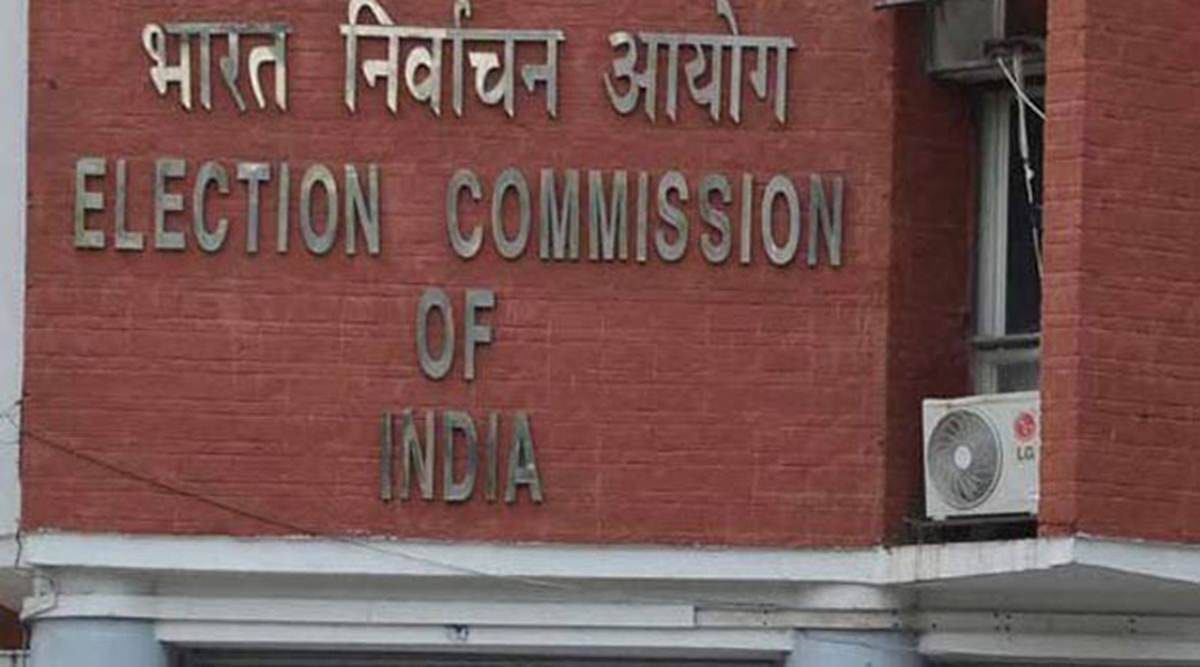
The developments over the controversial Special Intensive Revision (SIR) of electoral rolls in Bihar have kept the political temperature boiling for the past three months. Observers are keenly awaiting September 30 and October 7, 2025. On these dates, the Election Commission of India (ECI) will publish the final electoral rolls and the Supreme Court will hear final arguments on the constitutional validity of the hotly debated exercise.
Since June 24, 2025, when the ECI came out with the notification to initiate the SIR of electoral rolls in Bihar ahead of its state assembly elections, opposition parties and some civil society groups have questioned the exercise that aims to revise the electoral rolls in the state in order to include all eligible voters and eliminate all ineligible voters from the voter list.
While the objective of an accurate and error-free electoral roll is laudable and essential for a free and fair democracy, the implementation of the Bihar SIR has been subject to significant criticism and judicial scrutiny.
The Association for Democratic Reforms and others, including members of opposition parties, approached the Supreme Court under Article 32 from July onwards, challenging the ECI’s notification. They claim that the SIR is arbitrary and violative of the universal right to adult suffrage. It was also alleged that the exercise is a deliberate attempt to remove the names of voters from specific communities, particularly Muslims.
Since then, several orders have been passed by the top court to streamline the procedure with the warning that if any illegality was found in the ECI’s methodology, the entire exercise would be set aside, even after the final electoral roll is published on September 30, 2025.
Some of the directives passed by the Supreme Court asked the ECI to treat the Aadhaar card as the 12th prescribed document for identity proof during the SIR exercise. It was ordered that excluded individuals could submit their applications for inclusion online, eliminating the need for physical forms.
The ECI was directed to make public the list of excluded voters and specify Reasons for Exclusion, such as death, migration or duplication. The court mandated that this information be published on the websites of the Chief Electoral Officer and District Electoral Officers, as well as displayed on the notice boards of Panchayat Bhavans and block offices. This was to ensure both digital and manual access.
At this point, it becomes imperative to examine the controversies concerning the SIR of electoral rolls in Bihar with the stand of different political parties and organisations.
The citizens were surprised by the report that there had been the mass deletion of an estimated 65 lakh voters from the draft electoral roll and that a disproportionately high number of women voters were deleted, with some reports indicating around 7 lakh more women compared to men, raising serious questions.
The revision shifted the onus of proving eligibility from the state to the individual elector. Existing voters were asked to submit fresh enumeration forms and documentary evidence to establish their citizenship and eligibility. This was particularly problematic as the ECI initially rejected widely held documents like Aadhaar cards and ration cards, which are often the only forms of identification available to the poor and illiterate.
It was contended in the Supreme Court that the ECI was conducting a citizenship test through the SIR. The petitioners argued that determining citizenship is the exclusive domain of the central Government, and the ECI’s actions go beyond its mandate under the Representation of the People Act and the Constitution.
Prior to the Supreme Court’s intervention, there was a significant lack of transparency. The ECI did not publicly release the list of deleted voters or the reasons for their removal in a readily verifiable format. This created a trust deficit and made it difficult for affected individuals to challenge their exclusion.
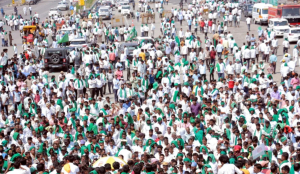
The opposition alliance, including parties like the Rashtriya Janata Dal (RJD) and the Indian National Congress (INC), has been at the forefront of the protest. They have used strong language, with Rahul Gandhi calling the revision an “institutionalised chori (theft)” to deny the poor their right to vote. They have labelled the process “Votebandi,” a term echoing demonetisation, to highlight the hardship it has caused.
They have alleged that the exercise is a deliberate attempt to remove the names of voters from specific communities, particularly Muslims, who are perceived to be their traditional vote bank. The disproportionate deletion of women’s names has also been highlighted as a sign of systemic flaws.
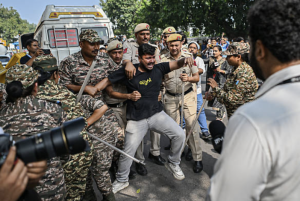
Opposition leaders have argued in the Supreme Court that the revision exercise is a “grave fraud” on voters. They have also pointed out that their Booth Level Agents (BLAs) faced obstacles in assisting voters, with some forms not being collected or acknowledged.
The ruling BJP has backed the ECI’s exercise as a necessary and routine update to ensure “electoral purity.” They argue that the revision is essential to remove ineligible persons, including those who have died or migrated, as well as “non-citizens” and “illegal immigrants.”
As we wait for the final publication of the electoral rolls and the next hearing in the Supreme Court, it can be said that while motivated by a legitimate goal of electoral purity, SIR in Bihar has been marked by significant procedural and substantive issues. The exercise, as initially conducted, risked the disenfranchisement of millions of genuine voters, particularly women and the poor, by placing an unreasonable burden on them to prove their eligibility.
The continuous intervention of the Supreme Court has been vital in addressing these challenges. By mandating transparency and expanding the list of acceptable documents, the court has forced the ECI to adopt a more inclusive and democratic approach. The final outcome of this legal battle, scheduled for a final hearing on October 7, will not only determine the fate of the Bihar voter list but will also set a crucial precedent for future electoral revisions across India.
It is imperative that the ECI, as a constitutional body, takes on the responsibility to ensure that electoral processes are not only accurate but also equitable and accessible to all citizens, without the need for constant judicial oversight.