Yoga-Kshema and India’s National Security: The Arthashastra Doctrine for Our Times
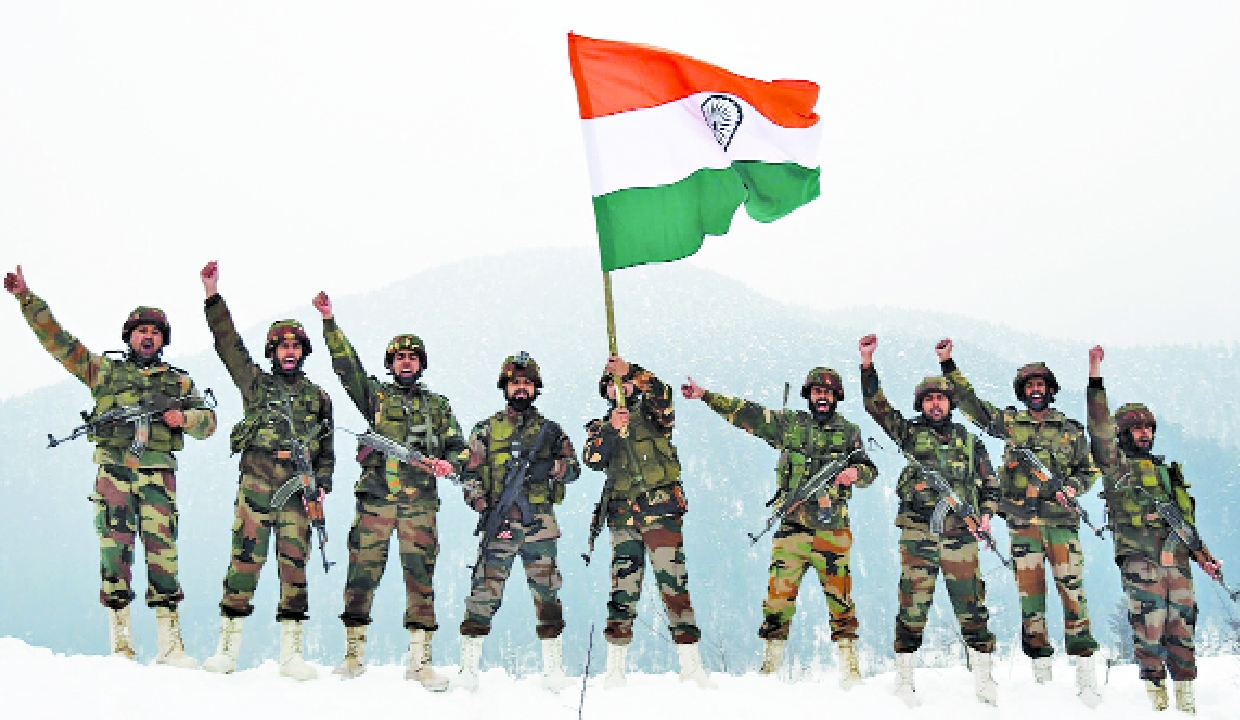
The global security landscape is experiencing major uncertainty. India, an essential actor in this larger security matrix, has neither been unaware nor unprepared. Soon after Operation Sindoor, Prime Minister Narendra Modi distilled the nation’s security vision into three words: Jointness, Aatmanirbharta, and Innovation. The message was clear: India must not merely respond to threats but also shape the strategic environment around them. The Defence Minister exhorted the forces to prepare for “invisible challenges”, including information warfare, ideological subversion, and ecological and biological threats, going well beyond traditional battlefield thinking. This resolve was articulated over two millennia ago through the Bharatiya Arthashastra Tradition.
The technicalities of Jointness and Aatmanirbharta are rooted fundamentally in an exercise in operationalising a civilisational DNA: the doctrine of Yoga-Kshema. The entire Arthashastra can be understood through this single framework. From internal governance to foreign policy, from intelligence operations to military strategy, every instrument of the state is subordinated to one master objective: Yoga-Kshema.
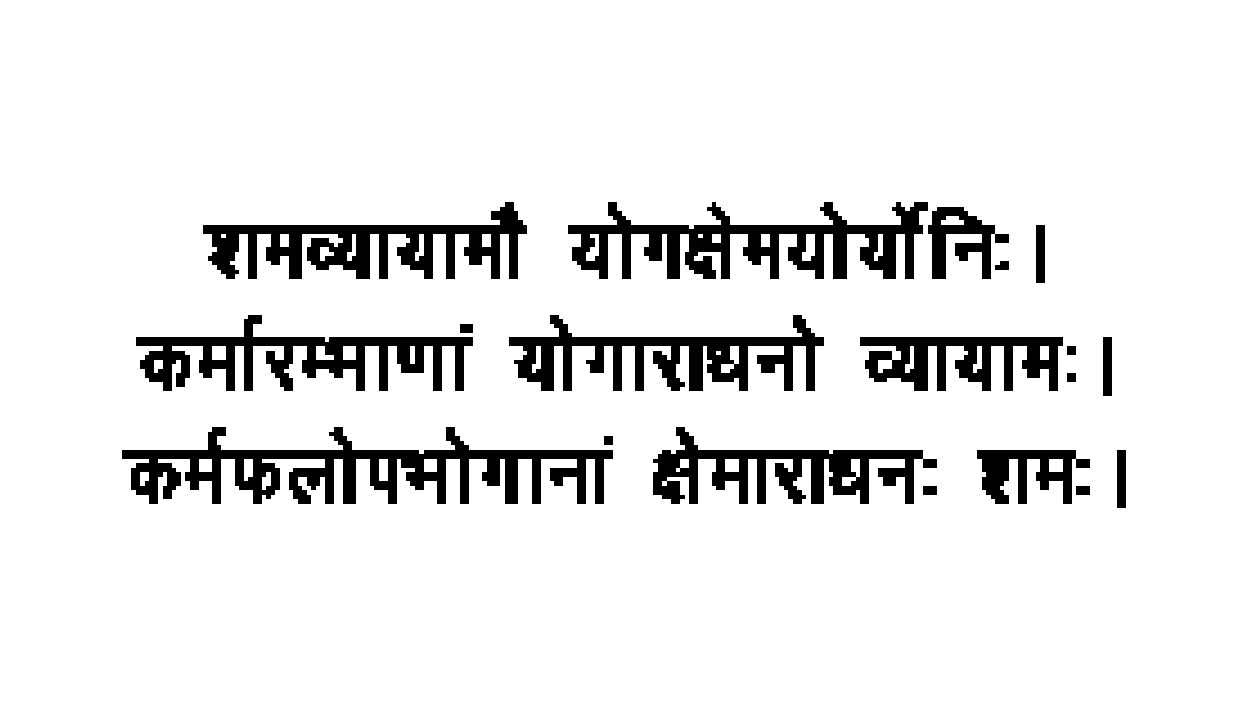
(Kautilya’s Arthashastra: 6.2.1-2)
Kautilya’s Arthashastra posits this as the singular fundamental goal of governance of any state working towards development and prosperity. In modern parlance, it is often understood in parallel with “national interest” or “core interests” by a few states. However, a nuanced understanding of the concept goes further beyond that. Yoga is the “acquisition” of resources for fulfilling national development goals-be it territory, technology, or economic depth. Kshema is the “protection” and efficient management of those gains. Together, they form a continuous loop of national advancement where one cannot exist without the other.
In contemporary terms, this architecture has long been tested by a total threat scenario. When India accelerates infrastructure along the border, it is reinforcing the Durga (fortress) limb. It is Yoga in action: acquiring a strategic position that did not previously exist. It has a direct bearing on India’s territorial and strategic policies. Kautilya is explicit that a vijigishu who aspires to advance must focus on what he requires for national development: fortifications, waterworks, trade routes, settled lands, and resource-bearing territories.
India’s assertive stand at Galwan in June 2020 was precisely a strong yoga conviction - refusing to cede ground. Similarly, the border infrastructure constructions since 2015, which provide all-weather connectivity to the forward areas, are a direct fulfilment of what Kau?ilya described as durga-samskara, or the strengthening of fortified positions. India’s growing interest in maritime domain awareness, the construction of naval bases in Karwar (INS Kadamba), the installation of coastal radar chains, and new basing arrangements in the Indian Ocean similarly reflect the Yoga principle applied to sea power.
Kshema (protection and preservation) is the harder art. It demands sustained vigilance, proportional response, and the institutional discipline not to squander what has been won. Notably, the acquisition through Yoga is valuable because it serves Kshema-the protection and prosperity of the Janapada (the people and territory). Additionally, the shift toward Aatmanirbharta (self-reliance) seeks to build by reducing India’s dependence on adversarial supply chains, particularly in critical minerals and defence manufacturing. This reflects the modern equivalent of securing the Kosha, ensuring that India’s ability to defend itself is not held hostage by foreign supply chains. The most delicate balance between acquisition and protection is found in the application of military force. Kautilya was remarkably clinical: force (Danda) is the means of achieving Yoga-Kshema, but it must be calibrated.
This doctrine of Yatharha Danda, or proportional force, was visible in Operation Sindoor in May 2025. By executing precision strikes against terror infrastructure in response to the Pahalgam attack, India practised the art of Kshema. The objective was not total war, but the protection of the state’s integrity through a calibrated signal of resolve.
Kautilya’s six foreign policy instruments - sandhi (peace/treaty), vigraha (war), yana (marching), asana (staying put), dvaidhibhava (double policy), and samshraya (seeking alliance) - collectively constitute the operational grammar of Yoga-Kshema in the international arena. The choice between them is governed by a clear principle:
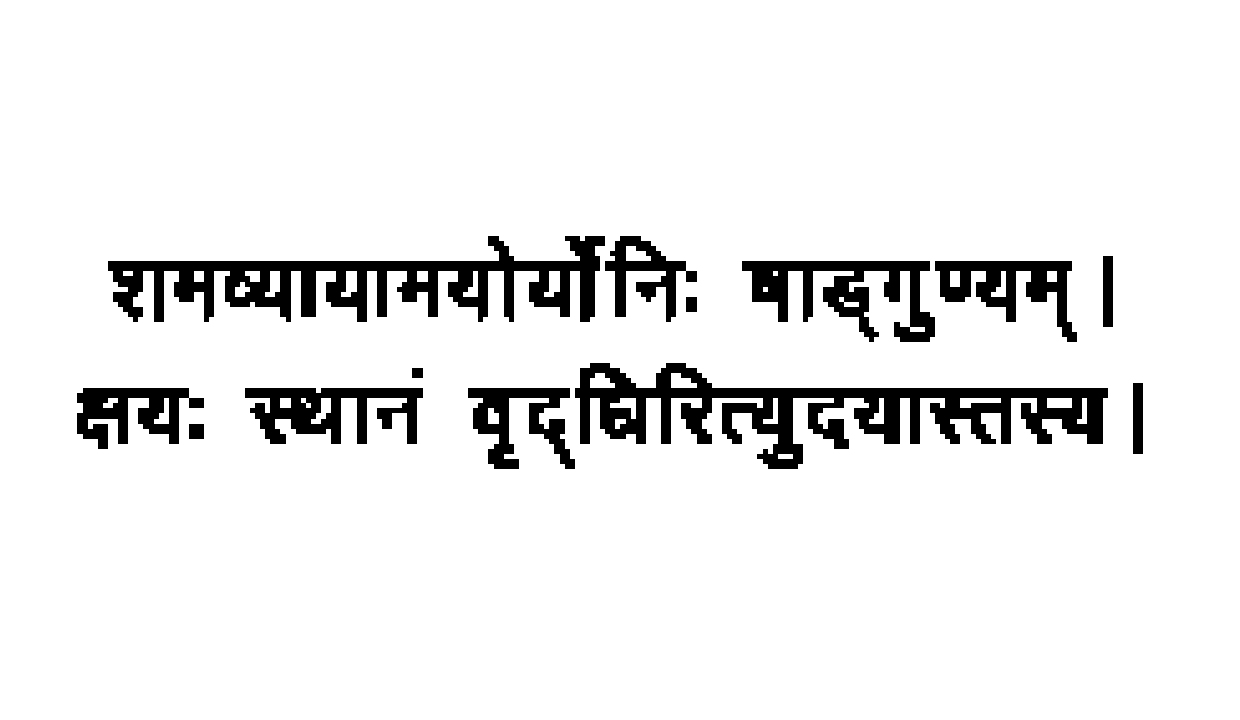
(Kautilya’s Arthashastra: 6.2.4-5)
India’s abstention during United Nations votes on the Russia-Ukraine war and diplomatic outreach with often opposing sides during an ongoing international conflict are, from a Kautilyan perspective, a textbook case of dvaidhibhava: maintaining a dual policy as a policy expression for Kshema, or the protection of India’s interests.
India’s deepening of Quad partnerships with the United States, Japan, and Australia, while maintaining its historically independent stance, is a similar reflection of a deliberate foreign policy choice being deployed to extend India’s strategic outreach without triggering bloc politics.
However, Kautilya’s framework warns that the greatest threat to Kshema often comes from within. His dedicated study of Yogavrittam (focused on internal security) remains startlingly relevant. The government has astutely responded to the “invisible challenges” — information warfare, radicalisation, and technological subversion, with great aplomb.
The Arthashastra concludes that statecraft is for the “acquisition and protection of the earth”. For modern India, this “earth” is the aspiration of a Viksit Bharat-a developed, secure nation.
Yoga-Kshema offers a roadmap that is both ambitious and grounded. It demands that India continually strive for the capabilities (yoga) while maintaining the institutional discipline to safeguard what it has built (kshema). Two millennia later, Kautilya’s message to the leaders of modern India remains the same: a serious nation does not merely react to the future; it acquires the tools to shape it and the wisdom to protect it. The reflection of this elaborate framework in governance policies testifies to the commitment and indomitable patriotism of our determined government, whose priority is the security of its nation and the safety and welfare of its citizens.
R K Pachnanda, Former Chairman, Haryana Public Service Commission; Former Chairman, Haryana Electricity Regulatory Commission; Former DG-ITBP; Former DG-NDRF; Commissioner of Police. Kolkata; Director, Bharat ki Soch; Views presented are personal.
Tejusvi Shukla, Assistant Director (Bharat ki Soch); Views presented are personal.