Iran’s checkmate in two moves?
Chess moves related to a secret letter, Trump’s confident claim
Finally, after a round of talks, and another one of failed discussions, the US President Donald Trump asked his officials to walk out, or rather not engage with Iran or Pakistan. He felt that there was no point in going back and forth, without an agenda, and Iran could always “call” if it wanted to come to the peace table. His confidence stems from a feeling that the Iranian leaders were “fighting like cats and dogs” among themselves to end the ongoing war. Trump’s view gains credence after reports of a secret letter surfaced in the media.
According to the letter, purportedly written by senior Iranian figures, which include the current prime minister and foreign minister, the leaders urged Mojtaba Khamenei, the son of the late Supreme Leader, to negotiate with the US, and end the conflict. The prime reason: The country’s economic situation was “severe and unsustainable.” The strain on the people and masses did not justify a war, which did not allow either side to retreat with its head held high. Hence, negotiations on the nuclear issue, as desired by the US, was a safer way out.
Immediately, three reactions emanated from Tehran once the contents of the letter went public. The first was, obviously, to dub it as “absurd and baseless.” The second was to define, or redefine, the war as a national priority, rather than a fight on ideological issues. “In Iran, there are no hardliners or moderates. We are all Iranian and revolutionary,” said one of the leaders, who was featured as one of the signatories of the letter. Third, a warning was issued to the citizens to inculcate a sense of fear. A leak of ‘classified correspondence’ carried ‘severe legal consequences,’ which included a jail of 10 years.
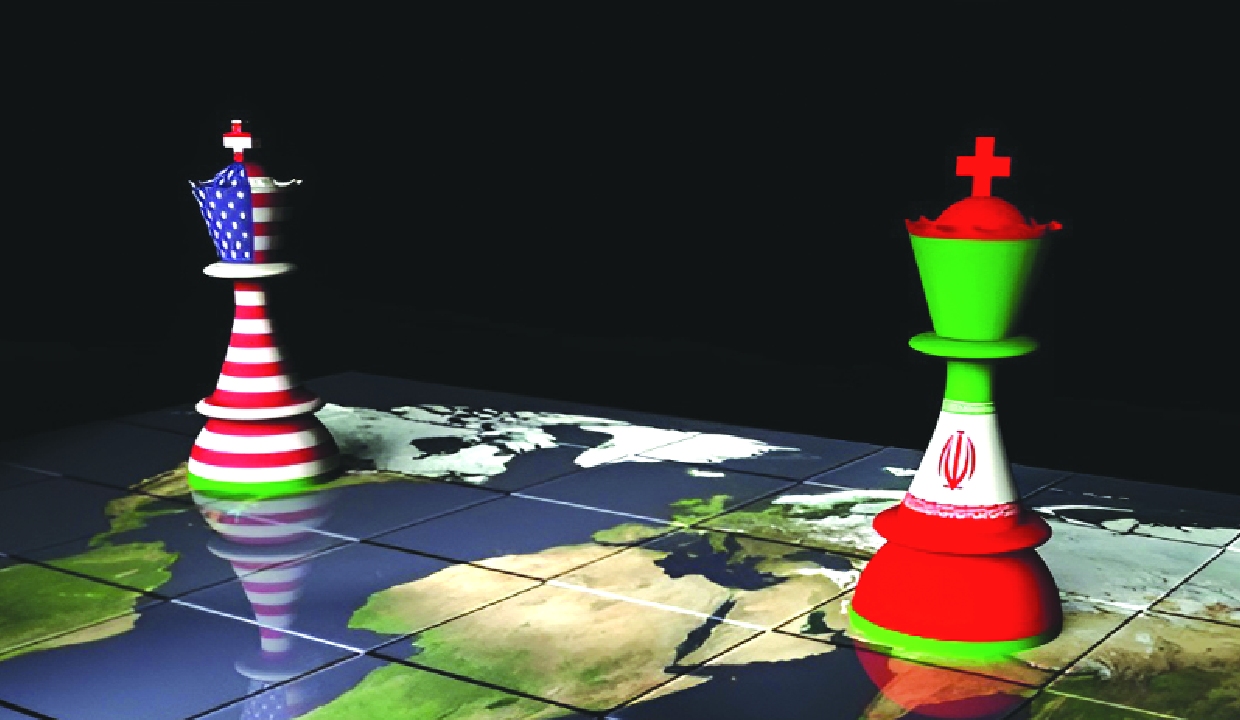
If Trump, and contents of the secret letter are to be believed, Iran’s economy, which was already under pressure in the pre-war period due to excessive sanctions, has begun to crumble because of the new American blockade on Kharg Island. The blockade, which is a counter to Iran’s attacks on the Strait of Hormuz, is aimed to shut down the exports of Iran’s crude oil, even as Iran disrupts global supplies. In chess parlance, the US move may have led to an ‘Armageddon game,’ which is guaranteed to produce a decisive result.
Despite Tehran’s expertise in smuggling oil across the high seas, as it did during the pre-war sanctions-led era, the heavy presence of the American Navy has limited the options. Or so it would seem from the secret letter. In response to the unsafe Strait, global suppliers have re-routed oil through alternate routes, and managed to push through a quarter or more of the oil that earlier flowed through this choke point. Consumers have reconciled to higher prices, restricted energy use, and found alternatives to the Middle-East suppliers. As we have repeatedly maintained, it is a case of who blinks first, the US or Iran?
Several experts draw the similarities between 2026 and 1988. In the latter year, during the final phase of the long-drawn-out Iran-Iraq war, “senior Iranian officials urged the then Supreme Leader, Ruhollah Khomeini, to accept a ceasefire, warning that the war was unsustainable.” Finally, under internal pressure, Khomeini, who wanted to continue the war, accepted a resolution of the United Nations Security Council, which ended the conflict.
However, the primary difference is the time period. The war with Iraq dragged on for years. The current one with the US is not even a month-old.
Another difference is that while both Iran and Iraq were economically ruined in 1988, both sides claimed economic victories in 2026, after having repeatedly claimed military ones. Reports emanating from the US talk about the retail prices of petrol, which have inched up, and fears of inflation over the next few months. While petrol is up by a dollar per gallon, jet fuel is up by two dollars. The period of high prices is uncomfortably and scaringly close to the forthcoming midterm elections in November. Hence, Trump wishes a peaceful reconciliation, of whatever form, much before the elections to woo the voters.
Some experts indicate that in this war of military and economic attrition, Iran is likely to buckle faster than the US. According to one of them, “The clock is much faster on Iran’s economy side….” More importantly, unlike most leaders, Trump is willing to go further to bring Iran to its knees, although his clock is running only a bit slower, as he has a few months before a political crisis point in August or September. Indeed, Iran’s blockade of the Strait costs it USD 500 million in lost exports, and the costs of the American ‘Kharg’ blockade may be higher.
Looking beyond growth, inflation, and energy costs, an analyst contends that Iran’s stock market is closed for eight weeks, which is an “unprecedented development.” This allows the leaders and policy-makers to live in a make-believe world that things are normal. But, in reality, the war “changed the value of companies, assets, and investor expectations.”
The stock market was in a crisis before the war, and the situation is worse, “even though nominal gains had masked the impact of inflation above 70 per cent.” Banking was in shambles, and so were critical sectors like energy, petrochemicals, auto, and steel.
Of course, what Tehran will calculate are the pros and cons of war, or rather, peace. Sustained war is not an option, unless Trump backs off, which he refuses to do. Peace is not a complete solution, as past experiences prove. Some experts indicate that the 2015 peace with the US facilitated global banking but only on paper. Banks refused to touch Iran’s money, and this was a case “not just (with) US banks, but little, tiny banks without any corresponding relationship with US banks.” In effect, Iran “put the funds on a pallet, and sent them in cash.”
Hence, the economics may pull down Tehran even if peace prevails. “If we have a democratic Government today, a transitional Government established in Iran today, and the Islamic Republic is gone, that transitional Government probably is not going to be able to pay Government salaries for more than a week or two,” says an expert.
Tehran knows this future scenario. So, both war and peace have consequences that go beyond the military and diplomatic. It is not about a face-saving retreat. It is about saving the nose or ears.