Dutch pact boosts Gujarat’s Kalpasar project
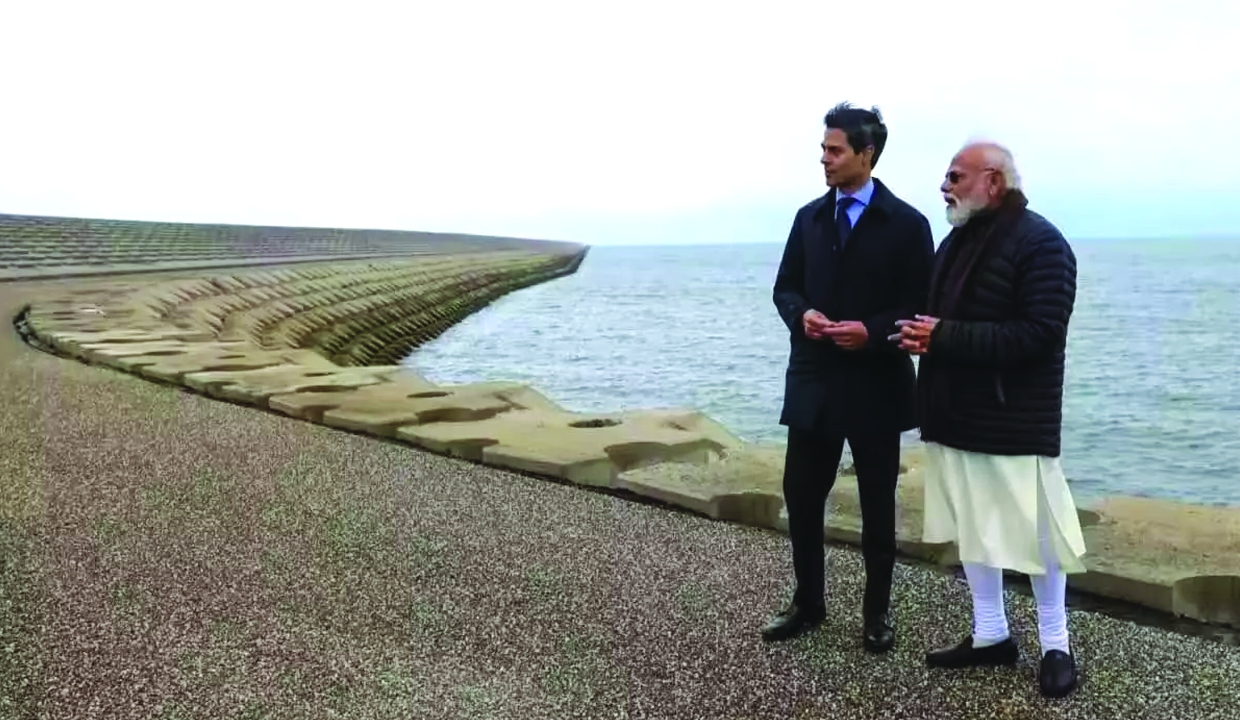
Gujarat’s ambitious Kalpasar Project has received renewed international attention following recent discussions between India and the Netherlands on advanced water management and coastal infrastructure technologies.
During his visit to the Netherlands, Prime Minister Narendra Modi reviewed the renowned Dutch dam project known as Afsluitdijk alongside Dutch leadership.
The visit highlighted similarities between the Dutch marine engineering model and Gujarat’s proposed Kalpasar Project in the Gulf of Khambhat.
In the presence of officials from both nations, India’s Ministry of Jal Shakti and the Dutch Ministry of Infrastructure and Water Management signed a letter of intent aimed at strengthening technical cooperation in water management and large-scale infrastructure planning.
The Kalpasar Project has long been envisioned as a transformative initiative designed to create a massive freshwater reservoir by constructing a dam across the Gulf of Khambhat. The project proposes harnessing water from multiple rivers flowing into the gulf while also integrating renewable energy generation, irrigation, transport connectivity, and regional development.
Experts believe the project could significantly improve long-term water security in Gujarat, particularly for drought-prone regions of Saurashtra. The proposed infrastructure is also expected to reduce travel distance between South Gujarat and Saurashtra while supporting sectors such as fisheries, tourism, and clean energy production.
The Dutch Afsluitdijk project, considered one of the world’s landmark engineering achievements, has successfully protected low-lying regions in the Netherlands from flooding for decades by separating seawater from freshwater reserves. Indian authorities view Dutch expertise in marine barriers and coastal engineering as potentially valuable for Gujarat’s future planning.
Officials stated that the cooperation reflects growing India-Netherlands collaboration in climate adaptation, sustainable infrastructure, and water resource management. The development is expected to provide technical insights that may help accelerate planning and execution of the long-discussed Kalpasar initiative.