Sentinel of the blue frontier: Fifty years of the Indian Coast Guard
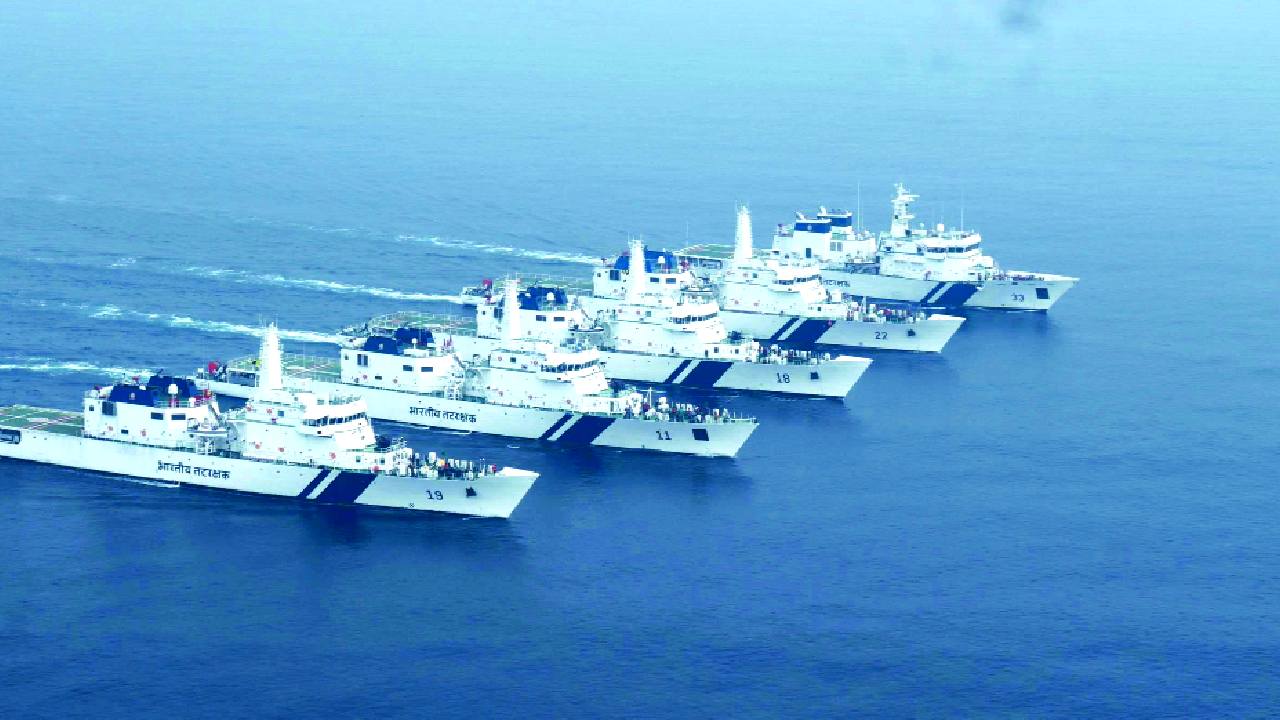
As India prepares to celebrate the golden jubilee of the Indian Coast Guard on February 1, 2026, the nation honours a force that has quietly but steadfastly protected its maritime interests for five decades. From its modest beginnings in 1977 to becoming one of the world’s largest coast guard services, this journey reflects India’s growing maritime consciousness and its evolution as a responsible oceanic power.
Birth of a Maritime Guardian
The genesis of the Indian Coast Guard is intrinsically linked to India’s engagement with the United Nations Convention on the Law of the Sea (UNCLOS) discussions during the 1970s. As the international community deliberated on maritime boundaries and ocean governance, India recognised a critical gap in its national security architecture. While the Indian Navy focused on defence against external threats, there existed no dedicated force to enforce maritime law during peacetime, combat rampant smuggling, protect emerging offshore assets, or manage the vast maritime zones that would come under Indian jurisdiction.
The UNCLOS framework, which would eventually grant coastal nations sovereignty over territorial waters extending twelve nautical miles and rights over Exclusive Economic Zones reaching 200 nautical miles, made the need for such a force urgent. India’s coastline of over 11,000 kilometres, combined with its island territories and an EEZ exceeding 2.01 million square kilometres, demanded constant vigilance beyond what existing agencies could provide.
On February 1, 1977, the Indian Coast Guard came into existence as an armed force of the Union, operating under the Ministry of Defence alongside the Army, Navy, and Air Force. Formally established through the Coast Guard Act of 1978, the new service was entrusted with protecting India’s maritime interests and enforcing law in its territorial waters, contiguous zone, and EEZ. It was a recognition that India’s security extended far beyond its land borders into the blue expanse of the Indian Ocean.
Growing into the Role
What began as a modest force has transformed into a formidable maritime security apparatus. Today, the Indian Coast Guard operates a fleet of 155 ships ranging from Offshore Patrol Vessels to specialised Interceptor Boats, supported by 80 aircraft, including fixed-wing planes and helicopters. This capability is further enhanced by 14 hovercraft, 66 interceptor craft, 42 Coast Guard stations, 11 air stations and enclaves, and an extensive network of 88 coastal radar stations providing comprehensive electronic surveillance.
The operational tempo is staggering. On any given day, the Coast Guard maintains 55 to 60 ships and 10 to 12 aircraft deployed for surveillance and missions, patrolling an area roughly 1.5 times the size of India’s landmass. This round-the-clock vigilance, guided by the motto “Vayam Rakshamah” (We Protect), ensures that India’s maritime domain remains secure.
Five Decades of Service
The achievements over fifty years speak to the dedication and professionalism of Coast Guard personnel. Since inception, the service has saved over 11,806 lives through search and rescue operations, bringing hope to fishermen in distress, evacuating crews from sinking vessels, and responding to maritime emergencies with speed and expertise. In 2024 alone, the Coast Guard saved 76 lives and performed 24 medical evacuations, often in challenging sea conditions.
The fight against maritime crime has been relentless. Anti-smuggling operations have evolved from combating gold smuggling in the 1980s and 1990s to addressing contemporary threats, including narcotics trafficking. In 2024, the Coast Guard nabbed 22 boats and 246 poachers, seizing narcotics and contraband valued at `1,876.40 crore. These operations, conducted in coordination with multiple agencies, have disrupted international smuggling networks and protected both national security and public health.
Environmental stewardship has emerged as another critical mission. As the nodal agency for marine pollution response, the Coast Guard enforces international conventions, conducts pollution response exercises, and responds swiftly to maritime disasters. The 2024 response to the MV MSC Elsa 3 sinking, which saw the collection of 690 tonnes of pollutants, exemplifies this commitment to protecting India’s marine ecosystem.
Humanitarian assistance and disaster relief operations have showcased the Coast Guard’s versatility. Whether shepherding thousands of fishing boats to safety during Cyclones Montha and Ditwah or delivering medical supplies to Djibouti, Sudan, Mozambique, and Sri Lanka under Operation Sagar Bandhu, the service has extended its protective hand beyond India’s shores, embodying the nation’s values of compassion and regional responsibility.
The Community Interaction Programmes, numbering over 17,321 since 2009, have transformed coastal fishing communities into partners in maritime security. By making fishermen the “eyes and ears” of coastal surveillance, the Coast Guard has created a vast network of vigilance that no technology alone could replicate.
Navigating Future Challenges
As the Indian Coast Guard enters its sixth decade, the challenges ahead are formidable and evolving. The maritime security landscape has transformed dramatically, with technology democratising advanced capabilities that were once the exclusive domain of major powers. Autonomous underwater vehicles pose unprecedented threats to port and coastal security and critical underwater infrastructure. Sophisticated submarine drones capable of weeks-long operations could infiltrate harbours, conduct reconnaissance, or attack naval assets with minimal detection risk. AI-powered drone swarms could overwhelm traditional defences through coordinated saturation attacks, while the convergence of cyber warfare with physical autonomous systems creates hybrid threats that challenge conventional response frameworks. Maritime smuggling networks have grown increasingly sophisticated, exploiting encryption, cryptocurrency, and dark web marketplaces. The aerial dimension, particularly cross-border drone smuggling through creeks, adds complexity that traditional maritime surveillance cannot address alone. The sheer volume of maritime traffic and the vastness of the ocean create monitoring challenges that demand technological innovation and regional cooperation.
Modernisation and the Road Ahead
Aligned with “Aatmanirbhar Bharat” and the Ministry of Defence’s reform agenda, the Coast Guard is pursuing comprehensive modernisation through indigenisation. Next-generation Offshore Patrol Vessels featuring AI predictive maintenance, integrated drone systems, and advanced sensors represent the future fleet. Multi-Purpose Emergency Response Vessels, Twin Engine Heavy Helicopters, and unmanned platforms will enhance operational reach and effectiveness. Digital transformation through artificial intelligence and machine learning will revolutionise surveillance and threat detection. Anti-drone systems, cyber crisis management protocols, and enhanced connectivity will address emerging challenges. Doctrinal reforms will prepare the force for hybrid threats that blur the lines between conventional and unconventional warfare.
A Tribute to the Guardians
As India celebrates this golden jubilee, the nation honours the men and women of the Indian Coast Guard who have stood watch over its maritime frontiers through storms and calm, through peace and crisis. Their dedication has saved thousands of lives, protected billions in national wealth, and upheld India’s sovereignty over its oceanic domain. The next fifty years will undoubtedly bring challenges we cannot yet imagine, but if the first five decades are any indication, the Indian Coast Guard will meet them with the same courage, professionalism, and commitment that have defined its service.
“Vayam Rakshamah” — We Protect-is not merely a motto but a sacred promise to the nation, fulfilled every day by those who guard India’s blue frontier.
The author is a retired Additional Director General of the Indian Coast Guard and has commanded four of the five operational commands of the Coast Guard; views are personal