SC declines ‘academic exercise’ on legislative privileges
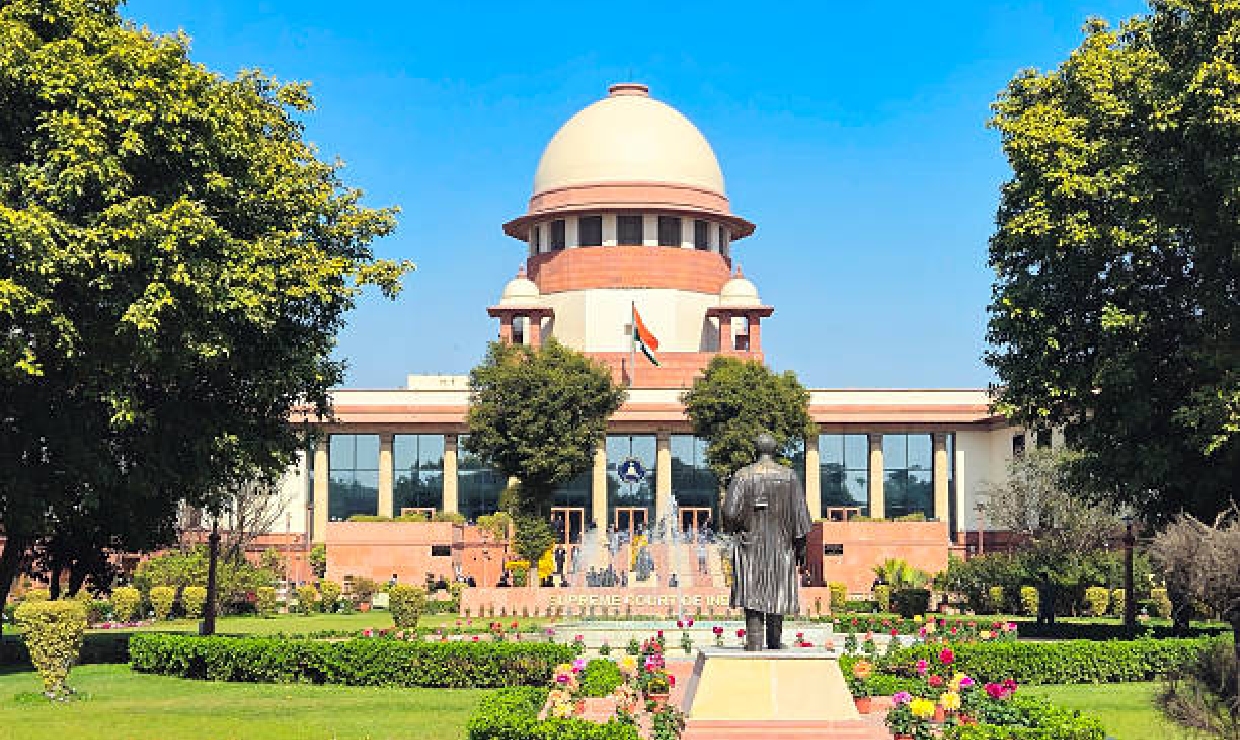
The Supreme Court on Monday, October 5, said there was no point in engaging in an "academic exercise" on the scope of legislative privileges of MLAs and their interplay with freedom of speech and expression if the issue no longer survives.
A bench headed by Chief Justice Surya Kant and comprising Justices Joymalya Bagchi and V Mohana was hearing the matter after the Tamil Nadu Assembly informed the court that the resolution at the centre of the dispute, passed in 2003, had been withdrawn in 2004.
Senior advocate Raju Ramachandran, appearing for the Tamil Nadu Assembly, told the bench that a seven-judge Constitution Bench is scheduled to hear the matter from Tuesday, October 6, and it was therefore necessary to bring the withdrawal of the resolution to the court's notice.
Ramachandran said he was unaware why the withdrawal had not been brought on record and suggested it could have been an omission by lawyers on either side.
Chief Justice Kant said the court should not engage in an academic exercise if the issue no longer survived.
"My suggestion will also be that don’t get engaged in academic exercise. If the issue survives, we should proceed and decide it, but if the issue does not survive, then we should leave the question open and wait for the right time," the CJI said.
Senior advocate Kapil Sibal supported the suggestion, saying that although the issue was important, it would be appropriate to decide it when it actually arose.
Solicitor General Tushar Mehta also agreed, saying there was no point in pursuing an academic exercise.
The bench directed Ramachandran to place the 2003 resolution before the seven-judge bench. The court will consider the document on Tuesday, October 6, and then decide how to proceed with the issue.
The dispute concerns the interpretation of Articles 194(3), 19(1)(a) and Article 21 of the Constitution, including the relationship between legislative privileges and the fundamental right to freedom of speech and expression.
The issue was referred to a five-judge bench in December 2003. In its December 8, 2003 order, the Supreme Court noted that the matter involved substantial questions concerning the interpretation of the constitutional provisions and their interplay.
When the case came before the five-judge bench in December 2004, the court was informed of conflicting views expressed by two separate benches. It subsequently recommended that the matter be placed before a seven-judge bench for an authoritative ruling.
One of the pleas, N Ravi and others versus Speaker, Legislative Assembly, Tamil Nadu, raises the question of whether fundamental rights prevail over legislative privileges.
The case dates back to 2003, when journalist N Ravi and others approached the Supreme Court after then Tamil Nadu Assembly Speaker K Kalimuthu ordered their arrest for alleged breach of privilege and contempt.
The Supreme Court stayed the arrest of six journalists and later referred the matter to a seven-judge bench following conflicting judgments.
One of the earlier judgments held that fundamental rights should prevail, while a 1965 verdict had held that fundamental rights were subordinate to parliamentary privileges.
Inputs: PTI