Safeguarding Gen Z from the digital addiction trap
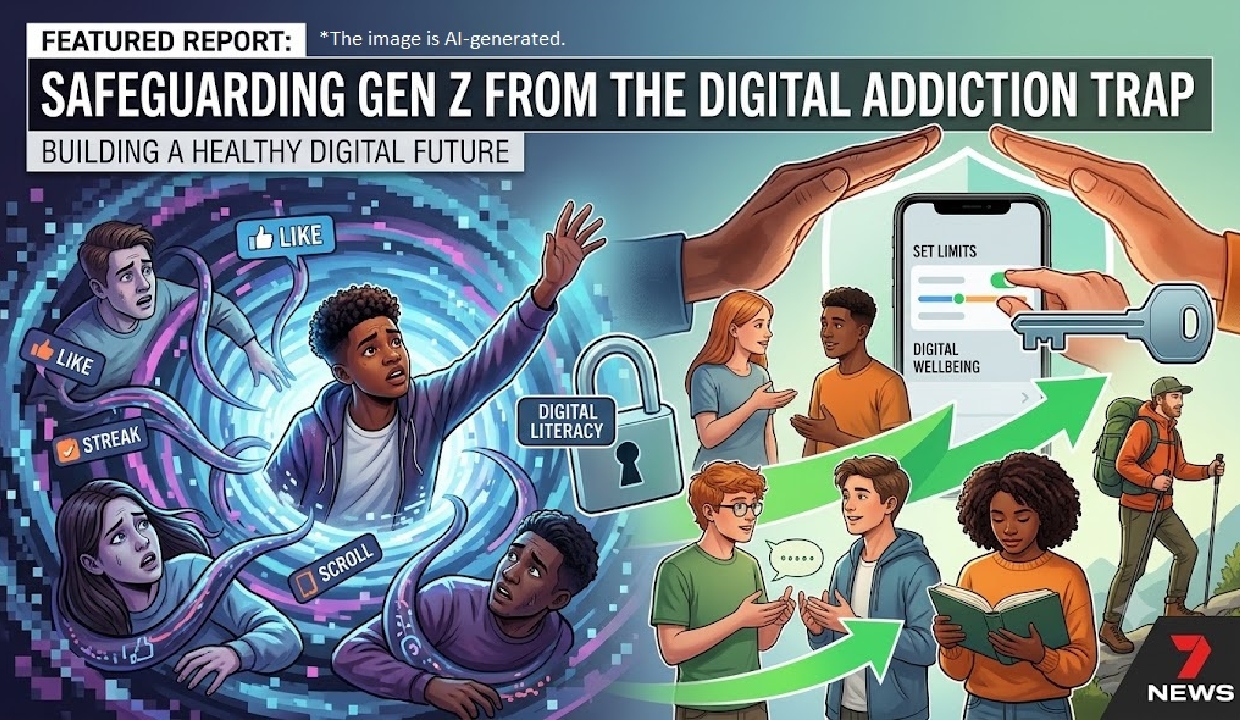
India's digital revolution has reshaped how the country learns, works, pays and unwinds, powered by cheap data, smartphones, digital payments and online entertainment. But the next phase of Digital India must confront a harder problem: how the very ecosystem that expanded opportunity is now eroding attention, mental well-being, and productivity.
This is the backdrop to the Promotion and Regulation of Online Gaming Rules, 2026, which came into effect on May 1, 2026. The rules mark a shift from a fragmented gaming landscape to a structured one built around user protection, age verification, time limits, parental controls, grievance redressal and a new Online Gaming Authority of India. They also distinguish between esports, educational games, social games and online money games - the last of which is now prohibited.
From Access to Discipline
India's youthful population has long been seen as its greatest economic asset. But a demographic dividend depends on more than numbers; it requires young people who can concentrate, learn, self-regulate and work productively. That capacity is under strain. Online gaming in India grew to roughly 488 million players in 2024, up 33 million from the year before - a scale at which even a small share of problematic use becomes a major public concern.
Compulsive gaming functions as a hidden tax on the demographic dividend, one that GDP figures don't capture. It shows up first as poor sleep, shrinking attention spans, anxiety, mood swings, falling academic performance and financial strain - then spreads into classrooms, workplaces and homes. This is not speculative: government estimates presented in the Rajya Sabha while introducing the online gaming bill put the number of people affected by online money games at nearly 45 crore, with losses exceeding Rs 20,000 crore.
The Economic Survey 2025-26 flagged digital addiction as a drag on both mental health and productivity, framing the Online Gaming Regulation Act 2025 as a response to its impact on children and young people. The stakes are amplified by scale: India's population is around 1.46 billion, according to UNFPA's 2025 dashboard, with the 15-64 age group anchoring its future workforce, innovation and consumption. Whether that generation stays healthy and focused, or slides into addiction, disrupted sleep and poor concentration, will shape whether the dividend becomes a growth engine or a liability. Other countries have already moved on this front - China restricts gaming for minors, South Korea once enforced a shutdown rule for under-16 users, and Vietnam caps gaming time for those under 18.
None of this means gaming itself is the enemy; esports, educational and social gaming all have real value. Notably, the WHO's ICD-11 already recognises gaming disorder, marked by loss of control, prioritising gaming over other activities, and continuing despite harm.
Building a Culture of Responsible Gaming
Rules alone can't teach judgment. Digital wellness needs to be treated as a life skill - alongside financial literacy and civic education - covering how attention works, how apps are designed to be persuasive, and why sleep, exercise and offline relationships matter. One survey found 47% of urban Indian parents of 9-17-year-olds reported over three hours of daily screen time. Just as road safety needed public awareness beyond traffic rules, and financial inclusion needed literacy beyond bank accounts, digital wellness needs behavioural education beyond compliance. Attention and self-regulation are now economic assets - worth protecting as much as highways or data centres.
The writer is an alumnus of IIM-Ahmedabad and an associate member of the Institute of Company Secretaries of India (ICSI) and works as a management consultant. He is the Co-founder of Smile Foundation; Views presented are personal.