Remembering Chandan Mitra: Mentor, visionary, and friend
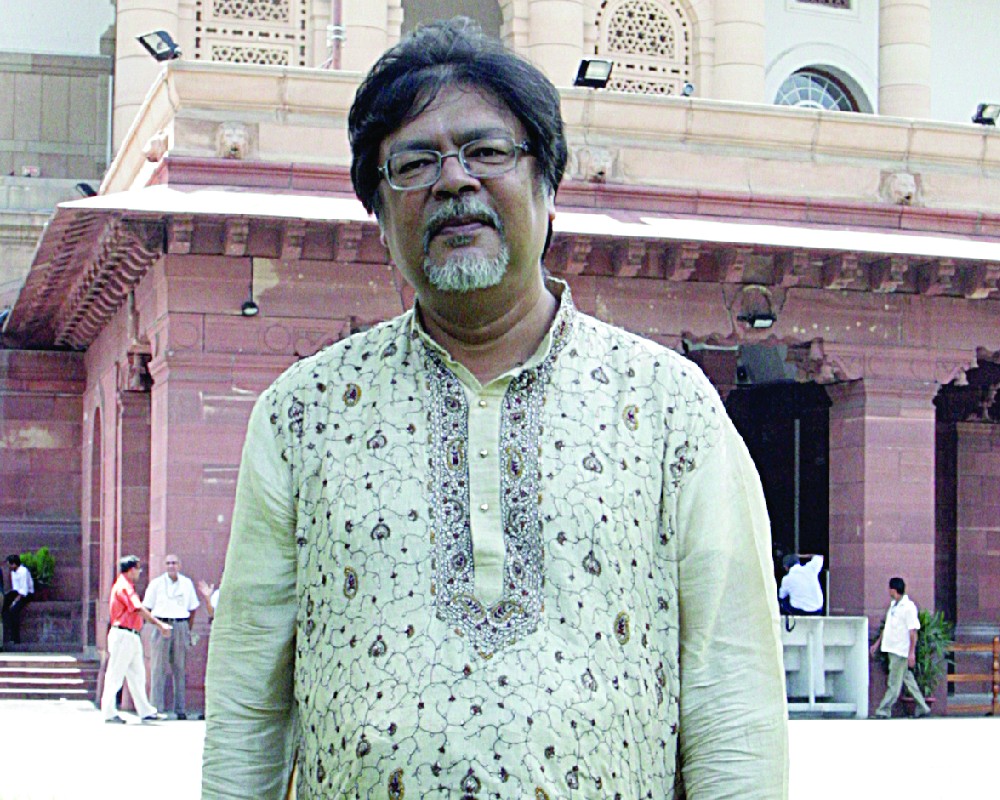
As I sit down to pen this tribute (my first column after his demise) on the occasion of Chandan Mitra’s birth anniversary, my thoughts drift back to the man who shaped not just Indian journalism but also impacted the lives of countless journalists like me. Born on December 12, 1955, Chandan would have turned 70 this year, a milestone that feels both poignant and unreal in his absence. He left us on September 1, 2021, at the age of 66, but his legacy endures like the enduring ink of a well-crafted editorial.
My association with Chandan Da was both as a columnist with The Pioneer, where he served as the Editor and Managing Director for many years and as General Secretary of the Indian Media Centre (IMC), an organisation focused on media training and skill upgradation, led by him as Chairman. There, we collaborated on initiatives aimed at strengthening grassroots journalism, a cause close to both our hearts.
Chandan’s journey into journalism was nothing short of illustrious, marked by academic excellence and a relentless pursuit of truth. A product of Kolkata’s La Martiniere School, he went on to graduate from St Stephen’s College, Delhi University, before earning a Master’s and a DPhil from Oxford University. His scholarly background infused his journalism with depth and rigor, setting him apart in an era when reporting often prioritized speed over substance.
Starting his career at The Statesman in Kolkata, Chandan quickly rose through the ranks, moving to The Times of India in Delhi and then to the Hindustan Times, where he served as Executive Editor. But it was at The Pioneer, which he joined in 1993 and eventually led as editor and managing director, that he truly left his mark. Under his stewardship, The Pioneer transformed from a regional newspaper into a national voice known for its bold editorials, investigative reporting, and commitment to ethical journalism.
As a senior journalist with experience in broadcast and print media, I had contributed to various outlets, but writing for The Pioneer under Chandan’s guidance was a defining phase. He had a knack for spotting potential in young and mid-career journalists, encouraging us to push boundaries while maintaining journalistic integrity. I remember submitting columns on socio-political issues, and Chandan would often call me personally to discuss nuances — sometimes challenging my views, other times refining them with his sharp insights. His feedback was never condescending; it was always aimed at elevating the discourse.
In an industry often marred by sensationalism, Chandan championed balanced reporting, reminding us that journalism’s true power lies in informing, not inflaming. Our collaboration extended beyond The Pioneer to the Indian Media Center initiatives, particularly through events and programs at IIMC, where I later served as Director General. IIMC, with its focus on training and skill upgradation for aspiring journalists, especially from grassroots levels, aligned perfectly with Chandan’s vision for a more inclusive media ecosystem.
He was a frequent panelist and guest at IIMC events, sharing his experiences on topics ranging from the evolution of Indian language journalism to the challenges of digital media. One memorable occasion was a panel discussion on journalism ethics, where Chandan delved into how media could empower rural and underserved communities. He emphasized the need for skill-building programs that went beyond urban elites, advocating for training modules that equipped journalists from small towns with tools for investigative reporting and multimedia storytelling. Often me and IMC Founder and veteran journalist late Shyam Khosla would admire the manner in which Chandan, unlike people of his stature and with hectic work schedules, would spend days together at our meetings in Chandigarh and other cities discussing how to empower content wise and technologically the journalists working in small towns and districts.
Chandan’s commitment to grassroots journalism was not mere rhetoric; it was action-oriented. At The Pioneer, he initiated coverage of underreported stories from India’s hinterlands, giving voice to issues like rural development, tribal rights, and local governance. This approach resonated with the ethos of IMC’s training programs, which aim to bridge the gap between metropolitan media and regional realities. He was also a passionate advocate for the soft power of Indian cinema, and was amongst the first to dedicate space in any mainstream newspaper to discussions linked to the industry. During our joint sessions, we discussed strategies to integrate digital literacy into journalism curricula, recognizing that the rise of social media demanded new skills for fact-checking and ethical online reporting. Chandan often shared anecdotes from his early days, illustrating how grassroots stories could influence national policy. He whole heartedly supported our demand for a National Register for Working Journalists, expanding the scope of Press Council of India to a wider Media Council of India and giving the ombudsman more teeth to enforce its mandate and fixing a minimum qualification for scribes. Later, as Vice Chancellor of Makhanlal Chaturvedi National University of Journalism and Communication, Bhopal, I tried to take forward Chandan’s dream by facilitating meetings between a high level delegation of Press Council of India led by Prof J S Rajput with local journalists and media educators for determining a minimum qualification for journalists in the backdrop of untrained and so called Citizen Journalists peddling fake news, misinformation and disinformation and thereby causing incalculable damage to the credibility of mainstream media.
Beyond his professional acumen, Chandan was a multifaceted personality—a politician, historian, and cultural enthusiast. Nominated to the Rajya Sabha twice by the Bharatiya Janata Party (BJP) in 2003 and 2010, he later joined the Trinamool Congress (TMC) in 2018. His political journey reflected his ideological flexibility and deep understanding of India’s diverse socio-political fabric. As a parliamentarian, he contributed to debates on media freedom, education, and cultural heritage, often drawing from his journalistic roots. I recall him speaking passionately about preserving India’s linguistic diversity in journalism, a theme that echoed in our IIMC collaborations. He was very supportive when I introduced Marathi, Malayalam, Urdu and Sanskrit courses at the Institute.
On a personal level, Chandan was warm, witty, and incredibly generous with his time. Despite his busy schedule, he mentored many, including me, during transitional phases in our careers. When I moved from active journalism to media education, Chandan was one of the first to encourage me, saying, “Suresh, teaching the next generation is the ultimate form of journalism — it’s about passing the torch.” His words stuck with me as I took on roles at IIMC and later at institutions like IIMC and Apeejay Institute of Mass Communication. He believed that journalism wasn’t just a profession but a public service, and his life exemplified that. Chandan’s impact on Indian media is immeasurable. He revived The Pioneer during turbulent times, expanding its reach and introducing innovative formats that blended print with emerging digital trends. His editorials were incisive, often critiquing power structures while advocating for democratic values. In fact, I vividly remember him telling me that financially managing a newspaper was a huge challenge and he was never interested in becoming a proprietor “but circumstances, the prospects of my journalist and non journalist colleagues losing their jobs, prompted me to take up this challenge.”
In politics, he bridged the gap between media and governance, using his platform to highlight issues like press freedom and cultural preservation. Tributes poured in after his passing, from Prime Minister Narendra Modi to fellow journalists, underscoring his role in nurturing young talent. The Rajya Sabha even paid homage to him in November 2021, recognizing his contributions as a former MP and Editor.
In the context of grassroots journalism, Chandan’s work at The Pioneer and his engagements with training bodies like IMC were pioneering. He supported programs that trained journalists in regional languages, ensuring that stories from India’s villages reached national audiences. Today, as media faces challenges from misinformation and digital disruption, his emphasis on skill upgradation feels more relevant than ever. I often reflect on our discussions about integrating technology into journalism education — ideas that have influenced modern curricula at institutions across India. As we mark this anniversary, I am reminded of Chandan’s enduring spirit. He was a man of many seasons: journalist, politician, scholar, and above all, a humanist.
His death snapped long-standing friendships, as noted by colleagues like Swapan Dasgupta, who remembered their bond dating back to 1966. For me, Chandan was a guiding light in a profession that demands both courage and compassion. His initiatives at the Indian Media Center — through panels, workshops, and advocacy — helped democratize journalism. In closing, Chandan Mitra’s legacy is not confined to headlines or parliamentary records; it lives in the journalists he inspired, the stories he amplified, and the institutions he strengthened. On this day, I raise a silent toast to my friend and mentor. May his vision for a vibrant, ethical, and inclusive media continue to guide us. Rest in peace, Chandan — you are missed, but never forgotten.
The author is Director, India Habitat Centre; views are personal