Recalibrating communication for the Global South
India can help build it by placing the orange economy, educational leadership, media exchange and digital cooperation at the centre of its engagement. The objective is not simply to improve how the Global South is seen
The Global South does not suffer from a shortage of stories. It suffers from a shortage of control over how those stories are framed, circulated and remembered. Its countries are home to most of the world’s population, some of its youngest societies, fastest-growing markets, oldest knowledge systems and most inventive responses to scarcity, climate stress, digital exclusion and social inequality. Yet much of the world still encounters the Global South through a narrow lens: conflict, poverty, instability, aid, extraction or delayed development. This is not merely a problem of image. It is a problem of power.
Communication shapes which experiences become universal, which institutions are treated as credible and which countries are seen as sources of ideas rather than recipients of them. For decades, the Global South has participated in an international communication order whose principal platforms, standards, narratives and gatekeepers were located elsewhere. Its societies have been represented, interpreted and often simplified before being heard directly. That order is no longer adequate.
The Global South now needs a communication strategy built around centrality. It must move from reacting to global conversations to setting them. It must stop appearing only as a subject of development and begin speaking as an author of the future. For India, this is both an opportunity and a responsibility.
India’s role cannot be confined to amplifying diplomatic messaging or promoting national achievements. It can help build a wider communication architecture through which the countries of the Global South exchange knowledge, circulate culture, shape policy language and develop direct relationships with one another.
At the heart of this effort should be the orange economy. The orange economy brings together culture, creativity, technology, intellectual property, design, media, entertainment, heritage, fashion, animation, gaming, publishing and digital content. It recognises that ideas and cultural expression are not decorative additions to economic life. They create employment, shape identity, influence aspiration and build international visibility.
India’s recent public communication increasingly reflects this understanding. The country presents itself not only through diplomacy, infrastructure, trade and technology, but also through cinema, crafts, music, cuisine, design, digital storytelling, creative entrepreneurship and civilisational knowledge. This shift matters because communication is most effective when audiences do not experience it as a communication policy. They experience it as culture.
For too long, culture has been treated as soft power in the weakest sense of the term, something attractive but secondary. In reality, creative industries are central to how countries become visible and memorable. The nations that shape global imagination do so not only through military or economic influence, but through stories, images, language, design and platforms. The Global South already produces extraordinary cultural work. Its weakness lies in circulation. Creators struggle with translation, financing, copyright protection, discoverability and access to regional markets.
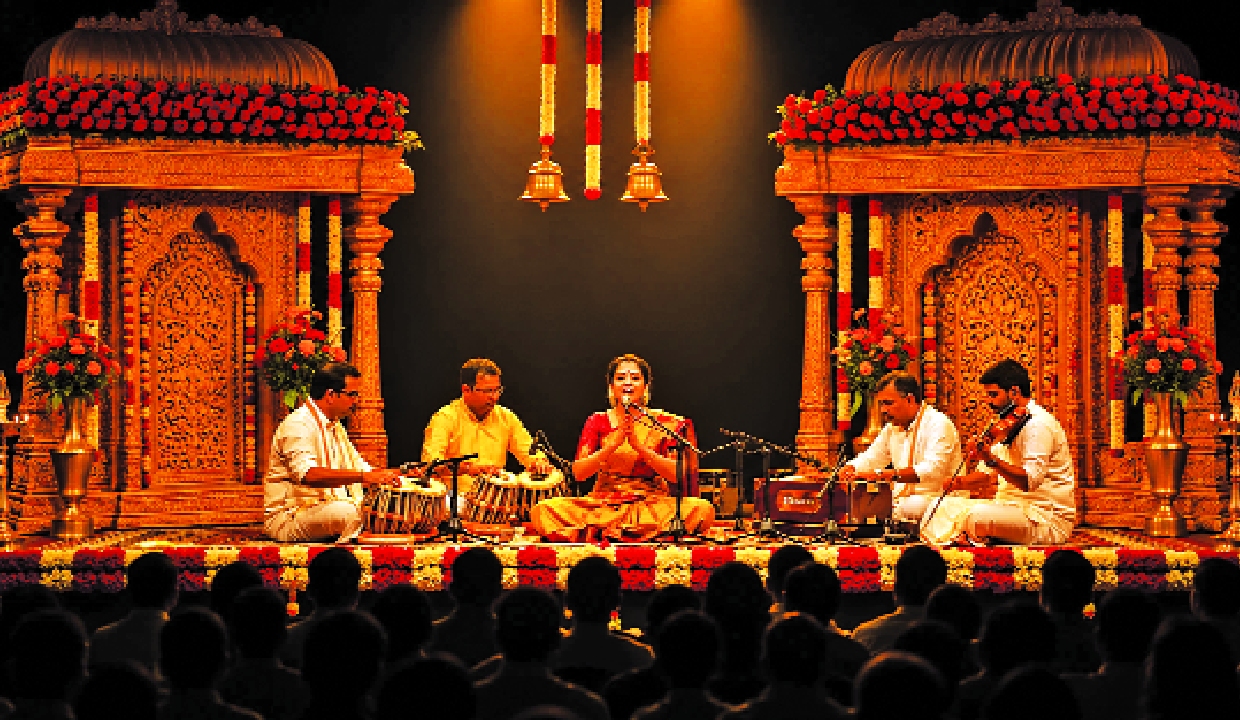
India can propose a network for creative exchange that goes beyond ceremonial festivals. It could support film and documentary co-productions, translation funds, digital archives, publishing partnerships, creator residencies, animation collaborations, gaming exchanges and common platforms for cultural content.
The aim should not be to produce propaganda or a uniform Global South identity. The South is too diverse for that. The aim should be to allow its societies to encounter one another without always passing through external filters. This requires direct communication networks. At present, news about one country of the South often reaches another through institutions based in Europe or North America. Research produced in Africa may become visible in Asia only after recognition by a Western university or journal. A policy innovation in Latin America may remain unknown in South Asia. Cultural products often become internationally valuable only after endorsement by global festivals, streaming platforms or award systems located elsewhere.
This indirect model keeps the Global South on the sidelines of its own story. India can help create a communication framework with four connected pillars: culture, knowledge, media and technology. The cultural pillar should focus on the orange economy. It should link filmmakers, writers, designers, musicians, game developers, publishers, museums, heritage institutions and digital creators across the South.
The knowledge pillar should connect universities, think tanks and research institutions. India’s educational leadership can be especially important here. Scholarships and training programmes remain valuable, but they are not enough. The deeper need is for a Global South knowledge common: shared digital libraries, multilingual courses, collaborative research networks and accessible repositories of public-policy experience.
The media pillar should support direct reporting among countries of the South. Journalist exchanges, regional news partnerships and multilingual editorial networks can reduce dependence on second-hand interpretation. The technology pillar should strengthen translation, distribution and discoverability. Artificial intelligence can lower language barriers, but technology must serve cultural context rather than flatten it. India’s greatest advantage is not that it has solved every communication challenge. It has not. Its advantage is that it contains many of the tensions the Global South must manage: scale and diversity, tradition and modernity, local languages and global platforms, public institutions and private creativity, democratic debate and strategic messaging. This gives India the ability to act as a convener rather than a lecturer. Its communication strategy for the Global South should therefore avoid paternalism. India should not claim to speak for a large and varied group of countries. It should build platforms on which those countries speak directly, equally and repeatedly.
Global South communication cannot become another exercise in official declarations. It must involve universities, creators, entrepreneurs, students, journalists, teachers, researchers and local communities. Governments can create the architecture, but they should not monopolise the voice. Much official communication across the Global South remains formal, defensive and overloaded with institutional language.
The Global South must also stop communicating through the language of catching up. Its societies are not moving towards a future already perfected elsewhere. They are producing different futures: affordable digital systems, frugal innovation, multilingual education, community-led climate solutions, public technology at scale and new creative markets. These are not regional exceptions. They are global ideas. The Global South does not need a louder version of the old communication order. It needs a different one: more direct, multilingual, creative, networked and confident. India can help build it by placing the orange economy, educational leadership, media exchange and digital cooperation at the centre of its engagement. The objective is not simply to improve how the Global South is seen. It is to change who gets to define what is worth seeing. The South must no longer wait to be invited into the main story. It must build the stage, create the language and draw the map itself.
The technology pillar should strengthen translation, distribution and discoverability. Artificial intelligence can lower language barriers, but technology must serve cultural context rather than flatten it. Human editors, translators, researchers and creators will remain essential
The author is a Commentator and Writer on Cinema, Branding, Media Management and Geo-Strategic Communication. Inputs provided by Zoya Ahmad and Vaishnavie Srinivasan; Views presented are personal.