PRAHAAR: Thunderbolt strike on terrorism
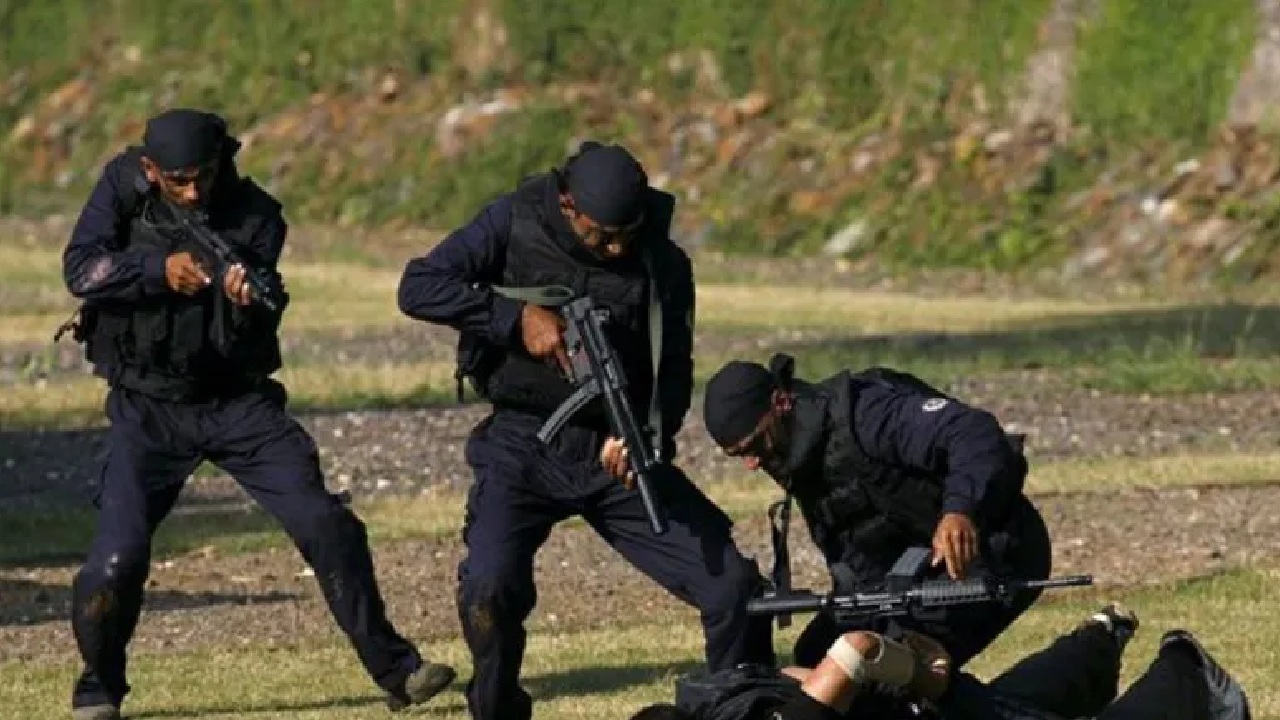
In a significant decision with major implications for India’s overall approach to national security, the Ministry of Home Affairs strengthened its ‘zero tolerance policy’ against terrorism by unveiling ‘PRAHAAR’ (Policy for Response Against Hostile Activities and Radicalism). It is India’s first comprehensive national counter-terrorism policy and strategy envisioning a ‘whole-of-government’ approach to dismantle the terror ecosystem. Prahaar literally means a thunderbolt strike against terrorism. It is the first policy document released by the largest democracy on the planet in its 77 years of existence and evolving continuous battle against the menace of terrorism in all its manifestations.
The strategy reflects the mature, evolved policy orientation, emphasising targeting technological threats like misuse of drones, crypto wallets, the dark web and encrypted messages for terror funding and recruitment. It further prioritises security of critical infrastructure and comes heavily on disruption of terror networks by cutting off access to funds and weapons for terrorists. The strategy aptly focuses on integration of the legal framework, ably strengthening the anti-terror mechanism of India that has evolved over seven decades, addressing the 21st-century threat profile, aptly summarised through its core seven pillars as:
- P - Prevention: Intelligence-led disruption of violence across land, air, and sea. It prioritises intelligence gathering via the Multi-Agency Centre (MAC) and Joint Task Force on Intelligence (JTFI).
- R - Response: Ensures swift, proportionate action through a tiered architecture involving local police (first responders), state special forces, and the National Security Guard (NSG) as the nodal strike force.
- A - Aggregating Internal Capacities: Modernises security forces with advanced technology (AI/ML-driven analytics) and weaponry while standardising training across states.
- H - Human Rights & Rule of Law: Anchors operations within constitutional frameworks, using the Unlawful Activities (Prevention) Act (UAPA) and new criminal laws (Bharatiya Nyaya Sanhita) as primary legal tools.
- A - Attenuating Conditions: Focuses on counter-radicalisation through community engagement, youth outreach, and prison programmes to address poverty and unemployment exploited by extremists.
- A - Aligning International Efforts: Strengthens global cooperation through extradition treaties, Mutual Legal Assistance Treaties (MLATs), and pushing for UN terrorist designations.
- R - Recovery & Resilience: Adopts a "whole-of-society" approach, involving doctors, psychologists, and NGOs to reintegrate affected communities and promote faster recovery.
The strategy document is not mere jargon but a reflection of India’s vast experience of handling the menace of terrorism since 1947, underscoring the genuine intent of the government to transform the anti-terror mechanism through an able policy framework backed by budgetary allocation.
Before declaring this policy, the Ministry of Home Affairs strengthened internal security through reforms including newly enacted criminal laws, technology-enabled justice mechanisms, and police modernisation backed by budgetary support - transforming the khaki into a smart force. Proactive capability was enhanced through data integration via the Multi-Agency Centre (MAC), enabling real-time intelligence sharing with privacy safeguards. While MAC acts as the integrator, NATGRID powers seamless coordination through systems like GANDIVA,
reinforcing neural transformation and strengthening India’s proactive anti-terror mechanism across states and UTs through effective state-centre synergy.
What has changed?
India, which was once tagged as a ‘soft state’ after the 26/11 terror strike, has seen qualitative transformation in its anti-terror mechanism characterised by intelligence-based prevention, pre-empting threats coupled with real-time data sharing. It further highlights Indian capabilities of going beyond neutralising terrorists to dismantling their ecosystems and lifeblood like finances and logistics. While doing so, the Ministry of Home Affairs is aptly addressing modern hybrid threats such as drone-based smuggling, cyber radicalisation, crypto wallet funding and potential use of CBRNED (chemical, biological, radiological, nuclear, explosive and digital) materials.
The comprehensive vision of the Home Minister to strengthen state as well as central entities’ capabilities through cooperative federalism has reinforced state police capabilities and today they are more than just a ‘law and order’ machinery — equipped with state-of-the-art surveillance infrastructure, modern communication, speedy transport and modern armament.
The budgetary allocation of `4,846 crore from 2021 to 2026 for modernisation of police highlights the government’s intent. These reforms have enabled surveillance sovereignty and ended international vetting, prioritising fait accompli over diplomatic requests and sanctions. Backed by a stringent legal framework and advanced forensic capabilities, this transformation has strengthened inter-agency coordination, bringing local police and elite units like NSG into synchrony — a decisive feature of anti-terror operations.
India as a global leader
The Indian anti-terror mechanism evolved across decades, and the recent transformation and decisive success achieved against the menace of terrorism in various facets makes India a dependable partner to collaborate with.
India’s counter-terror cooperation includes Joint Working Groups with 26 countries and MLATs with 50 countries. Its leadership in multilateral forums - BIMSTEC, QUAD, ASEAN, SCO, BRICS and G20 - reflects growing credibility. The policy signals firm intent to lead the global war on terror by holding both terrorists and their sponsors equally responsible.
Post Op Sindoor, doctrinal change established the principle that any future terror attack will be treated as an act of war - clarifying policy directives from ambiguous sub-conventional and conventional aggressions formalised in PRAHAAR.
Through global cooperation and policy push via the Comprehensive Convention on International Terrorism (CCIT) at the UN, India is pushing for universal standards.
The new policy document provides a roadmap envisioning a terror-free India through structural and geopolitical shift by 2030 and beyond.
The new CT strategy outlined by the MHA is distilled into four prominent force multipliers transforming national security DNA:
- Neural Transformation — predictive intelligence through technology integration.
- Kinetic Transformation — developing offensive non-contact lethality without boots on the ground.
- Legal Transformation — enabling smart police into trial-ready policing.
- Social Transformation — de-weaponising minds, moving away from a ‘one size fits all’ prison approach to graded response through de-radicalisation centres and proactive cyber capabilities.
India’s transformation from a defensive shield into a precision scalpel capable of removing the menace of terrorism with surgical accuracy — while the rest of the country continues to function normally — defines its decisive capabilities.
The ongoing Operation Sindoor is the direct military expression of this strategic shift formalised in the Prahaar strategy, serving as field validation of India’s move from reactive restraint to deterrence by punishment.
The globally acknowledged Operation Sindoor and its battlefield verdict proved India’s ‘zero tolerance’ policy is now active and an operational reality. It showcased India’s evolution from being a ‘soft target’ nation seeking global sympathy to a ‘proactive hunter’ who enforces an immediate and high-tech price for any hostility — aptly named ‘Prahaar’, the thunderbolt strike ending the era of ‘strategic restraint’ and paving the rise of ‘predictive lethality’.
The Author is a distinguished scholar of security studies and former Indian diplomat to Australia; views are personal