Politically incorrect: Why ‘jungle raj’ is a misnomer
The term “jungle raj” has become a common political shorthand, hurled to describe a state or region suffering from poor governance, lawlessness, and administrative collapse. In the often-used phrase “jungle raj” in arguments about governance, “jungle” is used to mean a disorderly entity suffering from “anarchy”.
The phrase “jungle raj” was not coined by a politician. It reportedly originated as an oral observation in 1997 by a judge in a Patna court, who used it out of frustration over poor civic conditions. It was used during the hearing of a contempt case regarding severe civic mismanagement, specifically a poor drainage system and waterlogging. The judge remarked that the situation was “worse than jungle raj” and related it to blatant dereliction of duty by top bureaucrats. Politicians, for obvious reasons, lost no time in seizing upon the phrase. Stripping it of its original context (civic collapse), they weaponised it as a powerful political statement. It was used to characterise alleged lawlessness and a breakdown of order. As a catchy slogan, it has been popularised and has become an enduring political metaphor.
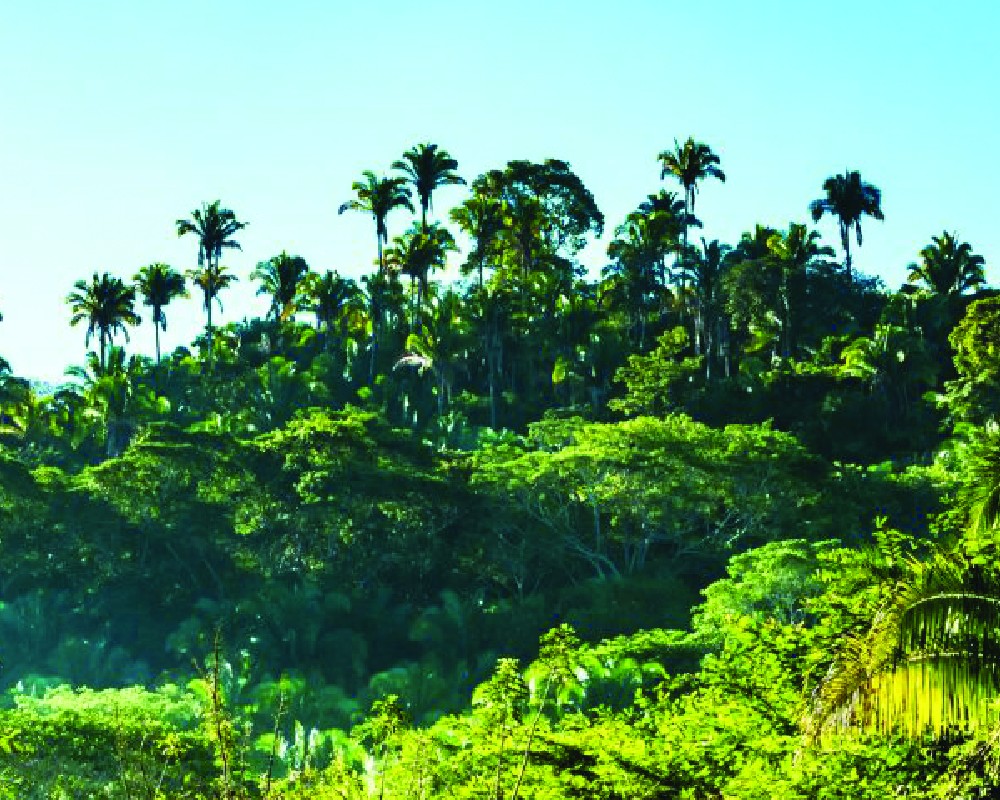
By the phrase “jungle raj”, people envision a place of violence and chaos where only brute force - the so-called “law of the jungle” — determines power. In sharp contrast, however, a “jungle” — a natural forest — is arguably the most systematically ordered space on Earth. Its survival and thriving are not accidental; they are governed by incredibly complex and invisible “rules” that ensure ecological balance. A jungle is an amazingly dense yet neatly woven network of interdependence. Below the ground exists a remarkable system that binds every microorganism to sustain soil health. Trees rely on soil rich in microorganisms, including fungi (mycorrhizae), for nutrients; herbivores rely on flora; and carnivores keep herbivore populations stable. Every species has a defined niche and a specific role to play in the system.
In a jungle or forest, cooperation for resource management far surpasses human planning. Resources such as space, sunlight, water, and nutrients are not seized randomly; they are efficiently partitioned among root systems, different canopy layers, and species to optimise energy utilisation across the entire community. The system is inherently sustainable — its systems and users are arranged so that virtually every resource is recycled, producing no true waste. Use of existing resources is remarkably organised. For example, recordings from camera traps stationed at water holes reveal that animals of different species visit them at different times without disturbing others. Food is for survival, not for hoarding. Hunting is for food, not for pleasure or a show of strength.
Forest ecosystems operate on an almost precise form of inbuilt “accountability”. If carnivore populations over-hunt or herbivores over-graze, their food sources collapse and their populations decline. Similarly, when a particular species overbreeds in an area, predators from neighbouring regions move in to access the abundant prey, and numbers are naturally controlled. Thus, a brilliantly operating, self-correcting dynamic exists within the jungle.
Ecological succession is another example demonstrating that a forest ecosystem is not chaotic but instead represents a highly ordered and predictable process of transformation over time. It is fundamentally a well-ordered, sequential process in which one community of species gradually replaces another until a stable final climax community is reached. It is Nature’s orderly blueprint, driven seamlessly by complex rules of interaction and systematic resource management.
Primary succession begins in areas almost entirely devoid of vegetation and soil, such as land masses formed by volcanic eruptions or glacial retreat. This systematic, non-random process starts with the Pioneer Stage, where specialised organisms such as lichens and mosses colonise bare rock, chemically breaking it down and creating the first soil particles and organic matter. This foundational work paves the way for the Intermediate Stage, in which grasses and small shrubs take hold. The nascent soil is stabilised by fibrous roots, water retention increases, and richer nutrients accumulate.
The sequence then progresses towards the stable Climax Community, during which large trees and complex forests develop. This stage is characterised by a self-sustaining system that optimises resource use while maintaining long-term ecological equilibrium.
This progression clearly demonstrates how an orderly system of soil-creators precedes soil-stabilisers, with a disciplined movement towards the creation of the climax forest. The entire sequence follows Nature’s laws and establishes a stable, energy-efficient ecosystem that maximises biomass and ecological niches. It is driven by predictable competition for resources, determined by natural laws, demonstrating Nature’s systematic movement towards maximum stability unless disturbed by external agents such as humans. The “jungle raj”, which is a fair and naturally sustainable system operating in forests, is antithetical to poor governance in human societies and man-made organisations burdened with chaotic, unsustainable, and destructive management practices.
The introduction of invasive species by humans damages existing food webs and fuels forest degradation. Pollution and illegal poaching shatter population dynamics, resulting in the collapse of trophic levels. Humans intrude into forest areas and wildlife habitats, block natural corridors, disturb natural processes, and increase the potential for human-wildlife conflict. Disorder in natural systems today is the direct consequence of interference by the modern super-predator — human beings — who exhibit severely eroded eco-sanity and a disastrous tendency to dominate Nature, a rapidly growing global pathology.
Labelling poor governance characterised by lawlessness and anarchy as “jungle raj” is an insult to the remarkably efficient systems of forests, which are in fact Nature’s masterpiece. Depicting forests — models of complex, systematic order and sustainability — as chaotic and lawless reflects grave misunderstanding and ignorance. Given its ethical flaw and biological inaccuracy, it is time to discard the “jungle raj” fallacy, which perpetuates the false narrative that Nature lacks order.
A true jungle represents complex, self-sustaining order and sustainability. The phrase “jungle raj” must not be used to describe lawlessness, corrupt rule enforcement, administrative failure, or the collapse of justice and governance systems. One may instead use terms such as kushashan and refrain from insulting forests, which are among Nature’s most meticulously managed spaces.
A forest is a triumph of order, and the operational reality of Nature must not be misrepresented or maligned by using the phrase “jungle raj” as a political metaphor or otherwise.
The writers are former PCCFs, UP and Maharashtra; views are personal