Pent-up anger overthrows the ruling elite
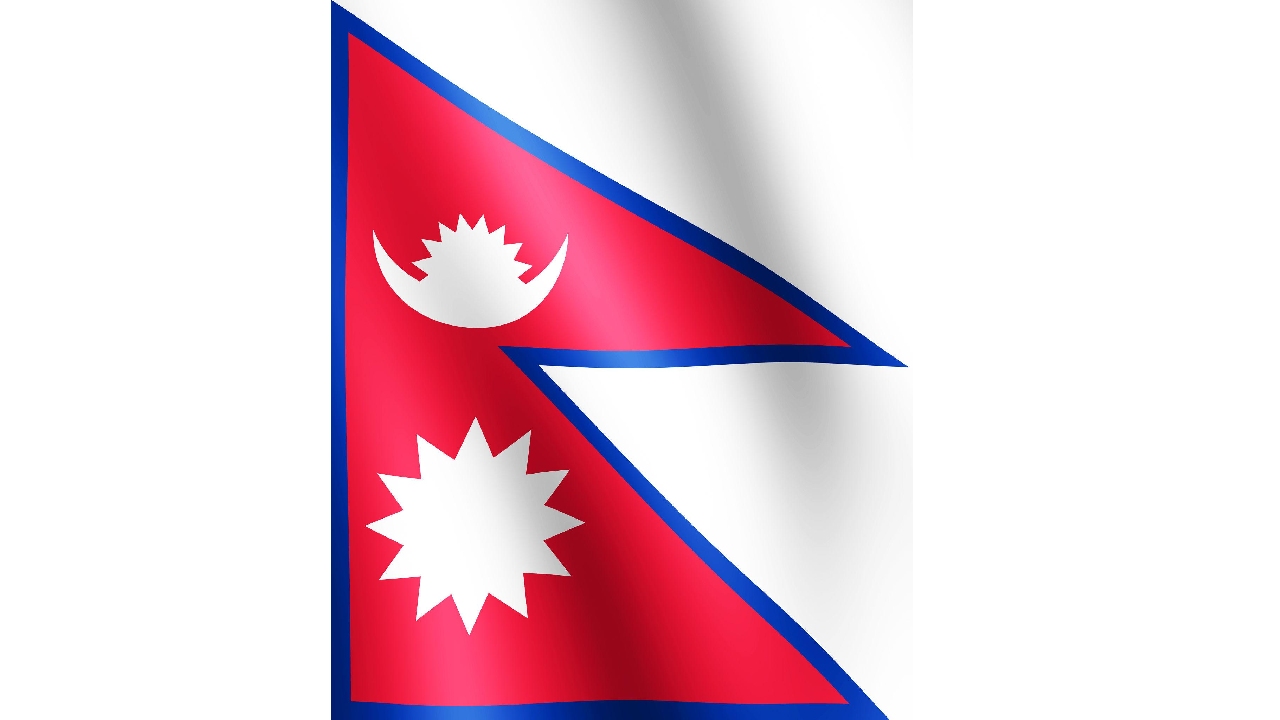
Nepal’s 2026 elections have produced a phenomenal democratic mandate. The Rastriya Swatantra Party (RSP), barely four years old, has secured a near two-thirds majority in Parliament, falling short by just two seats. Across the world, the result is being hailed as one of the most remarkable democratic shifts in Nepal’s contemporary politics. Many international observers and media outlets have described the result as a “Gen Z-led political wave.”
I disagree. The story of this mandate runs deeper than generational change. What we are witnessing is the culmination of decades of accumulated “rees” (anger) and “bethiti” (misgovernance) in Nepali society.
The peaceful conclusion of elections becomes even more significant when seen against the turbulence of the previous year. The events of March 26, 2025 and September 8-9, 2025 will go down as dark days in Nepal’s contemporary history. These days have exposed the fragility of democratic institutions, law and order, civic ethics in the media, and even the silence of observers. Violence, destruction of public and private property, fatalities, and excessive use of power revealed how fragile Nepal’s governance structure had become.
Yet the electorate responded not with despair, but with a decisive democratic verdict. The seeds of alternative politics and younger demographic representation sown in the 2022 General Elections bore fruit. Historic mayoral wins in Kathmandu, Dhangadhi, and Dharan, along with 21 parliamentary seats for RSP, set the stage for the 2026 elections.
The best analogy to understand Nepal’s current moment may lies in the country’s highest suspension bridge connecting Baglung and Parbat districts. A highly suspended bridge in a turbulent political system is a powerful metaphor to reflect on where Nepal stands today and the way forward.
Fragile stability amid chaos
Two decades of political transition following the end of the armed conflict were marked by unstable coalitions and the exchange of power among a handful of leaders. Accountability remained elusive. Across the country, polarisation deepened. Civil society and media engagement increasingly reflected political preferences rather than independent scrutiny of national challenges. Even the Nepali diaspora was not immune; party loyalties often shaped social cohesion abroad.
The development narrative became increasingly concentrated around Kathmandu and Pokhara, while cities such as Birgunj and Janakpur remained peripheral to the national conversation. Hopeful Balendra Shah will integrate these cities into Nepal’s mainstream development discourse.
Opportunities for quality education, employment, or entrepreneurship remained limited. At the same time, streets like Putalisadak and Dillibazar were filled with billboards of consultancies offering pathways abroad for study or work. The message to a generation was unmistakable: opportunity lay outside the country. Over time, anger accumulated silently. Social media became the principal outlet for frustration. Tolerance levels declined. Polarisation intensified. Those who did not vent their anger publicly often chose silence as their coping mechanism. But silence has consequences. Over the years, it has bred indifference to the pain of others.
The unrest witnessed in March and September 2025 was therefore not sudden. It was the eruption of pressures that had long been building beneath the surface. The immediate challenge before RSP is therefore not merely governance and policy implementation but restoring trust. Dialogue with political parties, civil society, and non-state actors will be essential. Consensus may not emerge on every issue, but rebuilding confidence in institutions is critical to move beyond the present sense of helplessness.
Nepal today lives with what might be described as fragile stability amid chaos. The system is functioning-but only barely. The bridge hangs; it does not stand. It suggests a political structure sustained by tension rather than trust. One wrong movement, and the entire structure could sway or snap.
Governance held together by external and domestic pressures
Nepal’s governance challenges can be viewed through three lenses: geostrategic, domestic, and institutional.Geostrategically, Nepal has long navigated a delicate balance among major powers. Located between India and China, the country historically followed the metaphor articulated by King Prithvi Narayan Shah - Nepal as a “yam between two boulders.”
This framework allowed Nepal to maintain balanced relations with partners including India, China, the United States, Japan, Australia, and the European Union.
Recent discourse, however, increasingly frames Nepal’s diplomacy as balancing simultaneously among China, India, and the United States. Such framing overlooks historical realities. Nepal’s deepest economic and social linkages remain intertwined with its immediate neighbourhood. Even Chinese strategic thinking dating back to Mao Zedong acknowledged that India-Nepal relations would naturally remain deeper because of civilizational and societal ties.
Maintaining this equilibrium remains central to Nepal’s strategic autonomy. The height magnifies fear. Every step matters. In politics, this mirrors leadership choices where a misstep doesn’t just bruise, it can trigger collapse, unrest, or legitimacy loss.
Political self-goals and the rise of RSP
The rise of RSP was also facilitated by the failures of established political parties.
The Nepali Congress, historically central to Nepal’s democratic movement, struggled with internal fissures and leadership crises. By the end of 2025, generational tensions weakened the party significantly.
This decline is striking given the party’s historic role. Leaders such as Matrika Prasad Koirala once maintained deep political connections across the region, even briefly presiding over the Bihar unit of the Indian National Congress during India’s freedom struggle.Such political capital gradually eroded. Many loyal supporters simply chose not to vote.
Meanwhile, the Communist Party of Nepal (Unified Marxist-Leninist) faced declining popularity under K. P. Sharma Oli. His familiar nationalist rhetoric, often framed through anti-India sentiment, no longer resonated strongly with voters.
Oli’s revival of engagement with China’s Belt and Road Initiative through a new cooperation framework generated symbolic headlines but little political traction. His political friction with emerging leaders such as Rabi Lamichhane and Balendra Shah further reinforced the perception of disconnect between established leadership and public sentiment.
The handling of the 2025 unrests, in March and September including the controversial social media ban, ultimately triggered wider youth mobilization and intensified public frustration.
Institutions: the real test
Winning elections is easier than governing.The new leadership inherits institutions weakened by years of political interference and fragmented donor-driven reforms. Corruption allegations frequently dominate headlines but rarely lead to decisive outcomes.
The controversy surrounding Pokhara International Airport illustrates this problem. Reports of irregularities have circulated publicly, yet investigations remain inconclusive while the project continues to place financial pressure on the national exchequer.
Similarly, low capital expenditure has remained a recurring concern raised by international financial institutions. Administrative costs have increased even as development outcomes lag behind expectations.
Nepal’s federal structure adds another layer of complexity. Only a limited number of countries operate federal systems, most of them large and institutionally mature democracies. For a smaller state like Nepal, evaluating whether a two-tier or three-tier system ensures efficiency and accountability may become an important policy debate.
Suspension bridges rely on cables more than pillars. Politically, this can imply a state held up by institutions, personalities, foreign backing, or coercive power, rather than democratic foundations.
Transition, not destination
Nepal’s 2026 electoral moment represents a transition rather than a destination.A bridge exists to connect two sides, but crossing it can feel precarious. Those designing the bridge may feel secure, yet those walking across it feel exposed.This metaphor reflects the gap between political elites and ordinary citizens.Whether Nepal’s recent mandate becomes a milestone of democratic consolidation or merely another phase in its long political transition, will depend on how effectively the new leadership restores trust, strengthens institutions, and reconnects governance with the aspirations of its people.
(The writer is a Nepal Observer and a financial, geopolitical and security analyst.)