Peer-to-peer power trading in India: The road ahead
The Ministry of Power’s proposal to pilot peer-to-peer (P2P) electricity trading under the India Energy Stack (IES) has generated considerable excitement. Often compared to UPI’s transformation of digital payments, P2P electricity trading is being projected as a democratising reform that empowers consumers, accelerates rooftop solar adoption, and modernises power markets through digital infrastructure. Yet beneath this optimism lies a more grounded policy reality. Within India’s current electricity framework, P2P trading is not a market revolution but a carefully controlled experiment. Unlike liberalised retail electricity markets in parts of Europe or the United States, India operates under a regulated distribution structure. State distribution companies (DISCOMs) hold monopoly responsibility for retail supply, universal service obligations, and recovery of network costs. Retail tariffs are determined by State Electricity Regulatory Commissions (SERCs), not discovered through bilateral competition.
Accordingly, the P2P initiative is being positioned as a policy sandbox rather than structural reform. Its immediate objective is not retail competition, but digital validation-testing identity management, smart meter data exchange, interoperable APIs, price discovery tools, billing integration, and settlement systems within a controlled environment.
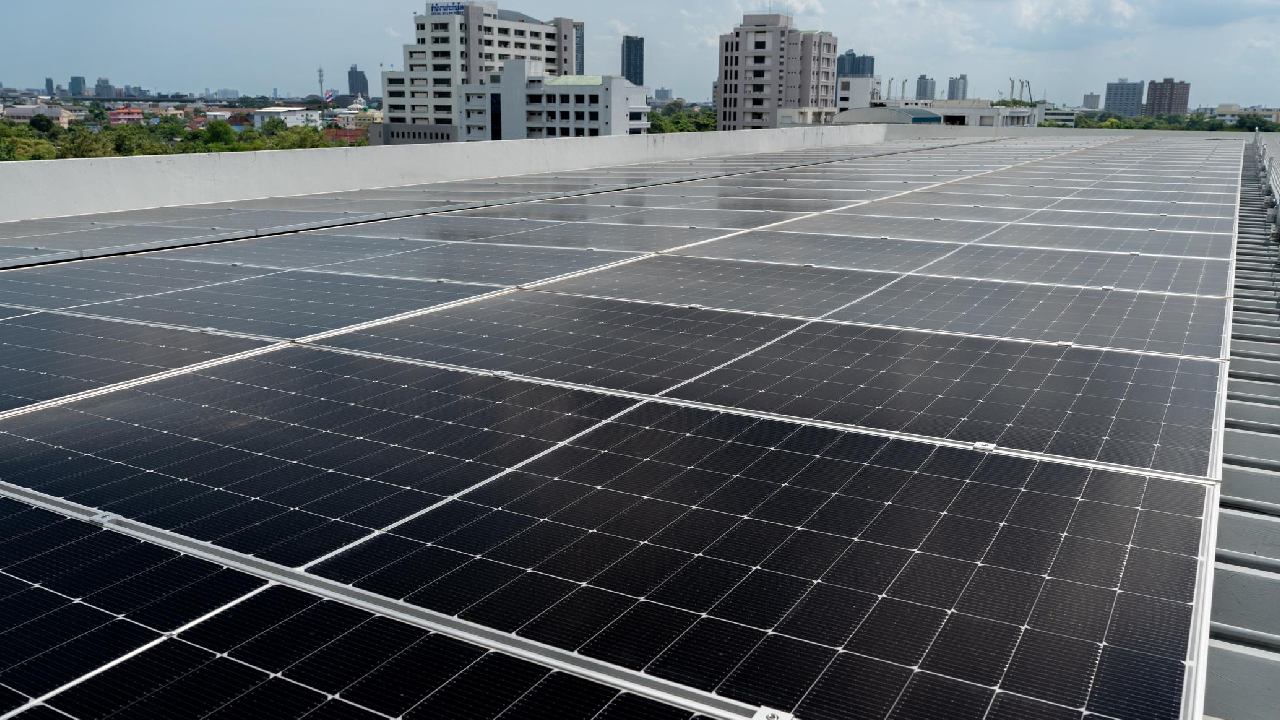
The pilot focuses primarily on rooftop solar prosumers-residential, commercial, and institutional consumers equipped with smart meters at distribution voltage levels. Participation is limited to small-scale injections within defined geographic boundaries. This design ensures retail tariffs remain unaffected, cross-subsidy mechanisms are preserved, DISCOM revenues are protected, and grid stability risks are minimised during experimentation.
Large generators connected to interstate transmission systems-thermal, hydro, and utility-scale renewables-are excluded. Operating under long-term power purchase agreements or exchange-based mechanisms regulated by CERC, their participation could distort price discovery and complicate balancing frameworks.
Similarly, large industrial consumers using open access are outside the current scope, as their inclusion would introduce complex questions around surcharge applicability, settlement integration, and tariff arbitrage.
The caution here is structural, not technological. India’s electricity market depends heavily on cross-subsidy, where industrial and commercial consumers pay higher tariffs to subsidise agricultural and low-income users. If high-paying consumers migrate towards negotiated P2P transactions without robust network usage and surcharge mechanisms, this architecture could weaken. Even limited participation raises a fundamental issue: who bears network costs when selective consumers transact outside traditional tariffs?
DISCOM finances heighten this sensitivity. Many utilities remain financially stressed and reliant on cross-subsidy revenues. Since P2P transactions would still use existing grid infrastructure, fixed costs must be transparently recovered. Otherwise, benefits may accrue to prosumers while network costs remain socialised.
Technical readiness is another constraint. Smart metering-essential for time-stamped settlement-remains uneven despite progress under the Revamped Distribution Sector Scheme. Reliable communication networks, high-frequency data exchange, and billing integration are prerequisites for scale.
Regulatory clarity is equally critical. India’s dual structure-CERC overseeing interstate markets and SERCs handling retail matters-creates potential overlaps. Expanded P2P trading could blur these boundaries, necessitating harmonisation of wheeling charges, surcharges, and accounting norms.
Even rooftop solar economics impose limits. Most residential systems generate modest surpluses during daytime hours, creating thin local markets. After accounting for network and transaction costs, gains over existing net-metering may remain marginal.
However, this does not diminish the initiative’s strategic value. P2P trading serves as a proving ground for the India Energy Stack-testing digital public infrastructure for electricity markets, building institutional familiarity with decentralised transactions, and strengthening regulatory capacity. The initiative signals innovation and digital readiness. But expectations must remain calibrated. Without deeper reforms-cost-reflective tariffs, rationalised cross-subsidies, DISCOM financial restructuring, and regulatory harmonisation-P2P trading cannot become a transformative retail model.
Electricity markets are shaped as much by policy and financial realities as by technology. Digital platforms may enable secure transactions, but they cannot substitute structural reform.
For now, peer-to-peer electricity trading should be viewed as an experimental overlay on a regulated system-valuable for learning rather than disruption. Its future impact will depend not on software alone, but on regulatory clarity, institutional confidence, and fiscal sustainability.
The writer is the Executive Director at IRADe and was the Chairman and Managing Director of PTC India Ltd; views are personal