Pahalgam: If we forget, we fail them
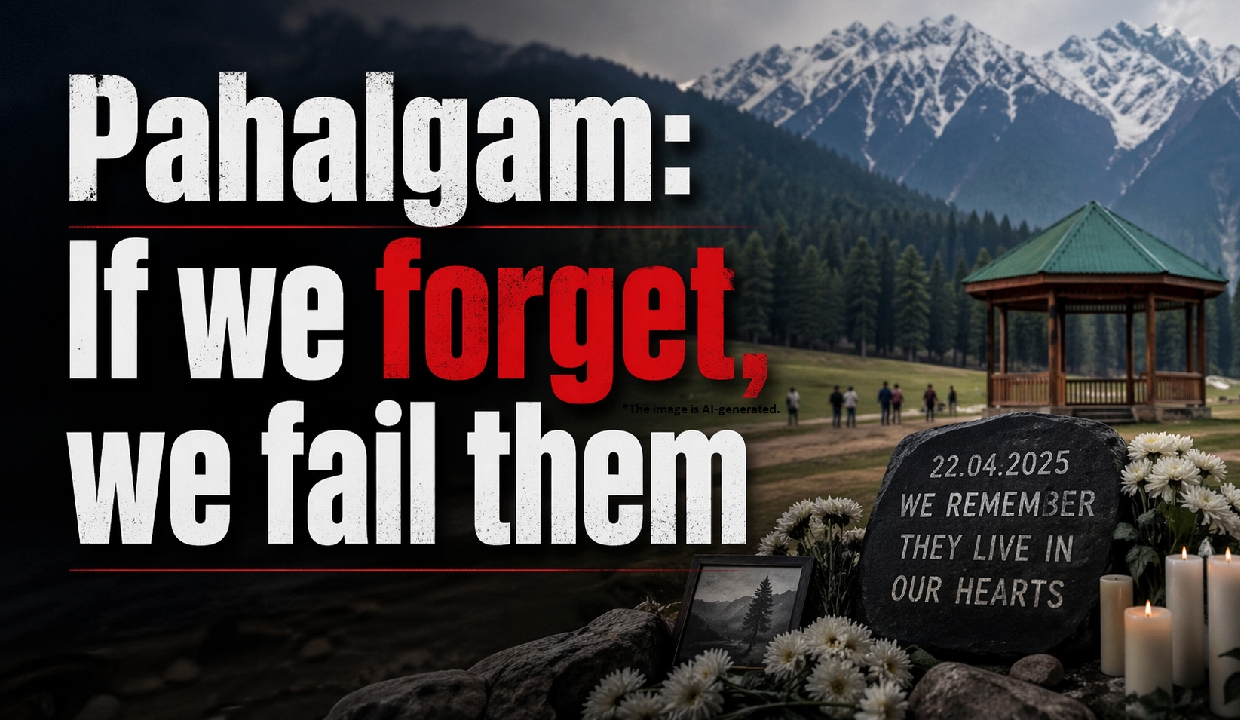
The anniversary is more than remembrance — it tests whether a nation can hold on to memory long enough to find meaning in it, and the resolve to act on it
It is a year since Pahalgam happened. The incident, where 22 innocents were massacred, shocked the nation and shamed humanity. On April 22, 2025, the illusion of peace in Kashmir’s Baisaran Valley was shattered as terrorists opened fire on tourists, killing 26 hapless civilians in one of the deadliest attacks in recent years. It was a brazen act, and the manner in which it was carried out was even more horrifying: victims were singled out, questioned, and executed at close range for their religion. They were not only out to terrorise people but to deliver a message to the Indian State — we are unstoppable and will have the last say, a challenge written in blood.
Now, one year on, that challenge still lingers. Have we moved on, normalised the incident, or has it shaped our resolve to eliminate such ruthless terrorists, each one of them? The answer is uncertain. The government and the Army have spoken unequivocally about eliminating it and taking concrete steps to prevent the recurrence of such horrific incidents. “They will never be forgotten,” the Prime Minister assured the nation, reaffirming a zero-tolerance approach to terrorism. The Army, too, has invoked resolve, pointing to retaliatory operations like Operation Sindoor as proof that the State remembers and responds. Operation Sindoor was swift and hard-hitting. Yet the scars it left are still bleeding in the memories of people who endured it.
Remembrance is not restricted to the state; it is all-pervasive, every Indian feels the pain. It lives in public consciousness, policy introspection, and honest accounting of what went wrong. If memory is reduced to ritual, it loses its purpose. It is not just about action in the aftermath but about preparedness — a preventive approach that deters perpetrators. The first lesson of Pahalgam is stark: complacency is costly. The attack exposed gaps in intelligence, surveillance, and threat anticipation, allowing militants to strike a crowded tourist zone. Even a year later, these lapses need to be plugged. If accountability is blurred, the cost is enormous.
The second lesson is more complex: terrorism in Kashmir is no longer just about terrorising people or claiming territory; it is about shaping a narrative of power. The attackers aimed to divide the society and instill a sense of fear, so no one dared to defy them. The response, therefore, must go beyond the military to include political, social, and psychological measures, ensuring such acts do not tear the social fabric.
And what of Pahalgam today? On the surface, there is a return to normalcy. Tourists have begun to trickle back, and systems like QR-based identification for workers have been introduced to tighten security. Yet beneath this recovery lies an uneasy truth: infrastructure remains strained, as seen in the under-resourced local hospital that still struggles a year after bearing the brunt of the tragedy. And for survivors, trauma lingers endlessly. India must invest in local infrastructure and ensure that security measures do not alienate the very communities they aim to protect. Pahalgam must not become just another day of remembrance. Such incidents stop bothering us after a while and that is the real danger!