Over 520 kanals of migrant land retrieved in Kashmir, 12,000 grievances logged
Over 520 kanals of land belonging to Kashmiri migrant property holders have been retrieved and secured under Superdari or handed over to the original owners between January and July 2026.
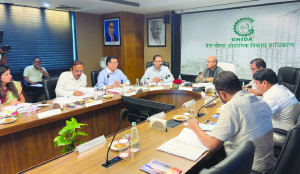
Chief Secretary Atal Duloo, who reviewed the quality and disposal of grievances lodged by Kashmiri migrant property holders across all ten districts of the Kashmir Division on Thursday, was informed that between January and July 2026, a total of 522 Kanals and 15.9 Marlas of migrant land were retrieved and secured under Superdari or handed over to the original owners.
Among the ten districts of Kashmir, Bandipora emerged as one of the leading districts with retrieval of 146 Kanals and 7 Marlas, followed by Baramulla with 82 Kanals and 10 Marlas, Kulgam with 80 Kanals and 0.5 Marlas, Ganderbal with 53 Kanals and Srinagar with 50 Kanals and 16.9 Marlas.
During the comprehensive review, the Chief Secretary was informed that the Online Migrant Grievance Portal (RRCM) has so far registered 12,223 complaints, covering various categories of violations, including 5,341 encroachment cases, 2,874 trespassing cases and 442 cases relating to record tampering. Of these, 10,038 cases have been closed by the District Magistrates, while 7,605 cases have received final approval through the RRCM mechanism.
The administration has also instituted an independent Telephonic Quality Verification mechanism through the office of the Divisional Commissioner, Kashmir, to assess the quality of disposal of cases shown as closed. Of the 4,918 applicants successfully contacted during the verification exercise, 4,605 expressed satisfaction with the disposal of their cases.
The remaining grievances have been flagged for further administrative scrutiny and necessary remediation.
The meeting was attended by Principal Secretary, Disaster Management, Relief, Rehabilitation & Reconstruction (DMRR&R), Chandraker Bharti; Secretary, Revenue; Divisional Commissioner, Kashmir; Deputy Commissioners; Relief Commissioner (Migrant), besides senior officers of other concerned departments.
The Chief Secretary directed the Divisional and District Administrations to ensure quality, thorough and time-bound disposal of every grievance, with particular emphasis on cases pending for long periods. He stressed that every complaint must be examined comprehensively and decided strictly on merit, ensuring satisfactory resolution for the concerned property owners.
Calling for greater use of technology in the management and protection of migrant properties, the Chief Secretary directed the remaining districts to expedite completion of geo-tagged inventories of migrant properties. He observed that comprehensive digital inventories would provide a reliable asset database and strengthen monitoring, protection and management of such properties.
The review also highlighted a series of institutional and technology-driven reforms introduced to improve transparency, monitoring and accountability. The districts of Baramulla, Ganderbal, Kulgam and Kupwara have completed geo-tagged digital inventories of migrant properties, providing a comprehensive technology-enabled mechanism for identification and monitoring of such assets.
The administration has further strengthened direct engagement with migrant property holders through grassroots outreach camps. Dedicated Additional Deputy Commissioners conducted extensive public outreach camps at Jammu during the first quarter of 2026, through which 1,878 complaints were received directly and 484 offline grievances were brought onto the unified digital platform.
The meeting was also apprised of the reforms introduced following the implementation of a revised Standard Operating Procedure (SOP) from October 2025, resulting in complete migration of the process to the e-Office platform.
The streamlined mechanism has enabled disposal of 129 complex alienation cases in the last 11 months, as against 6,258 cases processed during the preceding 28 years, reflecting a significant improvement in the efficiency and responsiveness of the system.