Opposition to Vande Mataram has little to do with faith
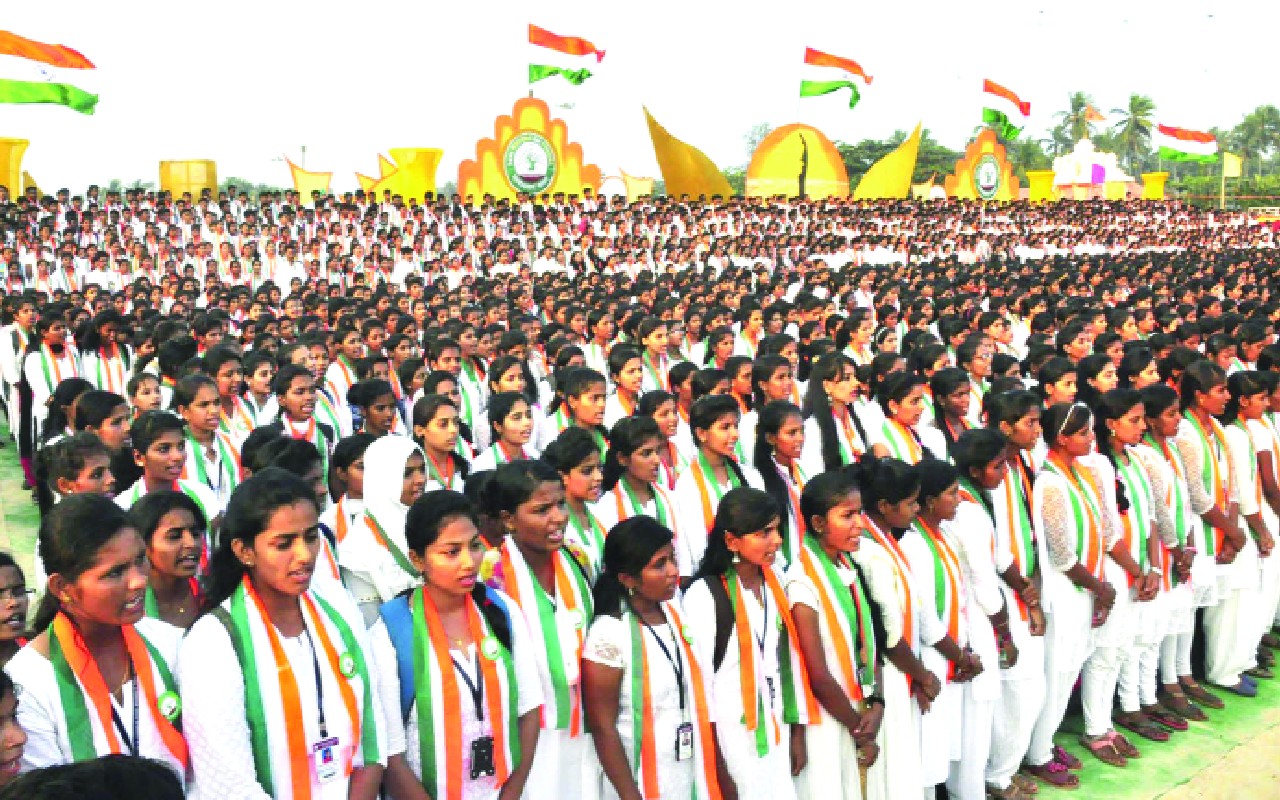
So, what should we make of the opposition against Vande Mataram, the song that the Constituent Assembly officially recognised as the National Song in 1950? Both the ‘secular’ camp — comprising left-liberals and parts of the Muslim leadership — have often claimed that singing it is ‘un-Islamic’.
In reality, these objections seem less about genuine Islamic theological concerns and more about a deep-seated hatred among certain segments of the Muslim elite in the subcontinent towards India’s non-Islamic civilisational roots. This inbuilt hostility, which contributed to the creation of Pakistan, continues to foster a divisive mindset that underpins the communal divide in the region.
Like organisations and individuals, ideas too evolve over time. Vande Mataram, undoubtedly, has its origins as part of a novel with anti-Muslim strands. But by the early twentieth century, it had moved decisively beyond the realm of literature to become one of the most powerful slogans of the national movement.
The Indian National Congress itself stands as a pedagogic illustration of such metamorphosis. Established in 1885 by Allan Octavian Hume — a retired officer of the British Indian Civil Service and an Englishman—the Congress was, at its inception, little more than a forum for constitutional petitioning within the imperial structure.
Yet, within a generation, and especially after 1920 under Gandhiji’s leadership, it reinvented itself into the principal architect of mass nationalism. Would it be intellectually honest to repudiate Congress on the grounds that its institutional genesis lay in a British initiative? If not, how does one justify the continued antagonism towards Vande Mataram by invoking its textual context?
During the independence struggle, Vande Mataram became a rallying cry for freedom fighters. In 1907, Madam Bhikaji Cama unfurled the first Indian tricolour abroad at Stuttgart, emblazoned with the words Vande Mataram.
The British administration attempted to suppress it. The song, however, became integral to the Congress’s political culture. Rabindranath Tagore first sang it at its 1896 Calcutta session, and in 1905 at Varanasi, the party formally adopted Vande Mataram for national occasions.
By the 1930s, Muslim leaders had started raising objections to the song on religious grounds. Remember, during 1920-30, many fissiparous tendencies, with overt and covert support from the British, were on the rise. In Tamil Nadu, an anti-North, anti-Hindi, and anti-Brahmin campaign was launched, which quickly transformed into an anti-Congress and pro-British movement in the name of ‘social justice’.
Muslim opposition to the Congress was not confined only to Vande Mataram. They, during those fateful years, opposed almost everything that embodied India’s rich and diverse civilisational spirit, aligning instead with the colonists alongside the Communists.
In this context, my previous column mentioned the Pirpur Committee Report. Since then, I have been contacted by some readers eager to know more about this nearly forgotten chapter of history.
Formally titled A Report of the Inquiry Committee Appointed by the Council of the All-India Muslim League, it was published in March 1938. Commonly known as the Pirpur Report, it was named after its chairman, Raja Muhammad Mehdi of Pirpur — a prominent and senior Muslim League leader from the United Provinces.
The Pirpur Committee accused the then Congress-run provincial governments of anti-Muslim and pro-Hindu biases. It implied that Hindus, Hindu communalism, and the Congress were all synonymous. It raised several issues, including the use of Hindi, the singing of Vande Mataram, and the right to “slaughter” cows.
The Congress, instead of opposing this divisive mindset, surrendered. In October 1937, the Congress Working Committee met in Calcutta and officially shortened Vande Mataram, choosing the abbreviated version as the national song. The Pirpur Report was used to strengthen the demand for Pakistan on the plea that Muslims could not get a fair deal in an independent India, likely to be ruled by a Hindu-dominated Congress. The report, in the present context, might well serve as a charge sheet against PM Modi. The allegations of ‘atrocities’ perpetuated against Muslims by the Congress listed in the report, and those used to paint Modi as ‘anti-Muslim’, are uncannily identical.
Barely a decade later, on June 3, 1947, the Congress agreed to the partition of India. Yet, one must ask: did these concessions cause any meaningful shift in the ideological outlook of a significant section of the Muslim community that remained in residual India?
We are repeatedly told that many Muslims rejected the Muslim League’s ‘Two-Nation Theory’ and chose residual India over Pakistan. If that is true, why does Vande Mataram — a song representing India’s civilisational ethos—still provoke resistance from parts of the very community that supposedly rejected that theory? The truth is that the demand for Pakistan was primarily driven by elite Muslims from Bihar, Uttar Pradesh, and Bengal — yet the vast majority of them chose not to migrate to the new nation they had strongly supported. Instead, they stayed in residual India, adopted khadi, and quickly joined the Congress. They changed their political identity without changing their mindset. Equally telling is the trajectory of Syed Ahmad Mehdi, son of the Raja of Pirpur and heir to the author of the infamous Pirpur Report. He later became a Member of Parliament (1957–62 and 1962–67) and eventually rose to the rank of Union Cabinet Minister. This single career arc captures a broader post-Partition pattern: those who had once legitimised the two-nation logic turned seamlessly into flag-bearers of India’s ‘secular’ politics.
How objection to Vande Mataram has less to do with Islamic theology and more to do with a longstanding hatred among sections of the subcontinent’s Muslims towards India’s pre-Islamic civilisational identity. A significant section of the Indian subcontinent’s Muslims continues to perceive Pakistan as a symbol of Islamic aspirations and religious identity.
However, this perception is deeply flawed. In practice, Pakistan has never been a genuine custodian of Islam or global Muslim concerns. On 22 June this year, the US bombed Iran. Most of the Islamic world (particularly subcontinent Muslims) were enraged over it, but not the Pakistani establishment. Indian subcontinent Muslims have generally expressed sympathy for Palestine and Iran.
Pakistan, however, endorsed the Israel-approved ‘Gaza Plan’, even as, amid US-backed Israeli airstrikes on Iran, Pakistan’s Army Chief Asim Munir was in Washington formulating a forward strategy with US President Donald Trump. Pakistan has a strategic association with China, a country known for working systematically to obliterate the Islamic identity of its Uyghur Muslim population and render it invisible in its homeland, the Xinjiang province. Usually, a state claiming to represent Islamic ethos and interests should have estranged relations with a nation indulging in the religious-cultural genocide of Muslims within its borders. But Pakistan not only keeps quiet over it, it is also happy to reduce itself to the status of China’s surrogate state.
What explains this contradiction? Pakistan’s love for Islam is easily overshadowed by its intrinsic contempt for its pre-Islamic traditions that are identified with residual India. PM Modi’s and Union Home Minister Amit Shah’s observation that the Congress’s 1937 compromise sowed the seeds of Partition is not just a rhetorical flourish but a historical fact.
The ideological pattern is clear: concessions made in the name of communal harmony neither satisfied separatist demands nor strengthened national unity. Instead, they emboldened the politics of veto, grievance, and rejection that eventually tore the subcontinent apart.
The writer is an eminent columnist and the author of ‘Tryst with Ayodhya: Decolonisation of India’ and ‘Narrative ka Mayajaal’; views are personal