New study lifts veil on hidden trauma in Muslim marriages
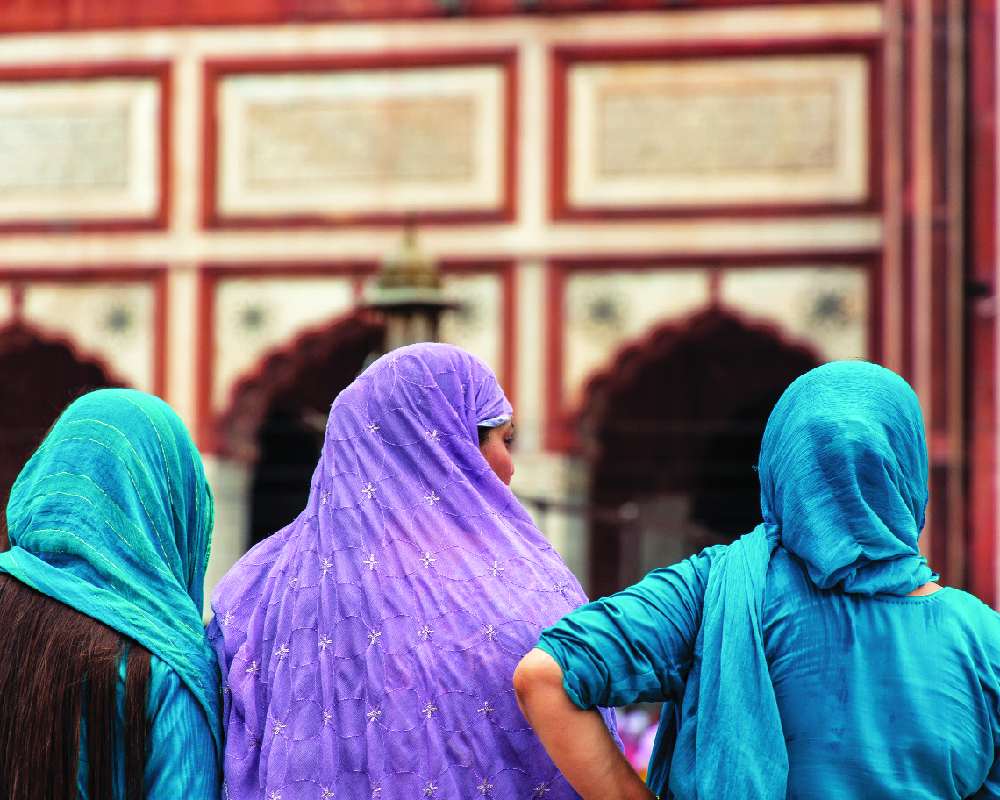
An overwhelming majority of married Muslim women in India are living in polygamous marriages, a recent study has shown. The survey, conducted across seven States, by the Bhartiya Muslim Mahila Andolan (BMMA), interviewed 2,508 women. The data compiled as a report Breaking silence -Lived reality of 2500 Muslim women in polygamous marriages shows 87 per cent of their husbands had two wives, 10 per cent had three wives and 3 per cent had four or more wives.
The report calls for immediate reforms in Muslim Family Law and underscores the dire need for banning polygamy among the Indian Muslims.
“Through detailed case studies and quantitative data, we have tried to go deep and understand the emotional, social and economic toll of polygamy and its impact on women’s health, relationships, dignity and rights. We have done this study to give voice to those who are silently suffering within the four walls of their home,” said Zakia Soman and Noorjehan Niaz, BMMA co-founders.
In the survey — in which senior activists from the Indian Muslims for Secular Democracy (IMSD) like Javed Anand and Feroze Mithiborwala also participated — almost all the 87 per cent of the victim women of polygamy rooted for the application of IPC 494 (bigamy) /BNSS 86 (cruelty” within the context of marriage-related offence) on polygamous Sunni Muslim men.
86 per cent want full codification of Muslim Personal Law with legal protection, transparency and accountability, Soman and Niaz added.
The survey found that the first and second wives in such marriages were aged from 31 to 50 years, 59 per cent had only secondary school education, with accompanying acute financial insecurity. 65 per cent of the first wives earned less than `5,000 per month, the rest had no income, and the second wives’ economic conditions were even worse.
As per the survey, the situation of the first wives was pitiable from the time of marriage - 84 per cent of them had no income, and later, 79 per cent of all the women had nil income, 61 per cent first wives and 32 pc second wives never received ‘Mehr’, and those who did, the amounts were as meagre as `786 (30 pc) and around `5,000 (43 per cent).
Against this, 32 per cent of the first wives coughed out dowry (between `50,000-`200,000), though the incidence of dowry was much lesser among the second wives, with the polygamy plague affecting an estimated 20 pc of the Sunni Muslims community, who account for 88 per cent of the total Islam followers in India.
Though 97 per cent of the surveyed women admitted that the formal consent (‘Qubool Hai’) for marriage was taken by the Qazi, 83 pc never read their ‘Nikaah-nama’ (marriage certificate) and 38 pc had no idea of the crucial document that was held by their husbands/relatives.
The interviewed women further revealed that at the time of ‘Nikaah’, a staggering 60 pc of the men were educated till Class X or less, 66 pc earned meagre (below Rs 20,000 per month), and while first wives were usually saddled with lower-income families, the second wives hitched onto men who were more stable financially.
With families crumbling, 47 per cent first wives returned to their parents’ homes but depended on them or charity for survival as 40 per cent of all women received no maintenance and 5 pc got less than `2000 per month.
The second wives also didn’t fare better - 29 per cent faced desertion as husbands re-joined the first wife - though a total 89 pc of all Sunni Muslim women confirmed that the scourge of ‘Triple Talaq’ has declined, indicating that legal reform can help transform lives.
“The study unequivocally concludes that polygamy causes profound emotional trauma, economic deprivation and psychological harm, kids suffer, religion is misused to justify injustice while the Islamic tenets of justice, compassion and fairness are discarded,” Soman and Niaz said.
“While we await action on the draft law, we have been also advocating for piecemeal legislation to address some or the other aspect of the Muslim family law. To end that we could get legislation against triple divorce in 2019,” they added.
“The voices of reform that arose in the last two decades such as the women-led movement against triple talaq cannot survive in an atmosphere of hate, religious polarization and aggravated communalism,” they further said.
Among other things, the BMMA have been advocating for bringing the Muslim community within the ambit of BNS 82/494 IPC, a provision against polygamy as well as to bring the Muslim community, unambiguously within the ambit of the Prohibition of Child Marriage Act, 2006. “Our PIL to end polygamy and halala is with the Supreme Court of India for a fair judgment,” Soman and Niaz said.
Bill against polygamy in Assam
Guwahati: Assam Chief Minister Himanta Biswa Sarma on Tuesday tabled a Bill in the State Assembly to ban polygamy, making it an offence with up to seven years of imprisonment for first offence. It proposes to keep Scheduled Tribe (ST) members and areas under the Sixth Schedule out of the purview of the bill.
With permission from Speaker Biswajit Daimary, Sarma, who also holds the Home and Political departments, introduced ‘The Assam Prohibition of Polygamy Bill, 2025’. it aims to prohibit and eliminate practices of polygamy, polygamous marriage in the State.