Disorder, insecurity engulfs Bangladesh: Sheikh Hasina
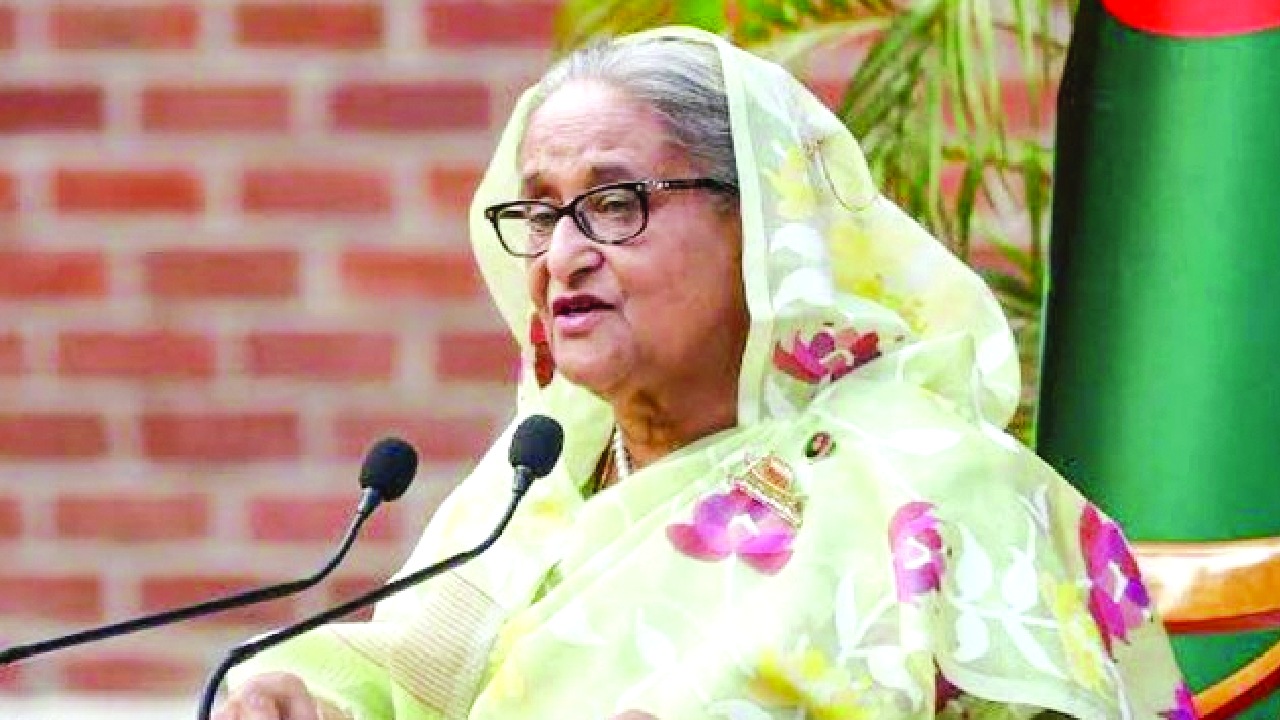
Former Bangladesh prime minister Sheikh Hasina has sharply criticised the Muhammad Yunus-led interim administration following the death of student leader Sharif Usman Hadi, alleging that the country has descended into disorder and insecurity since her removal from office.
In an email interview with news agency ANI, Hasina said Hadi’s killing was emblematic of what she described as the collapse of law and order under the interim Government. She argued that violence, political instability, and attacks on minorities have intensified, creating internal turmoil and damaging Bangladesh’s relations with neighbouring countries, particularly India.
“The killing highlights the lawlessness that began with the fall of my Government and has since worsened. Violence is now routine, and the interim administration appears either unwilling or incapable of stopping it,” Hasina said. “India and the world can see the chaos unfolding — the persecution of minorities and the dismantling of institutions we worked hard to build.”
Her remarks followed the death of Sharif Usman Hadi, a prominent youth leader linked to the 2024 July uprising and spokesperson for the political platform Inqilab Mancho. Hadi was shot at close range by unidentified attackers while travelling in a rickshaw in Dhaka’s Bijoynagar area on December 12. He sustained a severe head injury and was initially treated at Dhaka Medical College Hospital before being transferred to a private facility.
As his condition deteriorated, Hadi was flown to Singapore for specialised care and admitted to the neurosurgical intensive care unit at Singapore General Hospital. Despite medical intervention, he succumbed to his injuries after six days, according to an announcement by Inqilab Mancho cited by Bangladeshi media outlets. Hadi had emerged as a significant political figure after last year’s uprising and was seen as a potential independent candidate from the Dhaka-8 constituency.
Hasina also raised alarm over what she described as the interim Government’s failure to safeguard minority communities. Referring to the lynching of 27-year-old Hindu youth Dipu Chandra Das in Mymensingh district, she accused the administration of neglecting its responsibility to protect vulnerable groups. Das was allegedly beaten to death by a mob over blasphemy accusations, an incident that sparked widespread outrage.
“These events are not isolated,” Hasina said, linking the violence to growing diplomatic friction. She accused the interim leadership of fostering hostility toward India while allowing extremist groups to influence both domestic governance and foreign policy.
According to Hasina, radical elements have gained confidence under the current dispensation, leading to attacks on minorities, media organisations, and diplomatic missions. She alleged that protesters had targeted foreign embassies and that perpetrators were not being held accountable.
“A responsible Government would protect diplomatic institutions and uphold the rule of law,” she said. “Instead, the interim administration tolerates violence and shields those who threaten social harmony.”
Hasina further warned of what she described as an expanding role of radical Islamist forces in public life, claiming that convicted extremists had been released from prison and individuals with links to extremist organisations had been allowed into positions of influence. She expressed concern that Bangladesh’s secular foundations were being eroded under the interim setup.
Separately, the former prime minister questioned the legitimacy of recent shifts in Bangladesh’s foreign policy, particularly outreach toward Pakistan. She argued that such strategic decisions should not be undertaken by an unelected government.
“Bangladesh has always followed the principle of friendship with all and malice toward none,” Hasina said. “But an interim administration without a democratic mandate has no right to reshape long-term foreign policy or alienate longstanding partners.”
Reiterating the historical importance of ties between Dhaka and New Delhi, Hasina said bilateral relations would ultimately endure beyond the current political uncertainty.
“The relationship between Bangladesh and India is deep-rooted and enduring,” she added. “Temporary Governments may come and go, but those ties will remain.”