Nepal’s planes struggle to take off
Kathmandu (Nepal): Nepal’s civil aviation continues to be a victim of oversight, negligence, and corruption. According to an article by the non-profit Nepal Economic Forum (NEF), a mix of blunders related to policy execution, and unfavourable international perception added to the mess. Since 2013, the European Union (EU) blacklisted the nation’s civil aviation, a scenario that was made worse due to repeated air crashes that claimed several lives, and persistent inefficiencies at major airports. The result, according to NEF, is that these perceptions severely tarnished the country’s aviation reputation. At present, more than a third of the airports in Nepal lie defunct.
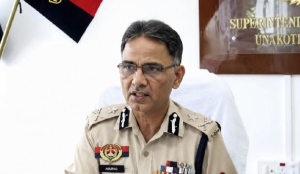
In October 2024, Prime Minister KP Sharma Oli set up a five-member high-level study and recommendation committee to examine the development of a safe, reliable, and trustworthy civil aviation system in Nepal. It was chaired by a retired Supreme Court judge, Anil Kumar Sinha. Coincidentally, Sinha emerged at the political forefront, when he was appointed as a minister with multiple portfolios, including civil aviation, in an interim government, which was formed after Oli’s ouster due to students’ protests. Now, with a new regime ready to take over after the national elections, Sinha reminisces about how he wanted to revive the country's civil aviation sector.
But first, one needs to remember that Nepal’s aviation industry has a rich history, and significant potential, despite the numerous challenges that hinder growth and reputation. The journey began in 1949 with the first flight landing in Kathmandu, followed by the Tribhuvan International Airport (TIA) in 1955. After two more airports were set up in Lumbini and Pokhara, more than 50 have cropped up. According to IATA data, tourism supported by aviation contributed $542.2 million to the GDP in 2023, and employed 260,900 people. International tourists contributed $633.7 million annually to the economy.
“Soon after my retirement, I was approached to head a high-level committee to suggest reforms. There were safety issues with many crashes. I refused as I did not have technical knowledge, but the government urged me to suggest remedies,” said Justice-Minister Sinha. However, he was told that he would be helped by experts, and they included a pilot with over two decades of flying experience, and a former civil aviation secretary. “I accepted the challenge. They gave three months, but logistics were missing, and there was not enough budget. We sought an extension,” Sinha added.
Sinha met Oli, who was unhappy about the situation. The latter assured the former that the finance department would release the funds. The committee’s scope was expanded to probe the affairs at Pokhara and Bhairahawa airports, and find out the reasons why Nepal Airlines performed abysmally. An article by ORF highlighted issues related to systemic corruption, procurement irregularities, and geopolitical constraints at Pokhara. Media reports indicated that Bhairahawa largely operated under temporary operating permits, as full global operations and route approvals remained incomplete. This limited the airlines’ commitments and scheduled services.
According to the NEF, the unviability of the two airports is only a tip of the iceberg as only 18 of the more than 50 airports operate profitably. The Bhairahawa airport, which was built with an investment of $76 million generated a revenue of (Indian) INR 132.12 million in 2023. Given these trends, it may take it more than 50 years to cover the cost of construction. Even if the traffic doubled, it can take more than 25 years for the airport to reach the break-even mark.
In the case of Pokhara, there were no commercial flights since its inception. Its revenues are minimal, and it may take at least 75 years to repay the high-interest bearing debt if commercial operations do not commence. China is in the thick of things, as it aids several projects in Nepal, partially thanks to the Oli government. As with other economic issues, Nepal’s borders with two geopolitical powerhouses affects the aviation industry, according to the NEF. For example, Kathmandu uses the Indian airspace for the air commute, and flights.
“Both the recently-built international airports (mentioned above) were built by the Chinese companies. The funds for Pokhara came via Chinese loans, and the project was declared as part of the Belt and Road Initiative (BRI) by the Chinese Ambassador to Nepal. As a response to this increasing Chinese involvement, India has not provided an air route to Nepal despite multiple requests. Thus, the unavailability of shorter air routes has increased the flight time for the airlines, and made operation costs higher, making new airports unattractive. This flaw in aviation diplomacy has kept the two international airports under-utilised,” pointed out the recent NEF article.
According to Sinha, the committee was aware of the problem areas. There were no doubts in his mind that civil aviation was vital to enhance connectivity, especially in remote areas. But the logistics and funds issues continued. The committee members were not even able to visit the two contentious airports, Pokhara and Bhairahawa. “We decided that it was not possible to continue, and we needed to submit a report based on whatever inputs we had. But as we were about to print the report the situation happened (or changed due to the Gen Z uprising that led to the ouster of Oli’s regime),” explained Sinha.
“Coincidentally, the report did come out when I became the civil aviation minister (in the subsequent interim government). The interim prime minister felt that since we had spent time to identify the issues, and provide remedies, the report should be implemented. It was placed in the cabinet, which passed it,” revealed Sinha. “I initiated discussions with the EU on the ‘blacklisting’ issue, and today 6-7 (global) aviation experts are helping the airlines companies. They are from the EU, India, and have portable simulator machines to help helicopter pilots.” Sinha feels that the problem is not with the engineers and pilots, but with oversights, investigations, and implementation of the recommendations.
As talks continue with the EU, Sinha expects Nepal to be out of the blacklist, or at least the safety concern list. He met this reporter a few days before the election results were to be announced, but he was still optimistic. “When I hand over the charge to the new government, I expect to do it with constructive suggestions and perhaps, some good news,” he said hopefully. Yet one is sure that this is not the end but the beginning of a new chapter. The next regime needs to show serious interest, and skilled piloting to help the sector to take off.
(The author has more than three decades of experience across print, TV, and digital media) ; views are personal