Nature’s TARIFFs: Crisis or Opportunity
In today’s geopolitical landscape, as nations assess the impact of trade tariffs worldwide, we often think of taxes on goods and services crossing borders. However, humanity faces other, much more serious tariffs: Nature’s TARIFFs. Unlike trade tariffs, these are not negotiable, avoidable, or reversible once fully imposed. They do not respect borders. The most important question we must ask ourselves is: do we see Nature’s TARIFFs as a crisis or an opportunity to change how we produce, consume, manage our energy, food, water, and waste systems, and connect to overall ecosystem sustainability?
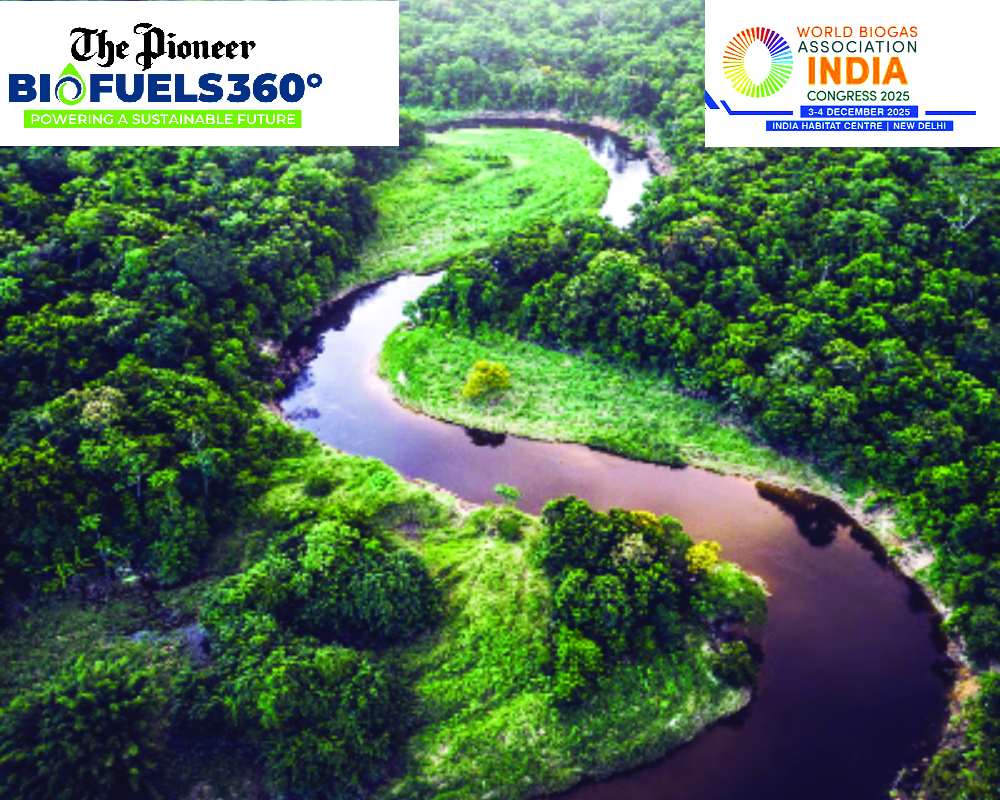
This is becoming clearer from the messages emerging from discussions held at COP 30 in Belém. There can be no climate justice without protecting the Amazon and similar ecosystems worldwide, and global collective climate action must finally match the scale of the crisis!
It is increasingly evident that Nature’s TARIFFs get collected every day through more frequent floods, hurricanes, and other extreme weather events, along with lost livelihoods and struggling communities. They affect all nations, regions, and communities worldwide, but in different ways and to varying degrees. The most troubling part is that the most vulnerable communities pay the highest price, whether it’s smallholder farmers in Africa, island nations in the Pacific, local and indigenous communities in Asia, or urban poor in megacities around the world. These groups bear the full brunt of Nature’s TARIFFS despite contributing little to cause them.
But it is also clear that eventually, no one will escape them. From disrupted supply chains to rising incidences of floods and droughts, increasing hunger and food insecurity, excessive air and water pollution, and mass migration, Nature’s TARIFFS will reach us all, whether we like it or not; they will be collected irrespective of location, position, or hierarchy.
Around the world, we are witnessing a troubling pattern: regions that once experienced predictable weather are now experiencing significant fluctuations between floods and droughts. For instance, unplanned urbanisation has disrupted natural drainage systems in most developing countries. At the same time, a rapid decline in green cover has reduced the land and soil’s ability to retain water and nutrients. The result? Cities flood during the rainy season, and neighbouring fields become cracked, barren land during dry spells. Both extremes affect urban habitats and rural areas, disrupt supply chains, increase food insecurities and hunger, and displace millions.
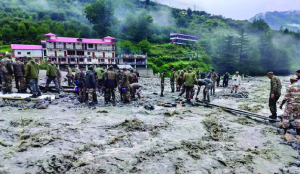
The recent hurricane Mellisa that devastated Jamaica, massive landslides in the Himalayan States of Himachal Pradesh and Uttarakhand in India, floods in the Philippines, and persistent heavy rainfall in England and Wales, the consequent flooding of Monmouth in the UK last week, or severe air pollution prevailing in Delhi nowadays are a few examples of Nature TARIFFS at work! Air pollution is one of the deadliest aspects of Nature’s Tariff. Invisible yet widespread, it causes an estimated seven million premature deaths each year. It burdens healthcare systems, reduces productivity, disproportionately affects women and impoverished communities, and lowers overall quality of life. Excessive air pollution from fossil fuel use, crop residue burning, particulate matter, and smog-filled skies over megacities, including Delhi, the capital of India, are not just increasing health risks; they are liabilities of unpaid ecological debt that gets paid as Nature TARIFFS!
Land health and soil quality are the foundation of our food security, agriculture, biodiversity, and water cycle. Yet intensive farming, overuse of chemical fertilisers, unplanned development, and deforestation are rapidly degrading it. About one-third of the world’s landscapes and soils are already degraded. As lands become degraded and soil health declines, so does our ability to feed the world’s growing population. Nature’s TARIFFs kick in in terms of desertification, hunger, and ecological degradation!
Excessive waste production accelerates Nature’s TARIFFs. Currently, over 105 billion tonnes of organic waste are generated annually, including food waste, crop residues, animal manure, forestry by-products, and sewage sludge. Less than 2-3% of this waste is treated or recycled. When left unmanaged in landfills or open dumps, organic waste becomes a major source of methane, responsible for about 20% of global methane emissions. Besides its significant climate and environmental impacts, it pollutes water and soil and poses serious health risks. Once Nature’s TARIFFs start to accumulate, their costs grow exponentially. It is time to convert all organic waste into biogas and biomethane to cut GHG emissions, enhance energy security, improve food security, and strengthen the circular economy.
While parties discussed Amazon’s health at COP 30 in Belém, it has become evident that the costs of inaction are increasing every day. Planetary boundaries have already been crossed in several areas. Addressing climate change, biodiversity conservation, and land degradation simultaneously, effectively, and decisively now will ultimately determine humanity’s survival in the coming years. The only way to reduce or eliminate Nature’s TARIFFs is to invest in climate mitigation and adaptation, clean energy, regenerative agriculture, land restoration, sustainable waste management, and eco-sustainability all at once. In this way, we can turn a grave crisis into a major opportunity by making informed decisions on how we produce and consume goods and services, and by making lifestyle changes to achieve a sustainable future for all. Net Zero and Nature-based Solutions are two sides of the same coin. Waste-to-clean-energy through anaerobic digestion to produce biogas is one of the most promising and cost-effective solutions for simultaneously addressing climate, energy, food, waste, and environmental challenges at both global and national levels. At its full potential, biogas can deliver half of the Global Methane Pledge, avoid nearly 0.15°C of global warming, and cut Global Greenhouse Gas emissions by 11 per cent by 2030. It’s time to take bold actions and make firm decisions to address the root causes. The moment to lower or eliminate Nature’s TARIFFs is today and now.
The writer, based in Vienna, is working with World Biogas Association, UK as the Policy Director and Senior Advisor; views are personal