National Handwriting Day: Is the pen losing to the pixel?
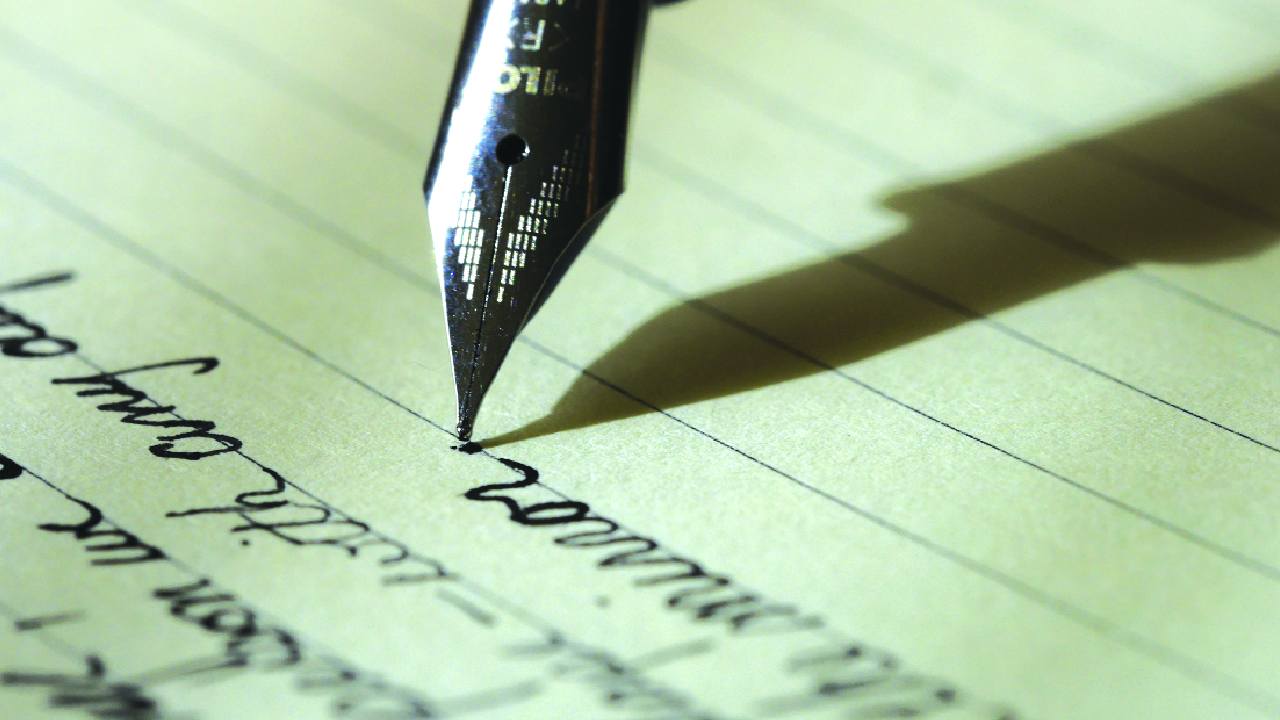
There was a time when handwriting was not merely read but felt-when the curve of a letter, the pressure of a stroke, and the rhythm of ink on paper revealed character, care, and conviction. From the elegant scripts of ancient manuscripts to Mahatma Gandhi's restrained yet resolute letters, handwriting carried meanings that extended beyond words. In today's screen-driven age, however, this deeply human expression appears to be fading, raising a vital question: is the pen finally losing to the pixel?
Once a marker of education and identity, handwriting now faces an existential challenge. Keyboards, touchscreens, and voice-to-text tools have quietly replaced pen and paper in classrooms, offices, and homes. Instant messaging and digital documentation prioritise speed over reflection, leaving handwriting confined to ceremonial uses or personal nostalgia.
Yet the story of handwriting is inseparable from the story of civilisation. Long before digital memory, humanity relied on written symbols to preserve knowledge and govern societies. In India, palm-leaf manuscripts in Brahmi, Devanagari, and regional scripts safeguarded philosophy, medicine, astronomy, and epics across centuries. Writing by hand was not only functional but sacred-an act of transmission across generations.
Even technological revolutions of the past did not erase handwriting. The advent of printing expanded access to knowledge but did not diminish the importance of handwritten correspondence, education, or administration. From royal decrees to personal diaries, handwritten words shaped history, law, and culture. The Constitution of India itself began as a handwritten document, reflecting the gravity and permanence of the ideas it enshrined.
Modern neuroscience reinforces what tradition long understood. Writing by hand activates multiple areas of the brain simultaneously, improving memory, comprehension, and creativity. Children who learn handwriting early often demonstrate stronger language skills and deeper conceptual understanding. The physical act of forming letters creates neural connections that typing cannot fully replicate.
Handwriting also offers psychological benefits. Journalling by hand is widely used to manage stress, anxiety, and emotional trauma. The tactile intimacy of pen and paper provides a calming rhythm in an otherwise accelerated world. Unlike fleeting digital messages, handwritten words carry permanence and emotional weight.
Socially, handwriting conveys sincerity. A handwritten letter or note communicates intention and warmth that no emoji can replace. In an era of automated replies and Artificial Intelligence-generated text, handwritten communication stands out as authentic and deeply personal.
The digital tide, however, continues to rise. Children encounter tablets before pencils, examinations move online, and signatures are increasingly replaced by biometrics. Artificial Intelligence can now generate articulate text within seconds, raising concerns that future generations may rarely write by hand.
But what is lost when handwriting disappears? Beyond skill, we risk losing reflection, cultural continuity, and ownership of thought. India's linguistic diversity-expressed through scripts such as Hindi, Odia, Bengali, Tamil, Telugu, and Urdu-is sustained through handwriting. If these scripts fade from daily use, cultural memory itself is threatened. Encouragingly, revival efforts persist. Digital styluses, e-ink tablets, and hybrid tools now allow handwriting to coexist with technology. More importantly, initiatives that promote letter writing continue to nurture this tradition.
Handwriting may no longer dominate communication, but it continues to shape how we connect — with ourselves, with others, and with history. In a world racing towards digital uniformity, the handwritten word stands as a quiet rebellion, a deeply human act in an increasingly automated age. As long as there are ideas that demand depth, emotions that seek tenderness, and stories that deserve remembrance, handwriting will endure — not as an obsolete skill, but as an authentic expression of the human spirit.
On this International Handwriting Day, let us preserve it not out of nostalgia, but because it nurtures what makes us human. Slow, imperfect, and deeply personal, handwriting is not a relic of the past-it is a reservoir of meaning, identity, and soul.
The author, a senior journalist; views are personal