Moody’s raises India GDP forecast
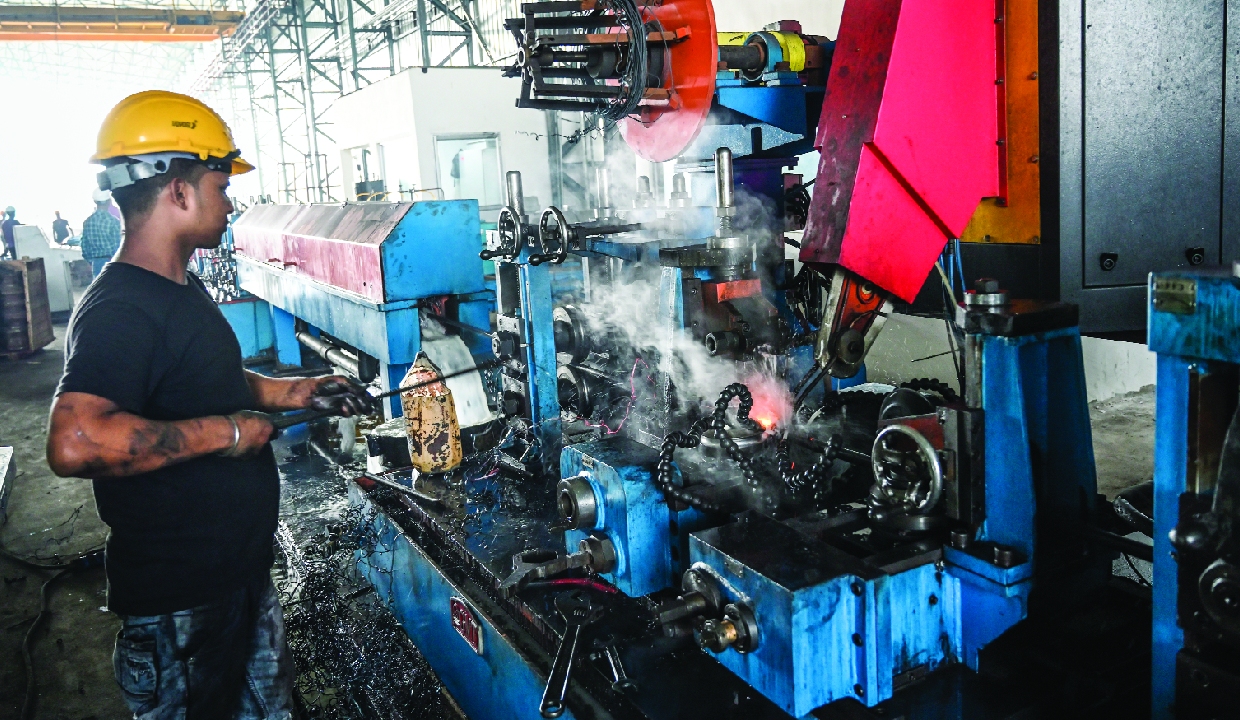
Giving a thumbs up to India’s economic growth, Moody’s Ratings on Friday sharply raised India’s GDP growth forecast for the fiscal year to 7 per cent -- the fastest growth rate among all G20 economies-- aided by economic resilience in the face of West Asia conflict but flagged risks to inflation from elevated oil prices and El Nino.
The agency warned that El Nino-related disruptions could increase food price pressures, weighing on private consumption and economic activity. In a statement issued after a periodic review of India’s Baa3 sovereign rating, Moody’s said the “muted” fiscal policy response to the West Asia shock reflects the Government’s commitment to reducing fiscal deficit to 4.3 per cent of GDP in the current fiscal, from 4.4 per cent in FY26. “The economy’s demonstrated resilience to the global shock wrought by the conflict in the Middle East has driven an upward revision to our forecast for real GDP growth in fiscal 2026-27 (year ending March 2027) to 7 per cent from 6 per cent previously,” Moody’s said.
The 7 per cent FY27 GDP growth estimate compares with 6.7 per cent projected by the RBI, 6.6 per cent by S&P Global Ratings and 6.4 per cent by Fitch Ratings.
The Indian economy grew at 7.8 per cent in the previous fiscal (2025-26). India’s real GDP growth accelerated to 8.2 per cent year on year in the first six months of calendar year (CY) 2026, up from 7.3 per cent for the full year in 2025, helped by stronger private consumption, infrastructure investments, and sustained strength in the services sector.
“Although we continue to expect India to grow faster than all other G20 economies, as well as similarly rated emerging market sovereigns, risks remain,” Moody’s said, adding elevated energy prices could push annual average inflation beyond its 4.8 per cent projection for the fiscal. The average inflation in FY26 was 2.4 per cent. Since the beginning of the war in West Asia on February 28, crude oil prices have risen significantly, stoking inflation fears. Crude prices have risen over $100 per barrel this month, from about $73 level before the war.
While the increased diversification of India’s crude import sources, sizeable foreign exchange reserves and strong domestic demand provide important buffers, higher energy and fertiliser import costs, softer external demand and weaker remittance inflows from West Asia could widen the current account deficit and weigh on growth momentum more broadly, Moody’s said.
Moody’s further said that the stable outlook on India’s rating incorporates India’s gradually improving fiscal metrics and resilient growth prospects compared with peers. Moody’s has maintained India’s rating at ‘Baa3’ since June 2020. In September last year, the agency had affirmed the sovereign rating.
Earlier this month, Japanese credit rating agency JCR had upgraded India’s sovereign rating to ‘A-’, a feat achieved after a gap of 35 years, citing solid economic growth and a strong financial system.
Two global rating agencies, S&P and Fitch, had affirmed India’s investment-grade rating at ‘BBB’ and ‘BBB-’, citing a dynamic and fast-growing, robust economy with policy stability and high infrastructure investments.