CM invites global investors to Assam
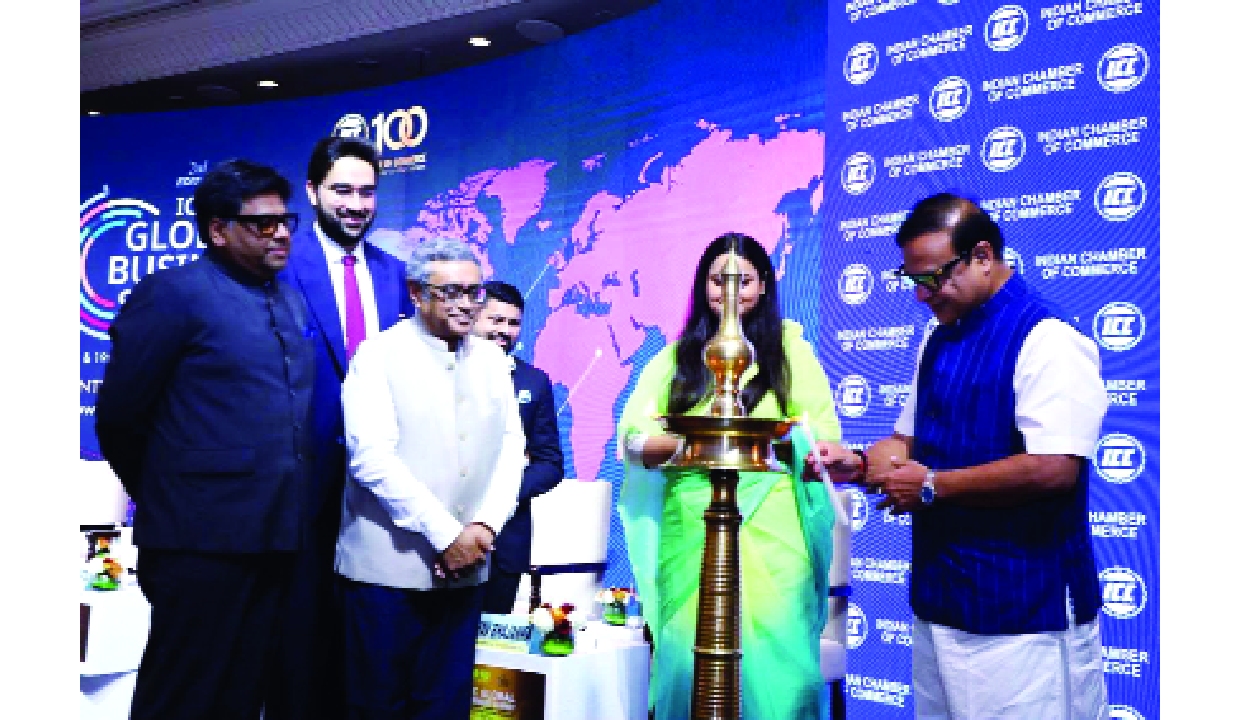
Chief Minister Himanta Biswa Sarma on Friday invited the global business community to explore investment opportunities in Assam, highlighting the State’s strategic location, improving connectivity, expanding infrastructure, growing economy, skilled human resources and investor-friendly institutional framework.
Addressing the second edition of the ICC Global Business Summit in the national capital, the Chief Minister said the rapidly changing global economic and technological landscape presents India with a significant opportunity to diversify production, strengthen supply chains and deepen its integration with global value chains.
He said the sustained focus of Prime Minister Narendra Modi on connectivity, infrastructure and development of the Northeast had transformed ‘Assam’s geography from a perceived constraint into a strategic advantage and brought the State from the periphery to the centre stage of India’s development trajectory’.
“Today, with stronger linkages to national and international markets, Assam is steadily emerging as a hub of connectivity, enterprise and opportunity,” he said.
Highlighting the State’s economic growth, Sarma said Assam’s nominal GSDP was estimated at Rs 7.45 lakh crore in 2025-26, with real growth of over 10 per cent, and was projected to reach Rs 8.71 lakh crore in 2026-27. The industrial sector is estimated to account for 35.64 per cent of the State’s GSDP at current prices in 2025-26.
Sarma said connectivity remained central to Assam’s growth strategy, with the State developing a multimodal network integrating highways, railways, inland waterways, aviation and logistics infrastructure.
The Multimodal Logistics Park at Jogighopa, expansion of the Pandu and Dhubri terminals, and development of the Brahmaputra as a navigable economic corridor are part of this effort, he said.
Sarma said Assam’s focus was not merely on attracting investment commitments but on converting them into projects on the ground.
The Chief Minister said Assam was strengthening its business environment through single-window clearances, sector-specific policies, industrial land banks and dedicated industrial infrastructure. The single-window clearance system, he said, had facilitated more than 2.5 million approvals.
Sarma highlighted the emergence of advanced manufacturing as an important component of Assam’s industrial transition. He said Tata Electronics’ Rs 27,000-crore semiconductor assembly and test facility was expected to be commissioned in December this year. The facility is expected to produce up to 48 million chips a day and generate more than 27,000 direct and indirect employment opportunities.
The CM said Assam was preparing for the energy transition and targeting 6,000 MW of renewable energy capacity by 2030.
The State is also developing opportunities in green hydrogen and bamboo-based second-generation ethanol, creating scope for investment in renewable power, energy storage, bioenergy, energy efficiency and related manufacturing. The CM said Assam’s young population, with a median age of approximately 22 years, was a significant human-resource advantage.
The State is strengthening its education and skills ecosystem through institutions in technology, engineering, management and vocational training. He cited IIT Guwahati, NIT Silchar and Assam Skill University, along with the State’s network of technical institutions, as important platforms for connecting young people with emerging economic opportunities.
The Chief Minister said Assam’s cultural and natural assets could support a broader tourism economy.