Medical college admission controversy fuels fresh polarisation in Jammu and Kashmir
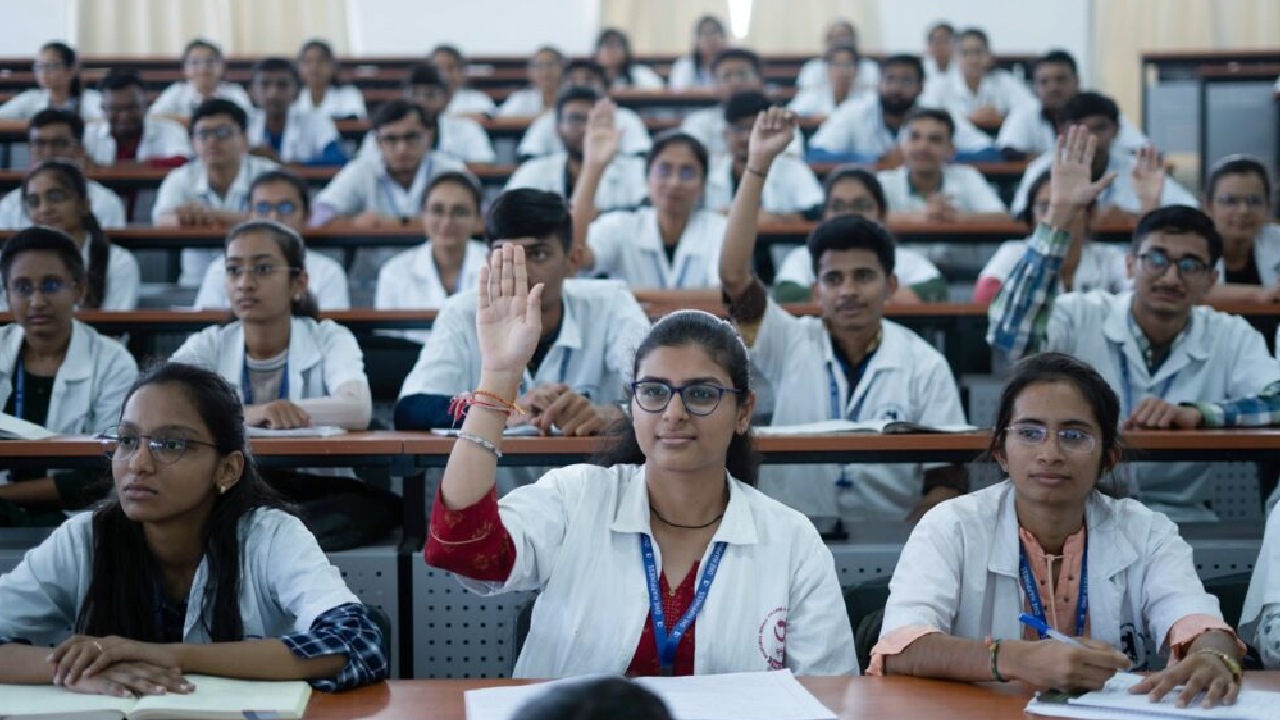
The Shri Mata Vaishno Devi Institute of Medical Excellence (SMVDIME), located in the foothills of the revered shrine of Mata Vaishno Devi at Katra, has been dragged into a controversy that was seemingly avoidable. The barely six-month-old medical college has suddenly been sought to be made an instrument of communal polarisation.
The controversy has erupted at a time when Jammu and Kashmir is struggling on all fronts to come to terms with the fallout of the August 5, 2019 constitutional changes, which by and large have not augured well either for Jammu and Kashmir or for the UT of Ladakh, as reflected in subsequent developments. It is rare that a controversy over the selection of candidates-done in this case by a central agency on an all-India basis-stems from a communal dispute rather than issues of merit or procedure. Out of the 50 candidates selected on the basis of the NEET examination, 42 are Muslims, one is a Sikh, and seven are Hindus. This has become the basis for fringe groups, mostly associated with the RSS-BJP combine, to hit the streets. They questioned how an institute funded by offerings made at the Mata Vaishno Devi shrine could have a majority of Muslim candidates. This is an affront to the country’s laid-down systems and norms. There is no denying the fact that the communal divide runs deep in the demography of Jammu and Kashmir and that it is dug up every election season or whenever political leaders feel insecure. The situation has become further entrenched over the last decade, and it would not be wrong to say that the SMVDIME controversy is its latest manifestation, with dangerous consequences. What followed was a quick turn of events-Hindutva-centric outfits staged protests, and an obliging Centre acted “swiftly” by pressing the National Medical Commission (NMC) into service. The NMC, in turn, without wasting any time, withdrew the Letter of Permission (LoP) granted to SMVDIME to run the MBBS course for the 2025-26 session, which had been issued in August-September last year.
Presumably, the LoP must have been granted after finding everything in order. What went wrong within six months? Were flaws, if any, ignored during the earlier inspection, and under whose pressure? Both the Union Health Ministry and the NMC should come clear on the facts in the interest of their own credibility.
The normal practice in such cases is that the erring medical college is given a hearing and time to remove deficiencies before any drastic action is taken. Was SMVDIME given such an opportunity? It appears that it was not. It is another matter that the NMC has protected the interests of the selected candidates by directing the J&K UT government to adjust them in other medical colleges. That itself indicates the uncertain future of the Katra medical college, which, if it remains shut, will amount to a lost opportunity for the Jammu region. Under the existing setup, this question assumes significance because the Narendra Modi dispensation, as seen over the last decade, has been adept at shifting blame to opposition parties, opposition-ruled states, or BJP adversaries for acts of commission and omission, even in areas that fall squarely under its own domain. If the selection process was wrong, as is being alleged by protestors wearing a religious cloak, who is responsible for it? In this context, the overnight action by the NMC is self-explanatory. The chairman of the Shri Mata Vaishno Devi Shrine Board is the Lieutenant Governor, Mr Manoj Sinha, an appointee of the BJP-led NDA government and a former BJP leader. Under his watch, the Board carries out various activities, including setting up a multi-specialty hospital to which the new medical college is attached. He must have played a pivotal role in securing quick clearances from the Union Health Ministry, under which the NMC functions. That, in itself, is appreciable and raises no issue. But did the Board visualise a situation where, in a Muslim-majority UT, such an outcome could arise at any given point? Ostensibly, it did not. Was this an oversight, or was a loophole deliberately left to be stitched up later, depending on political expediency? The NMC could not have moved with such speed without his intervention to bail out the BJP setup in Jammu and Kashmir and protect its overall Hindutva plank. This is especially relevant given that despite sweeping the Hindu-dominated belt of the Jammu region by winning 29 out of 30 seats in last year’s Assembly elections, and despite people voting for the BJP repeatedly from Panchayat to Lok Sabha since 2014, the region continues to lie in dire straits.
Did SMVDIME become a convenient tool to divert attention from burning issues and unfulfilled promises by igniting religious sentiments? Frankly, this conundrum is not easy to explain.
The closure of SMVDIME-though BJP circles prefer to call it a mere suspension-has led to two distinct reactions: one between Jammu and Kashmir, owing to politics driven by different demographic realities, and, more importantly, another within Jammu society itself. While the BJP brigade and its supporters were jubilant over the closure of the medical college and the stoppage of Muslim candidates, a substantial section of society has viewed it as a negative move against the interests of the Jammu region. A crucial question is being asked: what has Jammu gained from the closure of the medical college? Another important question is why the Jammu and Kashmir Mata Vaishno Devi Shrine Act, 1988, was not suitably amended before proposing a medical college. As experts suggest, amendments were required in sections dealing with governing administration, oversight, and the use of land and institutions developed by the Shrine Board. This would have ensured that the objectives of the shrine fund were clearly defined for such an institute.
Apart from the communal situation that has been created, with counter-reactions from the Kashmir Valley, the more worrying fallout of this episode is that meritocracy itself has come under question. Questioning the merit of students, irrespective of their faith, should disturb all right-thinking people who rise above politics and ignore societal fault lines. If merit is questionable here, then the entire NEET process comes under a cloud. One way out of the crisis, suggested by some experts and right-wing ideologues, is to grant minority institution status to SMVDIME, which would allow seats to be reserved for the Hindu community. If the Centre (read BJP) agrees to this, how will it justify its position on institutions such as Aligarh Muslim University and Delhi’s St Stephen’s College, which have minority Muslim and Christian character and whose status the ruling dispensation has repeatedly sought to alter? The Jammu and Kashmir Shri Mata Vaishno Devi Shrine Act, 1988, requires amendments, particularly in provisions related to administration, oversight, and the use of land and institutions developed by the Shrine Board. What is most intriguing is that the UT administration glossed over the fact that Jammu already has two institutions with minority status.
The Acharya Shri Chander College of Medical Sciences (ASCOMS), run by the Shri Chander Chinar Bada Akhara Udasin Society, enjoys Hindu minority status and reserves 25 per cent of its seats for Hindu students. The Mahant Bachittar Singh College for Engineering and Technology reserves 50 per cent of its seats for Sikh students as a Sikh minority institution. Importantly, both institutions continue to follow standard NEET/BOPEE admission procedures.
In the end, political compulsions appear to have overrun everything else, pushing the UT towards another bout of communal polarisation and accompanying frenzy. Immediate remedial measures are required to prevent the situation from worsening further.
The writer is a political and national affairs analyst; views are personal