Mamata refuses to quit, calls verdict a conspiracy
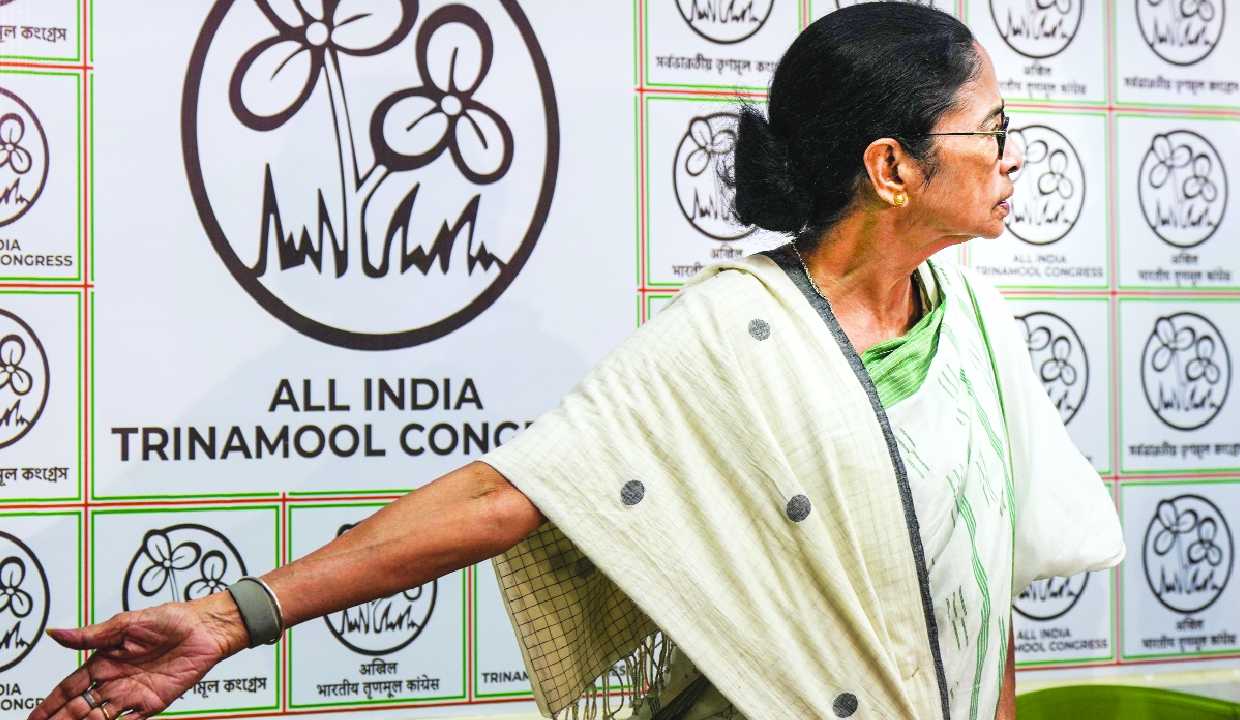
A day after the TMC’s rout in the West Bengal Assembly elections, Mamata Banerjee stood before television cameras and said, “The question of my resignation does not arise. We were defeated not by a public mandate but by a conspiracy. I did not lose.” The Election Commission of India (ECI), she added, had not conducted an election but acted as a branch office for the BJP.
Constitutional norms, she suggested, were for lesser mortals. This was not bluster. It was a master class in political alchemy, turning electoral humiliation into victimhood. Banerjee has ruled West Bengal for fifteen unbroken years. In 2021, she had defeated the BJP with a comfortable majority. This time, the numbers collapsed. TMC’s vote share shrank dramatically; the BJP-led alliance crossed the majority mark. The verdict was clear, decisive and delivered under the same Election Commission that had overseen her previous victories. Yet Banerjee insists the only fraud was institutional.
The claim is audacious even by her standards. For years, TMC workers have been accused of booth-level muscle, voter intimidation and scientific rigging.
Now the same leader who once boasted of controlling every polling station suddenly discovers that the Commission is an enemy agent. The irony is brutal, and the institution she once praised for declaring her a winner is now a BJP puppet because it declared her a loser.
Her refusal to resign is more than theatrical. “They can take action as per constitutional norms,” she taunted. “Let them try, she will sit in Nabanna, dare the Governor, dare the courts and dare everyone to physically remove her.
This is not defiance born of principle. It is the last gasp of a political machine that mistook power for ownership. Over three terms, Banerjee turned the state into a family fiefdom, nephew as de facto deputy, party as personal army, administration as electoral machinery. Sandeshkhali, the teachers’ recruitment scam, the unchecked rise of Syndicate Raj, all of it carried the unmistakable stamp of unchecked authority. When voters finally said enough, she responded by delegitimising their verdict. When a defeated incumbent refuses to vacate, she normalises the idea that elections are valid only when she wins.
The message to every future loser is simple: “Cry conspiracy, stall and dare the system to enforce its rules”. The Election Commission, which conducted a largely peaceful poll under intense scrutiny, is now painted as partisan. Tomorrow, another party will do the same. Trust erodes. Democracy becomes a ritual without consequence. Banerjee’s press conference was not an act of resistance. It was an admission of political mortality wrapped in conspiracy theory. She did not lose, she insists. The people did not choose. Only the system betrayed her.
History, however, records a simpler truth after 15 years, West Bengal voted for change. The outgoing Chief Minister’s refusal to accept that verdict is less a defence of democracy than a warning of how fragile it can become when leaders begin to believe the state belongs to them rather than the voters.