Kerala polls: A sharper three-way contest
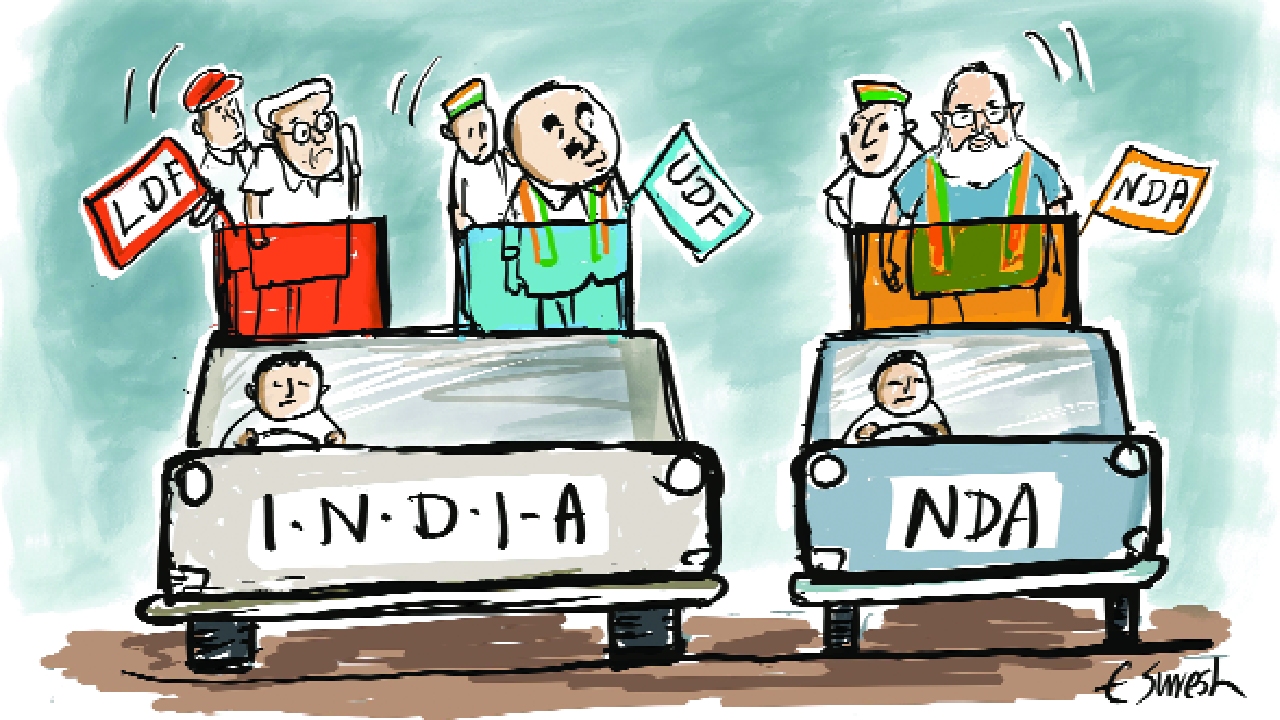
After a decade in the Opposition, the Congress Party is striving to regain its influence in Kerala ahead of the 2026 elections. The Congress-led UDF wants to snatch power, bolstered by strong results in past Lok Sabha elections and local body polls. The ruling CPI(M) is intensifying efforts to retain the state. The upcoming election will test the LDF’s ability to maintain power against a formidable challenge from the UDF.
Since 1982, voters have alternated their support between the Left Democratic Front (LDF) and the United Democratic Front (UDF) every five years, preventing any government from maintaining long-term power. In 2021, the LDF, led by Chief Minister Pinarayi Vijayan, won a second consecutive term. Both parties are currently opposing the Modi government and vying for Muslim voters’ support.
The NDA wants to grow its influence in Kerala. The BJP is focused on increasing its vote share and winning important seats.
Congress officials at the state level feel confident. However, there are serious problems at the local level that could hurt their chances in future elections.
The Left Democratic Front (LDF) is the dominant political coalition in Kerala, primarily supported by Hindus. In contrast, the United Democratic Front (UDF) relies on support from minority groups. The BJP has drawn some votes from the UDF. This coalition includes the Indian Union Muslim League (IUML) and the Kerala Congress, representing about 27 per cent of Muslims and 18 per cent of Christians, respectively.
Kerala has at least ten swing constituencies in six districts. These constituencies are important because, in the last two Assembly elections, all three coalitions received similar levels of voter support.
The internal conflicts within the Congress, especially over candidate selection, underscore the importance of party cohesion.
Even though leaders like VD Satheesan, Ramesh Chennithala, and KC Venugopal seem united ahead of the Assembly elections, they are still competing for the Chief Minister’s post if the UDF wins.
In the 2026 Kerala Assembly elections, the Bharatiya Janata Party (BJP) is trying hard to connect with Christian voters, especially in central Kerala. The party plans to engage with local communities, focus on key issues, and involve senior leaders in its efforts. It aims to present itself as a strong alternative to the usual United Democratic Front (UDF) coalition.
The party is focused on infrastructure, jobs, and safety. Recently, the National Democratic Alliance (NDA) has done well in local elections. This shows that the political landscape in Kerala, dominated by the UDF (United Democratic Front) and the LDF (Left Democratic Front), might be changing.
Disagreements within the Congress over candidate selection, including Rahul Gandhi’s concerns about ticket distribution, could weaken party cohesion and affect voter confidence.
About 60 per cent of candidates on the proposed list are linked to KC Venugopal, the Lok Sabha member and party general secretary. Gandhi has urged a more organised approach within Congress.
The Election Committee is focusing on key factors such as caste dynamics, winnability, and past electoral results, rather than relying solely on nominations from the state unit. Party members are also concerned about the lack of women represented in the candidate list. On the ground, the situation is clear. The CPI(M) has made strong progress through effective campaigning and clear organisation. In contrast, Congress is still having trouble getting its members organised.
Some people who want to be Chief Minister are working hard to secure tickets for their supporters. They are not just helping loyal workers or creating new leaders; they are also looking to strengthen their own groups. Satheesan, Chennithala, and Venugopal are showing rare unity ahead of the Assembly polls. Still, the competition for political leadership remains clear.
The Kerala Assembly elections in 2026 are seeing the BJP actively reach out to Christian voters, particularly the Syro-Malabar community in central Kerala. By engaging locally, running issue-oriented campaigns, and facilitating high-level interactions with leadership, the party aims to present itself as a viable alternative to the traditional UDF alignment.
Recent local body elections and early surveys indicate that the United Democratic Front (UDF) is slightly ahead but is facing internal divisions. If the BJP-led alliance maintains its 19 per cent vote share from the 2024 Lok Sabha elections, it could gain 7 per cent compared to 2021. The key question is whether this gain will take votes from the Left Democratic Front (LDF) or the UDF. How will the Christian and Muslim communities vote?
Recent surveys indicate that the UDF is slightly ahead but faces challenges. There is uncertainty over whether, after a decade in Opposition, Congress is crafting a comeback narrative for the 2026 elections. It is unclear whether voters will return to the Congress Party or remain with the LDF, which some view as better positioned to challenge the BJP. The results in the 47 seats held by these communities could determine the outcome of the 2026 elections. Ultimately, the question is whether the UDF can win a majority or whether the LDF can create a record with a third term. Now the decision goes into the hands of the voters.
The writer is a popular columnist; views are personal
Leave a Comment
Comments (1)
BJP should be given a chance to serve the state.