Jan 2, 1976: When India’s Constitution was bent towards dictatorship
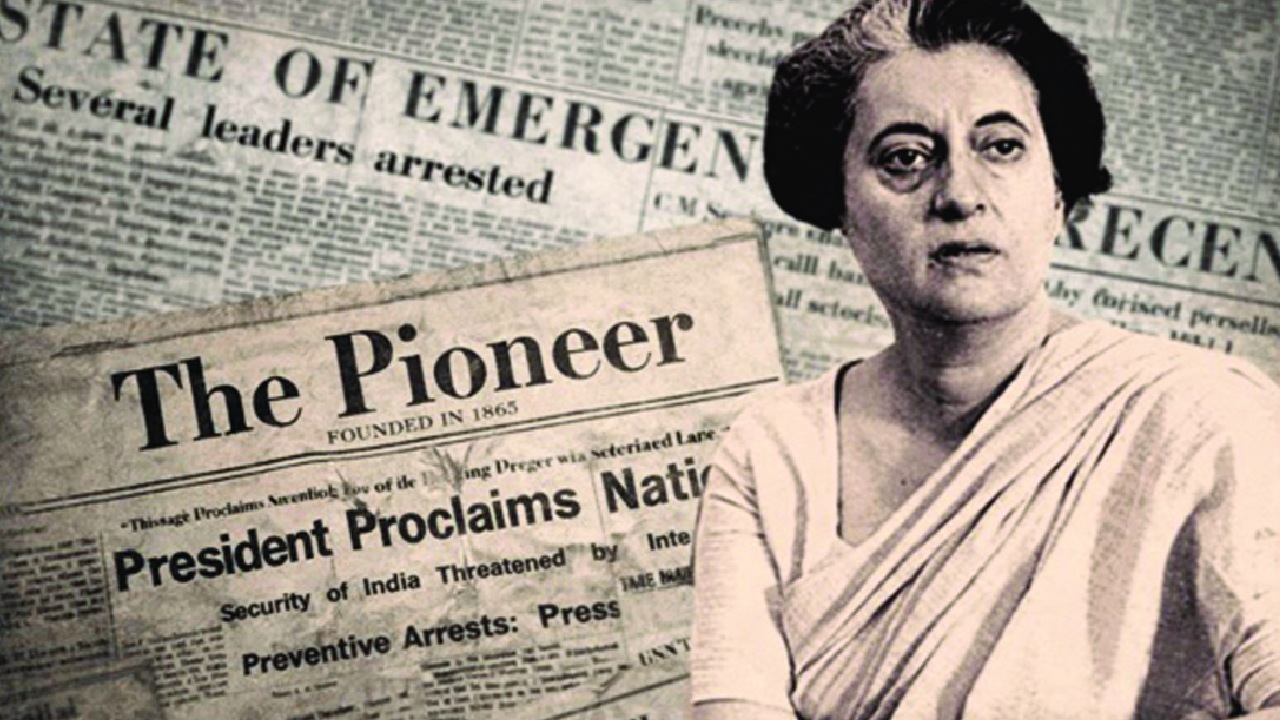
Independent India was not born into calm or cohesion. The Republic inherited from British rule a land scarred by Partition, communal violence, displacement, poverty, and institutional fragility. The nation was fragmented, its social fabric torn, its economy exhausted, and its political future uncertain. Few countries at independence faced such diversity of language, religion, caste, region, and historical memory — combined with such trauma. Yet it was precisely this heterogeneity, this expanse and complexity, that compelled India’s founders to adopt not a majoritarian charter, but a deeply restrained Constitution — one that placed limits on power, elevated liberty, and treated dissent as a democratic necessity rather than disruption.
Adopted in 1950, the Indian Constitution was not merely a governance manual; it was a moral compass. That authority without restraint would fracture the Republic, and that freedom was safest when protected against the state itself. This understanding shaped the early decades of India’s constitutional life. The 1950s and much of the 1960s witnessed intense disagreements over land reforms, nationalisation, preventive detention, and economic planning, but the underlying commitment remained intact: power would operate within constitutional limits, and opposition would remain legitimate.
Dr BR Ambedkar, the Constitution’s principal architect, warned explicitly against the dangers that could destroy this delicate balance. He cautioned Parliament against hero-worship in politics, arguing that blind devotion to leaders was “a sure road to degradation and eventual dictatorship.” Democracy, he insisted, could not survive on institutions alone; it required
constitutional morality — self-restraint by those in power. That warning, prophetic and precise, would be ignored within a generation.
By the late 1960s and early 1970s, the Republic entered a phase of deep restlessness. Corruption in politics, economic stress, inflation, and unemployment eroded public confidence. Electoral setbacks weakened the moral authority of the ruling establishment, while popular movements began questioning not merely policies, but legitimacy itself. It was in this context that Jayaprakash Narayan’s call for “Total Revolution” emerged - not as a quest for power, but as a moral indictment of unaccountable authority. His movement articulated a deeper anxiety: that democracy was being hollowed out from within.
From Constitutional Debate to Constitutional Fear
Even amid political turbulence, constitutional safeguards initially held. The judiciary asserted itself in landmark judgments. In Golaknath (1967), the Supreme Court held that Parliament could not amend Fundamental Rights. In response, Parliament asserted its amending power, culminating in Kesavananda Bharati (1973), a historic compromise that allowed amendments but preserved the Constitution’s “basic structure.” Judicial review, separation of powers, and fundamental freedoms were declared inviolable.
These cases reflected a functioning constitutional tension — an argument over limits, not an attempt to erase them.
That equilibrium collapsed with the declaration of the Emergency on June 25, 1975. Civil liberties were suspended, opposition leaders arrested, the press censored, and fear institutionalised. The Emergency was officially justified as a response to “internal disturbance.” Even if that claim was deeply flawed, it retained the language of exception. What followed by the end of 1975 abandoned even that pretence.
From Emergency to Permanent Control
Parliament functioned without a real opposition. Elections were postponed indefinitely. Pre-publication censorship strangled the press. Thousands were detained without trial. Trade unions were broken, student movements crushed, and civil society paralysed. What began as extraordinary governance rapidly transformed into a project of permanence.
The objective was no longer to rule through Emergency provisions alone, but to rebuild the constitutional order itself — to ensure that dissent could never again challenge authority.
ADM Jabalpur: Liberty Judicially Abandoned
No episode better captures this collapse than ADM Jabalpur v Shivkant Shukla (1976), the infamous Habeas Corpus case. The Supreme Court held that during the Emergency, when Article 21 was suspended, no citizen could approach the courts even against illegal detention.
Justice MH Beg reasoned that the right to life and liberty was a creation of the Constitution and could therefore be withdrawn by it. Justice YV Chandrachud concurred. Only Justice HR Khanna dissented, warning that such reasoning legitimised tyranny and reduced the rule of law to executive convenience. His dissent cost him the Chief Justiceship, but preserved constitutional conscience.
ADM Jabalpur did more than reflect judicial submission; it institutionalised fear. It told the executive that liberty had no sanctuary. What the Court surrendered temporarily, the government sought to surrender permanently.
One of its most haunting symbols is the custodial death of P Rajan, a young engineering student from Kerala, who was arrested in 1976 and tortured to death in police custody. His only crime was alleged association with political dissent. For years, the state denied his detention altogether, made possible by a constitutional climate where courts had been stripped of the power to demand accountability. It was Rajan’s father, TV Eachara Warrier, who waged a solitary, relentless legal battle that eventually forced confessions from the police and exposed the truth. The Rajan case revealed what ADM Jabalpur meant in practice: when liberty has no judicial refuge, torture becomes routine and death becomes deniable. Rajan did not die because of excess; he died because the Constitution had been silenced, and the fundamental right to life, guaranteed, was taken away by the state.
January 2, 1976: Rewriting the Constitution
That moment arrived on January 2, 1976, with the introduction of what would become the 42nd Constitutional Amendment. This was not routine amendment; it was constitutional reconstruction. Judicial review was weakened. Parliamentary supremacy was asserted. Fundamental Rights were subordinated to state-defined goals. The Constitution was transformed from a restraint on power into an instrument of it. Ambedkar’s vision of limited government was deliberately inverted.
Articles guaranteeing equality, free speech, association, and personal liberty were hollowed out. Courts were instructed not to invalidate laws merely because they violated individual freedoms if the state claimed higher objectives. Liberty ceased to be inherent. It became conditional — revocable at will.
The state acquired not just coercive authority, but moral supremacy over freedom itself.This constitutional shift mirrored the brutality on the ground. Preventive detention filled prisons. Families were torn apart in midnight arrests. Newspapers were reduced to blank columns. A few national dailies chose defiance, publishing empty editorials rather than propaganda. Forced sterilisation campaigns terrorised the poor. Slum demolitions destroyed lives in the name of discipline. This was not excess. It was method.
Article 31D: January 2, 1976 and the Architecture of Fear
The most chilling provision introduced in this phase was Article 31D, proposed in January 1976. It empowered Parliament to prohibit vaguely defined “anti-national activities” and “anti-national associations,” while shielding such laws from challenge under Articles 14 and 19. The term “anti-national” was left deliberately undefined. Political opposition, journalism, protests, trade unions — even poetry — could be criminalised. Voices like Ramdhari Singh Dinkar, who celebrated courage and conscience, would have stood constitutionally vulnerable. Nationalism was reduced to obedience.
Although Article 31D was later repealed before enforcement, its intent was unmistakable: repression was to be permanent, legal, and normalised.
India was never formally declared a one-party state. But when opposition cannot organise, speak, or seek judicial remedy without constitutional peril, pluralism becomes illusion. Democracy survives in form, not substance. The Emergency ended. Elections returned. But January 1976 marked the moment when the Constitution itself was in real danger. That project failed not because institutions stood firm, but because citizens did — guided by figures like JP Narayan, fearless journalists, and ordinary Indians who refused to forget freedom.
In today’s debates about constitutional assault, historical honesty is essential. The gravest attempt to bend the Constitution towards dictatorship did not occur incrementally or ambiguously. It occurred openly, systematically, and unmistakably during the Emergency, culminating on January 2, 1976.
Hemangi Sinha is Project Head & Pravin Kumar Singh is Senior Project Associate, World Intellectual Foundation; views are personal