India’s green heritage: Eco-villages, and the path to a sustainable future
In today’s rapidly evolving technological era, the challenge before us is both urgent and inspiring: how do we build a future that balances innovation with nature, and growth with sustainability? India’s answer is emerging clearly through the rise of eco-villages, LEED-certified green buildings, and renewable energy initiatives
Across India, eco-villages are rising as powerful models of sustainable, community-driven living. These are not utopian experiments - they are thriving settlements that integrate ancient wisdom with modern technology to create healthier, happier, and more resilient ways of life.
Auroville, Tamil Nadu, is perhaps India’s most iconic eco-village - a universal township dedicated to sustainable living for over five decades. Born in 1960 as a visionary concept and championed by the Government of India, Auroville received a landmark unanimous resolution from UNESCO in 1966, recognising its international significance for the well-being of humanity. Today, it continues to pioneer models of conscious, ecological living that inspire communities worldwide.
Govardhan Ecovillage (GEV), Maharashtra, nestled in the Sahyadri mountains near Mumbai, has earned international recognition from the United Nations World Tourism Organisation (UNWTO). Spanning 140 acres of lush green infrastructure, GEV seamlessly blends ancient Vedic knowledge with modern sustainable technologies. Visitors and residents alike benefit from organic farming, natural yoga practices, green-stay accommodations, and an Ayurvedic wellness centre rooted in Kerala’s traditional healing traditions.
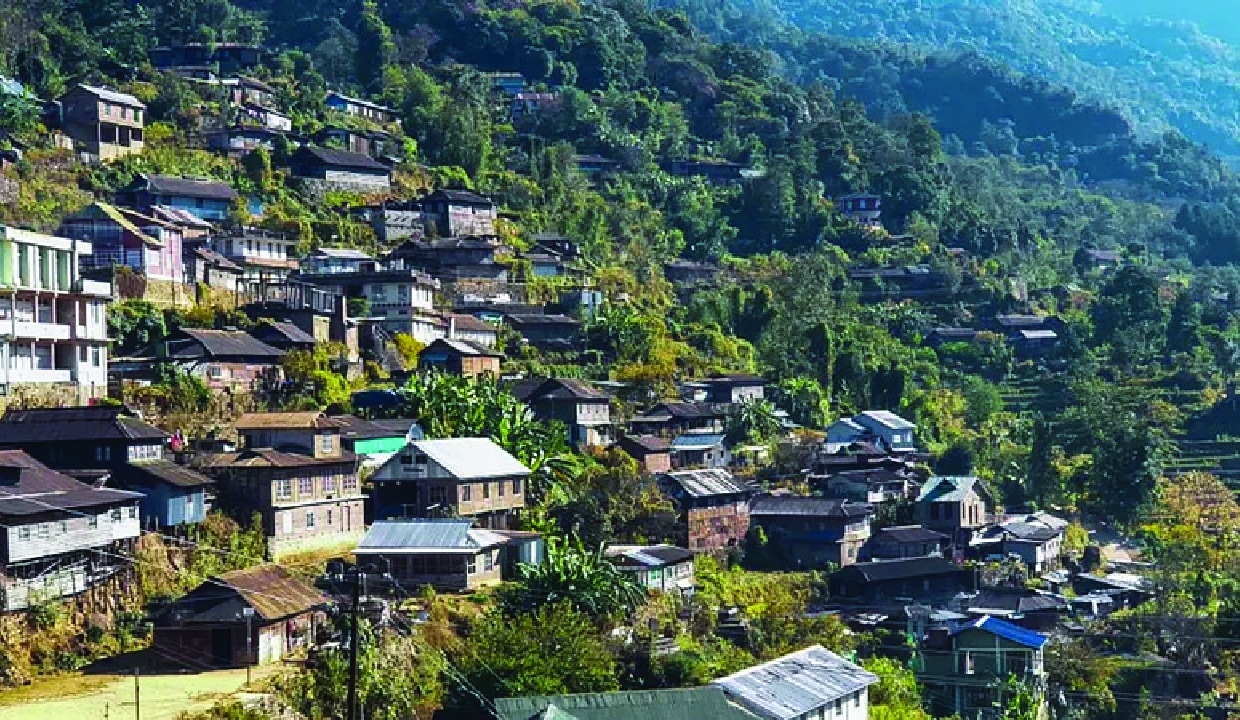
Khonoma, Nagaland holds the distinction of being Asia’s first green village, driven entirely by the indigenous Angami tribe community. Famous for its sustainable jhum (shifting cultivation) agriculture, rich biodiversity, and community-led wildlife conservation, Khonoma demonstrates that indigenous knowledge and ecological stewardship go hand in hand.
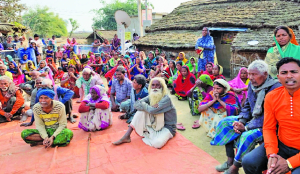
Dayalbagh, Agra is a century-old green ecosystem, established in 1915, that has long embodied a holistic philosophy of life.
Dayalbagh follows a Six Sigma quality of life framework, built around three pillars: Quality, Values, and Attributes. Its carbon-free environment runs on solar power and battery-operated electric vehicles - entirely free of petrol and diesel. Community kitchens minimise waste, and affordable parabolic solar collectors are used for cooking. Dayalbagh has pioneered Agri-Photovoltaic technology, integrating solar energy systems directly with agricultural land.
It has also cultivated medicinal herbs such as Abutilon indicum (Kanghi) and Acacia nilotica (Babool) for use in its own pharmacy and Ayurvedic treatments.
The Dayalbagh Educational Institute (Deemed University) has established a Centre of Excellence in Mushroom Technology, offering modular courses that have driven large-scale adoption of button and oyster mushroom cultivation among small-scale farmers in the Agra region - a true model of community-based learning and rural empowerment.
Mawlynnong, Meghalaya, famously known as “God’s Own Garden,” is recognised as one of Asia’s cleanest villages. Its remarkable cleanliness is sustained through disciplined waste segregation, traditional bamboo-based dustbins, and a strict zero-plastic policy - all managed entirely by community volunteers. It is a living proof that grassroots commitment can achieve what policy alone cannot.
Piplantri, Rajasthan has earned global recognition for a uniquely inspiring practice: planting 111 trees for every girl child born in the village. This movement has transformed Piplantri into a lush, thriving ecosystem while simultaneously celebrating the social value of women - a powerful union of environmental harmony and human dignity.
LEED Certification in India
India’s urban landscape is steadily transforming through the adoption of LEED (Leadership in Energy and Environmental Design) certification - the internationally recognised green building rating system originally developed by the United States Green Building Council (USGBC). In India, LEED certification is validated by GBCI India (Green Business Certification Inc.), ensuring that buildings meet rigorous standards for energy efficiency, water recycling and harvesting, and waste management.
Landmark LEED-certified buildings across India include Suzlon One Earth in Pune, the CII-Sohrabji Godrej Green Business Centre in Hyderabad, and ITC Green Centre in Gurgaon - each a benchmark of sustainable design and responsible construction. A particularly remarkable Indian innovation comes from ANT Studio, a pioneering architectural firm founded by Monish Siripurapu. The studio has developed a biomimicry-inspired passive cooling system using century-old Terracotta pot technology - a solution that is sustainable, affordable, and deeply rooted in India’s artisanal heritage. This project, which beautifully represents the STEAM approach (Science, Technology, Engineering, Arts, and Mathematics), received funding from the European Union and recognition under the UN Environment Programme.
Renewables: Agri-Photovoltaics, Solar, and Wind
India is emerging as a global leader in renewable energy, with innovative solutions that protect both the environment and the livelihoods of farmers. Agri-Photovoltaic (Agri-PV) technology - which integrates solar panels directly over agricultural land - is being implemented across Uttar Pradesh, Maharashtra, Madhya Pradesh, and Gujarat. The Indian Agricultural Research Institute (ICAR) and the National Institute of Solar Energy, under the Ministry of New and Renewable Energy (MNRE), have established a Centre of Excellence in Agri-PV to boost green productivity in rural areas. India has also made history by commissioning Asia’s largest floating solar project at Omkareshwar in Khandwa District, Madhya Pradesh - a testament to the nation’s bold renewable energy vision. On the wind energy front, the wind farm at Kayathar in Thoothukudi, Tamil Nadu, operated under the National Institute of Wind Energy (NIWE), stands as a major national asset for clean, renewable power generation.
Conclusion
India’s eco-villages, green buildings, and renewable energy initiatives collectively represent far more than environmental policy - they embody a philosophy of living in harmony with nature, drawing equally from ancient wisdom and modern innovation.
As India marches toward its goal of carbon neutrality by 2070 and its vision of a developed, self-reliant nation by 2047, these grassroots movements and technological milestones light the way. The health of our planet and the happiness of our people are inseparable - and India’s green heritage proves, powerfully, that a sustainable future is not only possible, but already taking root.
India is emerging as a global leader in renewable energy, with innovative solutions that protect both the environment and the livelihoods of farmers
The author is Head Institute Industry Interface Programme Hindustan College of Science and Technology, Mathura; Views presented are personal.