India’s economy feels the heat of a distant war
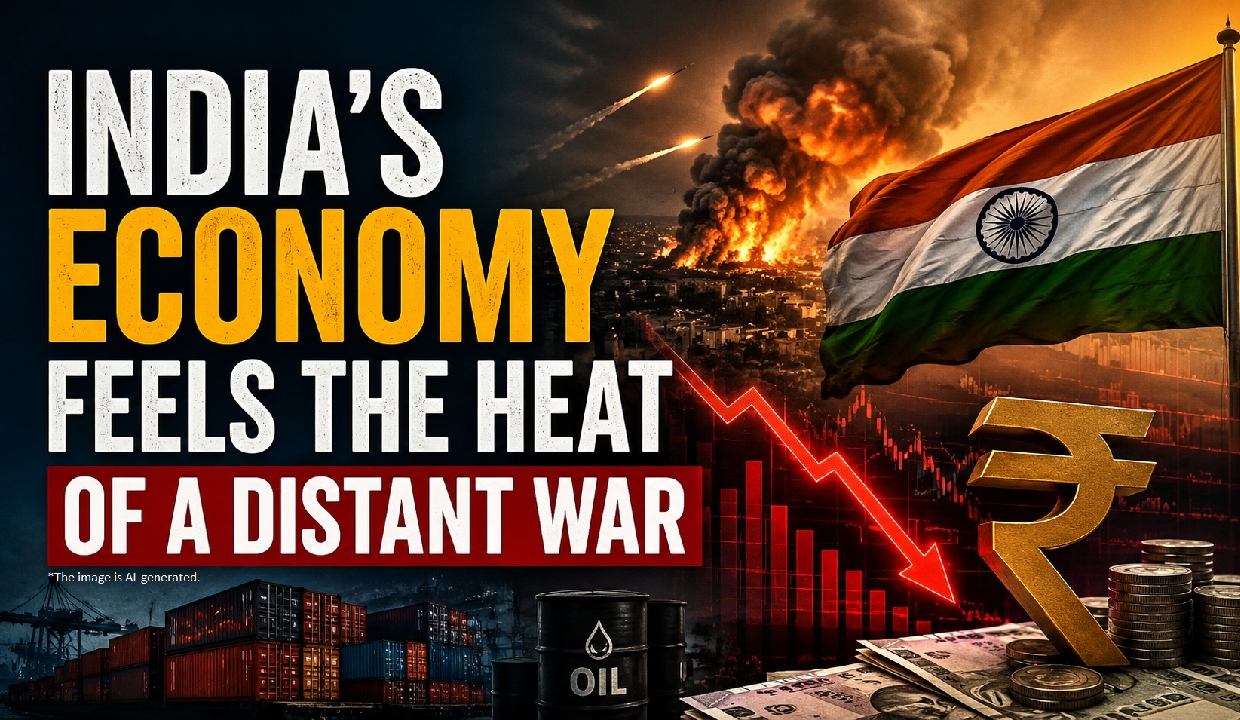
The latest economic data suggest that geopolitics is once again becoming a decisive force shaping India’s macroeconomic outlook
Four numbers landed within days of each other this month, and together they tell a sharper story than any one of them alone. The rupee has pushed back above 96 to the dollar. Retail inflation jumped to 4.38 per cent in June, breaching the RBI’s 4 per cent target for the first time in 17 months. The trade deficit widened to a five-month high of $30.4 billion. And the RBI, having just paused in June, is now facing market chatter about a rate hike as early as August. Individually, each is explainable.
Together, they describe an economy absorbing a shock it did not create. That shock has a name: the renewed war between the US-Israel coalition and Iran and the periodic closure of the Strait of Hormuz, through which a fifth of the world’s oil moves. Brent crude, which had drifted back towards $70 a barrel as an earlier ceasefire held, has jumped back above $85 after fresh strikes and tanker attacks reopened the conflict. For an economy that imports roughly half its oil from the Gulf, that is not an abstract geopolitical headline-it is a direct hit to the import bill, the currency and the price of everything that moves on diesel.
The trade numbers show this plainly. Merchandise imports rose 31 per cent year on year in June to $70.8 billion, with petroleum imports alone running well above pre-war norms. Exports grew too, a healthy 15.5 per cent, but could not keep pace, especially with shipping through Hormuz disrupted. The result is a current account under growing pressure, with economists now pencilling in a deficit near 1 per cent of GDP for the fiscal year.
The inflation print carries the same fingerprints. Fuel pass-through from May’s petrol and diesel price revisions, layered on to a sharp run-up in vegetable prices, pushed food inflation to 5.32 per cent. Core inflation has stayed comparatively tame, which is the one genuinely reassuring detail in this data set-this looks more like an imported cost shock than demand-side overheating.
That distinction matters for the RBI, which now faces a harder version of the choice it ducked in June. Growth is still projected at around 6.6 per cent, and the central bank would rather not choke it off with a hike aimed at a price shock that may partly unwind if the ceasefire holds. But, having just missed its own target, and with economists split between an August pause and the start of a hiking cycle, the RBI has little room left to sound relaxed. None of this yet amounts to a crisis.
Reserves are substantial, the RBI has been intervening in both spot and forward markets, and corporate hedging has hit record levels. But the four indicators are correlated, not coincidental, and they share a single upstream cause that India does not control.
The honest reading is not panic, but vigilance: the next real test is not this month’s data, but whether the Strait of Hormuz stays open long enough for these numbers to prove temporary.