India’s water crisis: Scarcity or mismanagement?
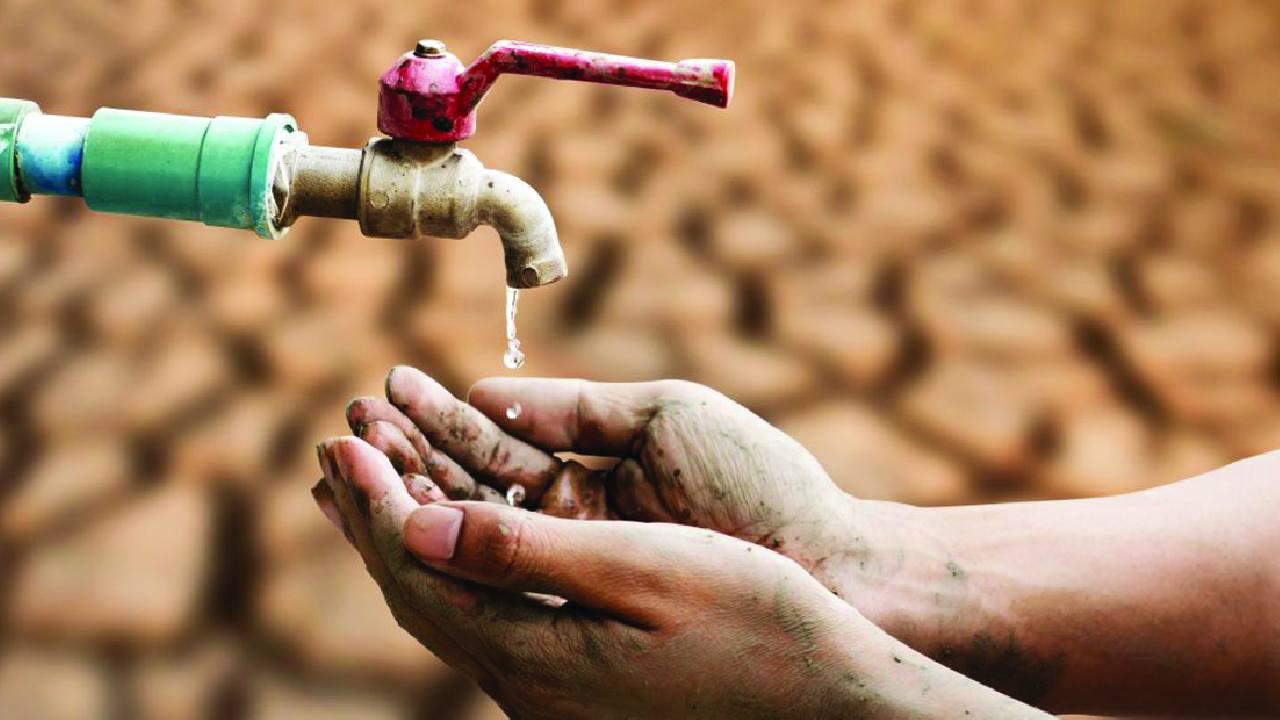
India’s water crisis is often described in the language of shortages and statistics, but for most people it shows up in ordinary ways: a motor switched on at dawn, a neighbour banging on the gate because the tanker has arrived, a rooftop tank silently overflowing while no one is watching. This crisis is not only about scarcity. It is about how water leaks away-through pipes, habits, systems, and indifference-until scarcity becomes an emergency. For a country that supports nearly 18 per cent of the world’s population with just 4 per cent of its freshwater resources, the warning signs were always there. What has changed is where the crisis now lives. Once considered a rural hardship or a summer phenomenon, water stress has moved into India’s cities and everyday urban routines.
According to NITI Aayog, nearly 600 million Indians live under high to extreme water stress, and three out of four households do not have drinking water within their homes. The report warns that 21 major cities could exhaust groundwater reserves within this decade. These numbers are alarming, but much of India’s water crisis is not caused by absolute lack, but by inefficiency and neglect.
In many cities, between 38 and 40 per cent of treated water never reaches consumers. It disappears through leaking pipelines, illegal connections, and faulty meters-what utilities call non-revenue water. Every litre lost has already been pumped, filtered, treated, and paid for. When it leaks into the ground, it takes electricity, labour, and public money with it. In a water-stressed country, this is a massive failure.
Inside homes, the picture is similar. Residents depend on electric pumps to fill rooftop tanks. Motors are switched on and forgotten. Tanks overflow, pumps run dry, and power is wasted. These scenes barely register anymore. Yet pump systems account for nearly a quarter of electricity consumption in domestic and agricultural use. What leaks here is not just water, but energy and money.
Technology, particularly automation and the Internet of Things, is offering a different future. Cities such as Surat, Pune, and Chennai are installing digital meters that record water use in real time. These allow officials to spot leaks early, flag abnormal consumption, and detect unauthorised connections. Where such systems are paired with focused loss-reduction efforts, cities are recovering water that once vanished unnoticed.
At home, simple automation-a sensor in an overhead tank and a smart switch on the motor-can ensure pumping only when supply arrives and stopping when the tank is full. Overflows disappear, dry runs are avoided, and electricity bills fall. Pilot projects in Bengaluru and Coimbatore show power savings of up to 40 per cent in such households.
For municipalities, automation offers visibility. Sensors across networks reveal pressure drops, bursts, and theft in real time. Combined with mapping and analytics, utilities can finally see where water is being lost. In a country with ageing pipes and rapid urban growth, this visibility is transformative.
Perhaps the biggest change is cultural. When people see their own water use-patterns, alerts, and savings-behaviour shifts. Conservation becomes personal. Tier-2 cities, with erratic supply but greater agility, stand to gain the most. Mysuru and Nagpur have shown that smart systems can cut losses meaningfully.
Technology alone will not solve the crisis. It needs policy support and maintenance. But managing existing water is cheaper than chasing new sources. Even a 10 per cent reduction in losses can save utilities crores annually. India does not need only more dams or deeper borewells. It needs a new relationship with water-built on measurement, responsibility, and respect. If automation can make every drop visible, resilience may begin not with grand projects, but with a simple sensor.
The writer is General Manager, Flosenso; views are personal