India’s migration moment: Overhauling policy framework
As India rapidly expands its network of Free Trade Agreements (FTAs) — now spanning more than 50 countries, including the recently concluded pact with New Zealand on December 22, 2025 — a quiet but consequential opportunity is unfolding. Beyond goods and services, these agreements are opening pathways for India to position itself as a reliable supplier of high-end professionals and semi-skilled workers to ageing economies grappling with acute labour shortages.
From healthcare workers and technicians to IT professionals and skilled trades, demand for India’s youthful workforce is rising across the developed world. Demography is firmly in India’s favour. What is not, however, is its migration policy framework. The real constraint today is not excessive mobility, but inadequate governance.
A Policy Framework Frozen in the 1980s
India’s emigration regime continues to rest largely on the Emigration Act, 1983 — a law crafted for a different economic era, when overseas employment was concentrated in West Asia and recruitment was mediated almost entirely through physical agents and paper contracts. The Act mandates emigration clearance through a limited number of Protector of Emigrants offices for workers classified as Emigration Check Required, largely those with lower educational qualifications or travelling to select destinations.
While the intent was worker protection, four decades on the outcome is a system that is cumbersome, unevenly enforced, and poorly aligned with modern labour markets. India today seeks to treat labour mobility as an economic asset-exporting skills, earning remittances, and integrating into global supply chains. Yet its legal architecture remains fragmented and control-oriented, treating migrants as administrative risks rather than economic contributors.
Recruitment channels have diversified, digital hiring platforms have emerged, and informal brokers continue to operate in the shadows. The regulatory framework, however, has not kept pace with these realities.
Migration Policy Without a Strategy
Recent efforts to consolidate migration-related laws through the Immigration and Foreigners Act, 2025 may strengthen monitoring, security, and enforcement. But border management alone does not constitute a migration strategy.
Outbound labour migration is overseen by the India Centre for Migration under the Ministry of External Affairs, supported by grievance portals such as MADAD and Samadhan, and training programmes for workers and officials. These are useful administrative tools, but they operate in silos. What India lacks is a coherent national migration framework that integrates overseas mobility, skill certification, bilateral labour agreements, and enforceable worker protections into a single policy logic.
Internal migration is treated even more diffusely. Welfare initiatives such as One Nation One Ration Card, PMAY, and Affordable Rental Housing Complexes provide partial relief, but they do not substitute for a rights-based internal migration policy grounded in social security portability and labour protections.
Exporting Labour in a Closed-Citizenship World
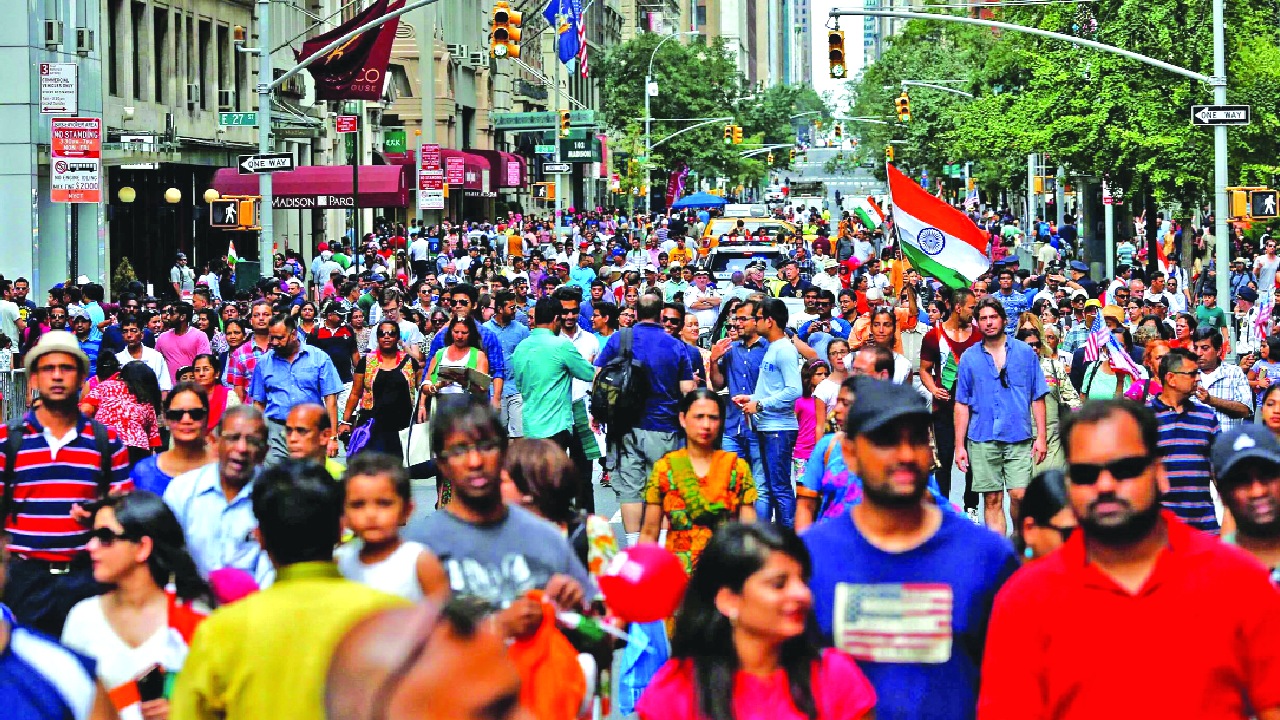
India is now the world’s largest source of international migrants, with an estimated global diaspora of 35.4 million, including 15.8 million Indian citizens and 19.6 million persons of Indian origin. Advanced economies facing demographic decline increasingly depend on migrant labour, yet remain reluctant to extend long-term political or citizenship rights. This contradiction is most visible in Gulf Cooperation Council countries and in hubs such as Singapore and Japan, where migrant workers power economies without social or political identity.
The risks are mounting. According to the Ministry of External Affairs, 3,258 Indian nationals were deported by the United States in 2025 alone — the highest annual figure so far, compared to 2,042 in 2019. Student migration has also surged. Indian students abroad increased from about 13.35 lakh in 2023 to nearly 13.8 lakh in 2025, making India the largest source country for universities in the US, Canada, the UK, Australia, and Germany. This largely self-financed migration exposes households to significant financial and emotional risk, yet policy oversight remains thin.
Remittances Cannot Substitute Reform
Remittances have masked policy gaps. India has remained the world’s largest recipient for over a decade, with inflows crossing $135 billion in 2024-25 for the third consecutive year above the $100-billion mark. These flows support household consumption and strengthen the balance of payments, but they cannot indefinitely compensate for weak governance.
Migration persists because economic incentives are overwhelming. According to the International Organization for Migration, the India-US, India-UAE, and India-Saudi Arabia corridors are among the world’s largest. Men constitute about 65 per cent of India’s external migrants.
Multilateral frameworks such as the World Trade Organization’s General Agreement on Trade in Services offer only broad principles. In practice, bilateral labour agreements determine access, rights, and protections-and here India’s coverage and enforcement remain uneven.
The Way Forward
India stands at a critical juncture. As FTAs expand and ageing economies look to India’s workforce, migration must be treated as an economic enabler, not an administrative inconvenience.
India’s migration framework is failing not because people move, but because institutions have failed to adapt to mobility. This requires a decisive shift from control to protection, and from fragmented schemes to enforceable rights. A credible national migration policy must integrate global mobility, align domestic skill certification with overseas demand, and ensure full portability of social security for migrants. Less-skilled and less-educated workers-those most vulnerable to exploitation-must receive the strongest institutional support, not the greatest bureaucratic burden.
Updating four-decade-old laws is no longer optional. If India’s demographic dividend is to pay off, mobility must be governed with foresight, dignity, and economic logic. The cost of delay will not be borne by institutions, but by millions of Indians who move-across borders-in search of work and opportunity.
The author is Vice-Chairman of the Punjab Economic Policy and Planning Board, Chairman of ASSOCHAM Northern Region Development Council; views are personal