India’s installed energy storage capacity to hit 346 GWh by 2033: Industry paper
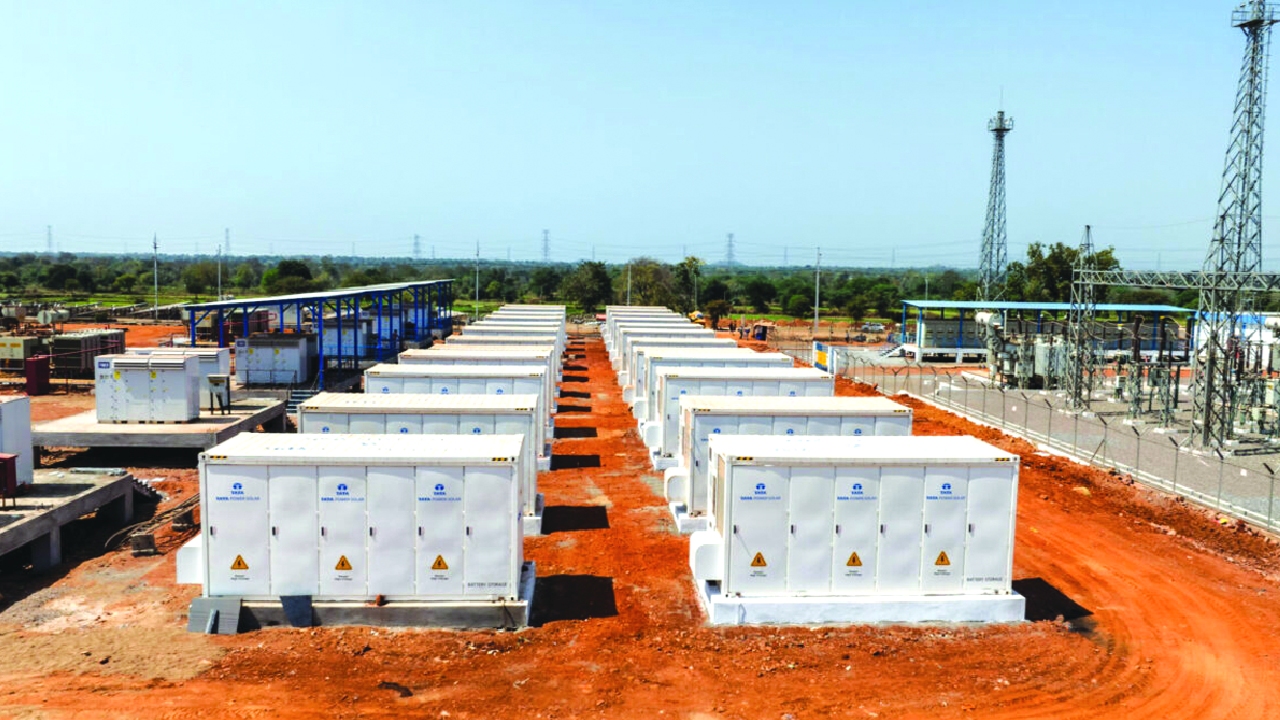
India’s installed energy storage capacity is set to reach 346 GWh by 2033 from nearly one GWh currently, according to an industry white paper submitted at Stationary Energy Storage India (SESI) 2026 conference here.
The SESI 2026 conference is organised by industry body Indian Energy Storage Alliance (IESA), part of the ongoing Bharat Electricity Summit 2026 here.
According to the white paper, India’s stationary energy storage sector is witnessing explosive growth, with the total capacity of battery energy storage system (BESS) projects in the pipeline now reaching a record 92 GWh. Meanwhile, cumulative installed capacity, currently less than 1 GWh, is projected to soar past 346 GWh by 2033, it added.
This trajectory was underscored on Friday at the SESI 2026 conference, where the IESA unveiled the white paper, developed in partnership with Customised Energy Solutions (CES). The SESI 2026 conference brought together more than 450 industry leaders, Government officials, and international delegates from over 10 countries.
The event was inaugurated by SC Saxena, Chairman & Managing Director, GRID India, who highlighted the Government’s commitment to accelerating the adoption of energy storage as a critical pillar of the nation’s renewable energy ambitions.
“India’s power system is experiencing unprecedented ramping and flexibility requirements, with grid demand swings reaching up to 90 gigawatts. In this context, large-scale energy storage is no longer optional; it is essential for a resilient and reliable grid,” Saxena said in a statement. Over the past year alone, the sector has seen a surge of 69 new BESS tenders totalling 102 GWh, a 35 per cent increase over 2024 and nearly double the annual tender volume.
The installed stationary storage capacity will surge to 346 GWh by 2033 under the base scenario, rising to 544 GWh if policy momentum continues, it stated.
Pumped hydro energy storage (PHES) is also gaining steam, with cumulative capacity expected to climb from 7 GW in 2025 to 107 GW by 2033.
Debmalya Sen, President, IESA, remarked, “This white paper is both a milestone and a call to action. It provides the strategic clarity needed for India to realise its vision of 500 GW of non-fossil generation by 2030, with energy storage as the backbone of a flexible and reliable grid”.
The white paper attributes this acceleration to a combination of forward-thinking initiatives, including the rollout of Energy Storage Obligations (ESO), Viability Gap Funding (VGF), and the formal recognition of storage in the Electricity Amendment Rules 2025.
Vinayak Walimbe, Managing Director of IESA and Customized Energy Solutions, said, “The insights and vision shared in this report will empower all stakeholders to seize new opportunities and drive India’s clean energy transition forward”.
With nearly 5 GWh of new stationary storage capacity set to be commissioned in 2026, a tenfold increase over previous years, India is poised for a breakthrough year.