Indian Archery Faces Major Test in Shanghai World Cup Amid Coaching Crisis Ahead of Asian Games 2026
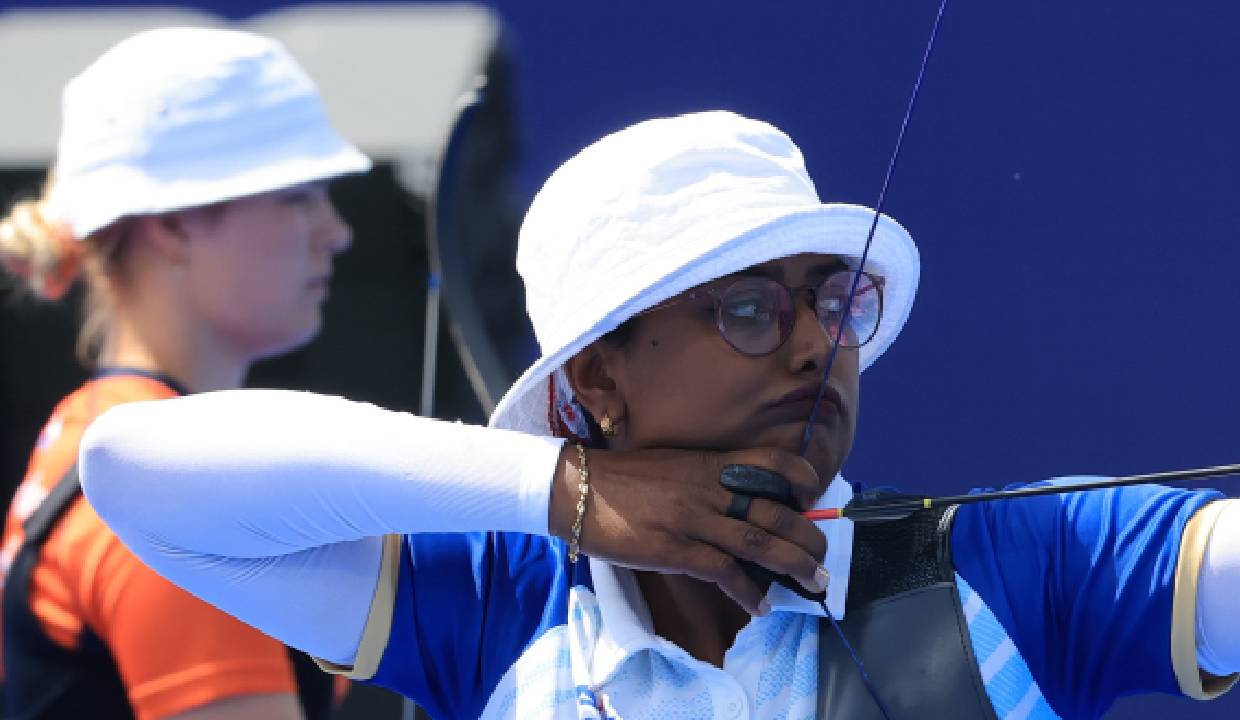
Indian archery enters another key international competition under a cloud of uncertainty, with poor planning, lack of direction, and the absence of a full-time head coach raising serious concerns ahead of the Asian Games 2026 in Aichi-Nagoya, Japan.
The World Cup Stage 2, beginning in Shanghai on Tuesday, brings together a strong international field, but India’s preparations appear far from ideal at a crucial stage of the season.
With the Asian Games scheduled from September 19 to October 4, India’s build-up has already raised questions after a disappointing start to the year at World Cup Stage 1 in Mexico. The only positive outcome was a gold medal from the women’s compound team, which masked deeper issues in the recurve section.
India’s recurve archers struggled despite competing in a relatively weaker field, with South Korea absent. Senior names such as Tarundeep Rai, Atanu Das, Dhiraj Bommadevara, Deepika Kumari, and Ankita Bhakat failed to make a significant impact, as none reached the medal rounds.
The men’s recurve team exited early after a straight-sets defeat to Spain, while the women’s team was knocked out by Turkey in the quarterfinals. In individual events, Deepika Kumari exited in the second round, while others including Ankita Bhakat and Simranjeet Kaur progressed slightly further before elimination.
The mixed team of Dhiraj Bommadevara and Kumkum Mohod also suffered an early exit against Brazil, adding to India’s inconsistent performances.
Despite these results, the same squad has been retained for the Shanghai World Cup stages, with selection trials for the Asian Games and upcoming events scheduled in Sonipat later this month.
In Shanghai, India will again depend on a mix of experienced but struggling archers, including Tarundeep Rai, Atanu Das, and Deepika Kumari, against a much stronger international lineup.
South Korea returns with a full-strength squad featuring Olympic champions such as Kim Woojin, Lee Woo Seok, Seo Mingi, and Kim Je Deok in the men’s team, while the women’s side includes world champion Kang Chaeyoung.
Several Asian nations, including Kyrgyzstan, Uzbekistan, and Saudi Arabia, are also using the event for preparation ahead of the Asian Games, making the competition even more intense. A total of 320 archers will compete at the Yuanshen Sports Centre in Shanghai.
Coaching Crisis Deepens Concerns
India’s biggest challenge, however, remains off the field. With just months left for the Asian Games, the country is still without a full-time head coach.
Currently, the team is being managed through personal coaches, with archer selection often determining support staff—highlighting a lack of structured planning and long-term vision.
Discussions with experienced international coaches, including Sergio Pagni and Kisik Lee, have not materialised into appointments due to reported differences over financial terms. A possible part-time arrangement is being considered, but clarity is still missing.
This uncertainty adds to concerns that India’s recurve team may struggle to compete for medals in upcoming major events.
As things stand, India’s strongest medal prospects continue to lie in the compound category.
The women’s compound team will be led by Jyothi Surekha Vennam alongside Aditi Swami and Madhura Dhamangaonkar, while the men’s team includes Abhishek Verma, Ojas Deotale, and Kushal Dalal, who will aim to improve on their previous performance in Mexico.
Shanghai will therefore serve as an important reality check for Indian archery ahead of the Asian Games 2026, revealing both strengths and structural weaknesses.