India’s final push to eliminate the Maoist insurgency
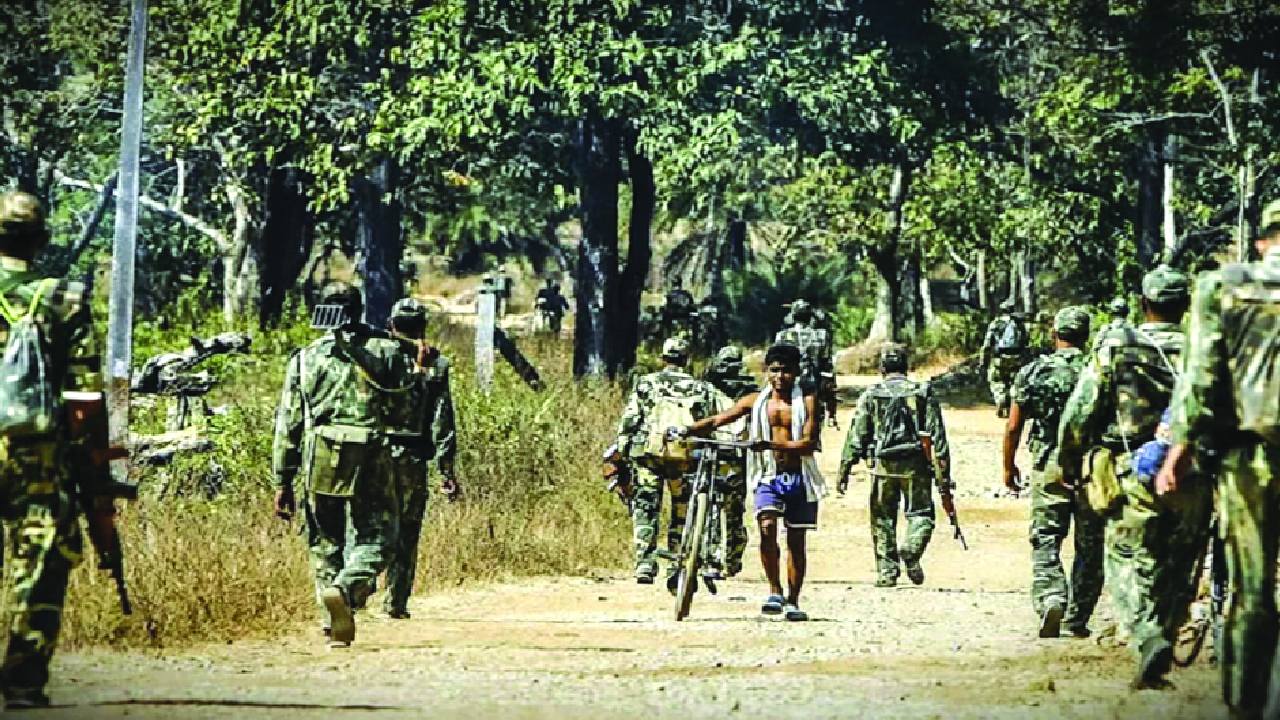
With less than two months to go before the deadline of March 31 set by the Union Home Minister Amit Shah to declare the country free from the Maoist menace, the security forces have stepped up their strategy and operational efforts to either arrest the remnants or force them to surrender. Giving due recognition to the fact that a spate of successful operations conducted by the security forces in recent months was largely due to accurate and pinpoint intelligence provided by the intelligence agencies, the Centre hiked the budgetary allocation to the Intelligence Bureau by 63 per cent, from Rs. 4,159 crores to Rs. 6,782 crores.
The Maoist movement, which originated in a little-known town of Naxalbari in Darjeeling district in the late 1960s as a fracas between landlords and peasants, soon turned into a violent revolution to grab state power. The brainchild behind the movement was the trio of Kanu Sanyal, Charu Majumdar and Jangal Santhal.
The killing of policemen and landlords led to massive induction of the Central Reserve Police Force (CRPF) in West Bengal. As many as 78 policemen were killed in the streets of Calcutta. Under the banner of the Communist Party of India (Marxist-Leninist), it spread its wings in Bihar, Punjab, Andhra Pradesh and Kerala, necessitating the raising of more CRPF battalions by merging 28 Armed Police battalions of the states and raising seven battalions. Insurgency in the north-eastern states too posed serious problems. By 1971, 60 CRPF battalions were deployed on the ground across the country. The CPI (M-L) movement was crushed, though cinders remained. With the passage of years, the cinders turned into a conflagration when the movement gained a foothold in erstwhile Andhra Pradesh and spread to neighbouring states of Odisha, Maharashtra and erstwhile Madhya Pradesh. In April 1980, under the leadership of Kondapalli Seetharamaiah, CPI (M-L) split, with the new outfit CPI (M-L) People’s War, better known as the People’s War Group (PWG), wreaking havoc in the state. PWG merged with another armed group known as the Maoist Communist Centre to form the Communist Party of India (Maoist) in 2004, which is nearing annihilation.
Having suffered large casualties, Andhra Pradesh Police raised its elite Greyhound commando outfit in 1989 to tackle the menace. Stealth operations by small bands of commandos scoured the forests and inflicted heavy casualties on the Maoists, forcing them to flee to other adjoining states. Nearly 4,000 sq. m of the vast stretch of forests in Abhujmad (Chhattisgarh), bordering Telangana, Maharashtra and Madhya Pradesh, provided a safe sanctuary where government presence was minimal. Comfortably ensconced in the jungles, the Maoists ran a parallel government, suppressing illiterate villagers and running kangaroo courts to punish those who dared to oppose their diktats.
Among the Central Armed Police Forces (CAPF) battalions initially inducted in Chhattisgarh was the CRPF. Other CAPF battalions subsequently inducted were the Border Security Force, the Indo-Tibetan Border Police and the Sashastra Seema Bal. After pre-induction training for about a month, the companies were deployed in the affected districts. Road connectivity posed a serious problem. Vehicles had to negotiate through unmetalled kachcha roads to reach the company posts or battalion headquarters. Slow-moving vehicles became easy targets of attacks by the Maoists, who ambushed the vehicles and planted Improvised Explosive Devices (IEDs) to blow them up, thus inflicting heavy casualties on CRPF personnel. When mine-protected vehicles were inducted in the state for transportation of men and material, the Maoists enhanced the quantum of explosives buried on the roads, causing heavy damage to the vehicles and casualties among personnel.
The determined initiative of the Government to construct roads turned the tide against the Maoists. Local contractors feared undertaking any road construction tasks due to Maoist threats. With the security blanket of the CRPF, the BRO personnel undertook the construction of roads. A CRPF camp was established near Puvarti, a village of hardcore Maoist Madvi Hidma. There was no looking back thereafter. With over 100 Forward Operating Bases established by the CRPF in Abhujmad, construction of roads began in full swing, with local contractors feeling secure due to the proximate presence of security forces. Schools and hospitals were set up. CRPF posts instilled a sense of security among villagers. Mobile towers were installed. Chhattisgarh police personnel, along with District Reserve Guards (DRG) and the CAPF, carried out operations on the basis of pinpoint intelligence, leading to success in encounters. Coupled with technical intelligence, human intelligence played a pivotal role as villagers passed on information to the security forces while at the same time denying access to the Maoists. Irked by the hostile attitude of villagers, the Maoists killed them on mere suspicion of their being informers.
Metalled roads facilitated the movement of security forces, as they could reach any spot in a short time and carry out operations. Having displaced the Maoists from their secure sanctuary, the security forces launched aggressive operations, relentlessly driving them helter-skelter in small groups. The incessant massive 21-day operation by the COBRA battalions, the DRG, CRPF and other CAPF battalions in the Karregutta hills on the Telangana-Chhattisgarh border led to the killing of 31 Maoists, apart from scattering those who managed to escape. The killing of General Secretary Basvaraju, along with his security guards and over 26 Maoists, followed by the killing of other top leaders like Madvi Hidma, Ganesh Uike, and lately Anal Da, has crushed the Maoist movement completely. A spate of surrenders in hordes over the last several weeks speaks volumes about Maoist morale. Over a hundred surrendered in Chhattisgarh in January this year.
The central committee that at one time boasted of 45 members has declined to just four, with Anal Da killed on January 24 in the Seranada forests by the COBRA commandos along with 16 others. Tippri Tirupathi, the General Secretary Ganapathy, Mallaraju Reddy and Misir Besra, all in their 60s, are on the run. With the robust intelligence set-up in the Maoist-affected districts, the countdown for these leaders has begun. Though they have admitted to their extinction by sending messages to the Government for peace talks, days may not be far when they will be killed in encounters or surrender to the security forces.
No movement can be sustained for long without leadership, popular support, manpower and a high degree of motivation. This has been achieved by dint of hard work, determination, robust intelligence, excellent connectivity, and the sacrifices of hundreds of CAPF and police personnel, apart from civilians who were instrumental in combating the Maoist menace.
Under the shadow of fear, the Maoists will avoid encounters but can cause casualties among security forces by planting IEDs around their hideouts. It will, however, not be far from the truth to state that the Maoist movement has been crushed, though the Union Home Minister may wait until April 1 to announce that our nation is free from the menace once and for all.
The writer is Inspector General of Police (Retd), CRPF; views are personal