India defies global trend
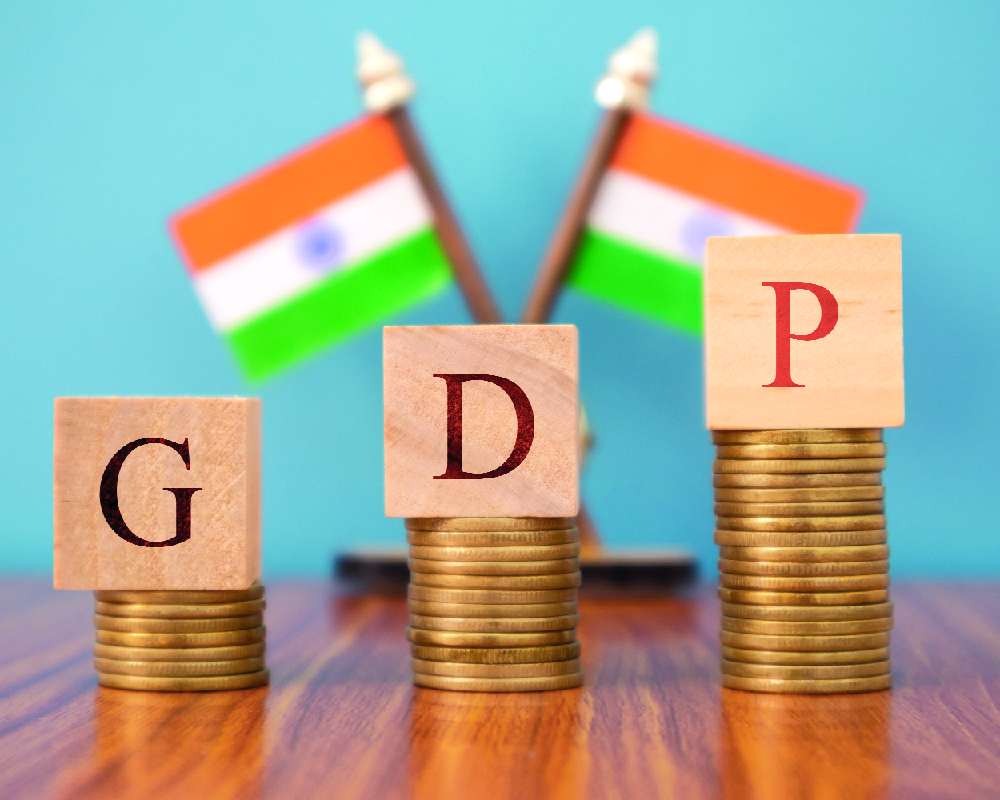
India has bucked the global trend of economic decline due to turmoil in several countries and has withstood the stiff Trump tariffs, recording an impressive growth rate of 8.2 per cent in Gross Domestic Product (GDP). This is the highest real GDP growth in six quarters for the Indian economy. The previous high at 8.4 per cent was posted in the fourth quarter (January-March) of fiscal 2023-24. This has helped India retain its position as the world’s fastest-growing major economy.
During the July-September quarter, the Chinese economy grew by 4.8 per cent. In parallel, New Delhi and Washington moved closer to finalising the first tranche of their Bilateral Trade Agreement.
The figures, released by the National Statistics Office (NSO) on Friday, pointed to the growth in the second quarter, which, compared to 7.8 per cent in the preceding three months and 5.6 per cent in the year-ago period, was also aided by a good showing by the manufacturing and services sector, which clocked double-digit growth. Manufacturing, which makes up 14 per cent of the country’s Gross Domestic Product, rose by 9.1 per cent in the second quarter, up from 2.2 per cent in the same quarter last
financial year.
Similarly, following the GST rate cut announcement by Prime Minister Narendra Modi in his Independence Day address, factories stepped up their output to meet the festival season demand. The GST rate cut came into effect on September 22. The performance of the services sector, including banking and real estate, also witnessed an impressive growth of 10.2 per cent from 7.2 per cent in the same period a year ago.
In a social media post, Prime Minister Narendra Modi said the 8.2 per cent GDP growth in Q2 of 2025-26 reflects the hard work and enterprise of the people and vowed to continue to advance reforms. “The 8.2 per cent GDP growth in Q2 of 2025-26 is very encouraging. It reflects the impact of our pro-growth policies and reforms. It also reflects the hard work and enterprise of our people,” Modi said in a post on X. “Our Government will continue to advance reforms and strengthen Ease of Living for every citizen,” the PM said.
Buoyed by more-than-expected 8.2 per cent GDP growth rate in the second quarter, Chief Economic Adviser V Anantha Nageswaran on Friday expressed optimism that India’s economy is likely to record growth of 7 per cent or higher than that in the current financial year.
India was placed 11th in 2013-14 and is now the fourth-largest economy. India has surpassed many countries in terms of economic size over the past decade and now needs to continue making progress in terms of per capita income. Financial, Real Estate & Professional Services (10.2 per cent) in the Tertiary Sector has sustained a substantial growth rate at Constant Prices in Q2 of FY 2025-26.
India defies global trend
Agriculture and Allied (3.5 per cent) and Electricity, Gas, Water Supply and Other Utility Services Sector (4.4 per cent) have seen a moderated Real growth rate during Q2 of FY 2025-26. Real Private Final Consumption Expenditure (PFCE) has reported a 7.9 per cent growth rate during Q2 of FY 2025-26 as compared to the 6.4 per cent growth rate in the corresponding period of the previous financial year.
Despite global headwinds such as US tariff hikes, India remains the fastest-growing major economy. Notably, the IMF too has lowered the full fiscal FY26 growth projections to 6.6 per cent in FY26, down from its July forecast of 6.4 per cent citing high US tariffs. For FY27, it pegged growth at 6.2 per cent. However, the RBI has retained its forecast and so has the Government, which too stuck to its projections of 6.3-6.8 per cent in FY26.
According to NSO figures, Real GDP or GDP at Constant Prices in Q2 of FY 2025-26 is estimated at `48.63 lakh crore, against `44.94 lakh crore in Q2 of FY 2024-25, registering a growth rate of 8.2 per cent. Nominal GDP or GDP at Current Prices in Q2 of FY 2025-26 is estimated at `85.25 lakh crore, against `78.40 lakh crore in Q2 of FY 2024-25, showing a growth rate of 8.7 per cent.
The decline was primarily driven by a sharp moderation in food inflation (CFPI), which registered at (-)5.02 per cent over October 2024, supported by easing prices of oils and fats, vegetables, fruits, eggs, cereals and products. The trend also reflects the positive impact of the recent decline in GST rates.