India braces for a below-average monsoon
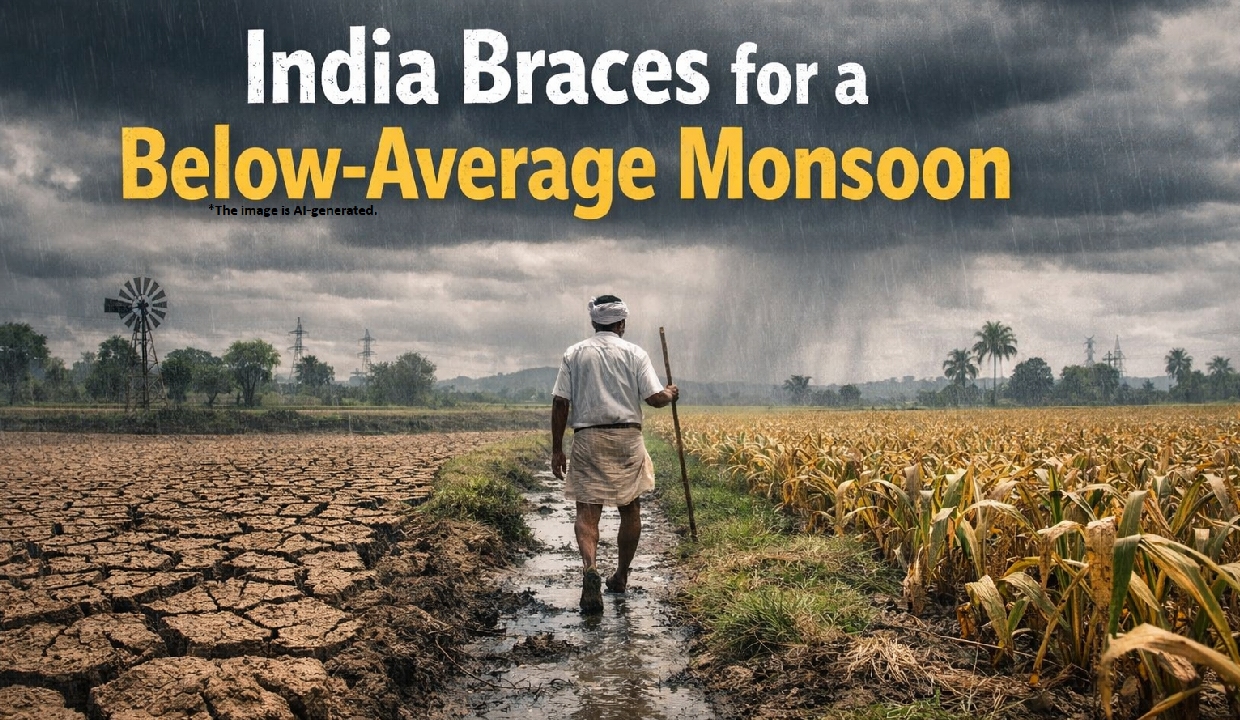
El Niño is likely to result in a poor monsoon, which could trigger a ripple effect — from farm distress to food inflation, testing both policy preparedness and rural resilience
The past few years have been good for Indian agriculture; a normal monsoon and favourable weather conditions have given the agriculture sector the respite it needed. However, the chances of a good monsoon this year are bleak. Thanks to El Niño, India is likely to experience a below-average monsoon. While official projections suggest rainfall at around 92 per cent of the long-period average, this may not look like a big drop, but in practice, even a marginal shortfall can translate into severe distress when rains are erratic, delayed, or unevenly distributed. Indian agriculture is monsoon-fed, as nearly 61 per cent of farmers depend on rain-fed agriculture.
A weak monsoon is not only an economic dampener but also a social stress test. Moreover, the India Meteorological Department (IMD) forecast comes at a time when unseasonal rains and hailstorms have already damaged Rabi crops, causing farmer distress. A weak Kharif season would compound these losses and make things unbearable for marginal farmers. Besides, global disruptions, including geopolitical tensions, have driven up fuel costs and caused a scarcity of fertilisers, pushing their prices up. Higher input costs, combined with lower yields, create conditions of inflation across the economy.
Farm distress does not remain confined to rural India; its implications extend far beyond. A poor monsoon affects rural demand, shrinks consumption, and causes fiscal strain on the government to subsidise the extra burden. It also impacts food security. The situation could be bad if key crops like rice, pulses, and oilseeds underperform. In that scenario the government would be forced to import them to keep prices in check, leading to a drain on foreign reserves. A failed monsoon is not an abstract risk for a large number of marginal farmers but a direct threat to livelihood and survival. The government, therefore, would do well to anticipate the situation and come up with a swift policy response to mitigate it.
In the long run, water management must take centre stage but this point, the government should urgently assess reservoir levels, repair canal systems, and prioritise water conservation through local structures such as ponds and check dams. MGNREGA can be crucial in building and restoring these assets, enhancing groundwater recharge and improving resilience at the village level. It would also put income in the hands of rural households. Besides, crop planning needs recalibration. Farmers should be incentivised to shift towards millets, pulses, and oilseeds-crops that are more resilient to water stress and increasingly aligned with nutritional and environmental goals.
Diversification through multi-cropping can act as a natural hedge against climatic uncertainty. A weak monsoon need not become a full-blown agrarian crisis if met with timely intervention and adaptive policy. The challenge is as much about governance as it is about rainfall. Preparing for the worst, while hoping for the best, remains India’s most prudent course of action.