How India is reclaiming its economic destiny
“India has boarded a speedy reforms express……” ..” The world is tilting towards India ..” commented the Prime Minister of India. India's historical trajectory from antiquity to the early modern period was marked by multiple phases of progress. A striking feature common to these phases was the development of institutional frameworks and technological innovations that integrated large parts of South Asia with Africa, West Asia and Europe. India emerged as a major producer of textiles, spices (notably black pepper), aromatics, precious stones and metals, all of which were in high global demand. The subcontinent functioned as a central hub of the Indian Ocean trade.
Trade in the Indus Valley civilisation was largely organised, with a wide range of goods circulated across regions. The presence of standardised weights and seals suggests a regulated internal trade system.
The sixth century BCE marked a decisive phase with the emergence of janapadas and mahajanapadas, signalling a shift from lineage-based societies to territorial states. Urban centres initially developed in the middle Gangetic plains and later spread to the Deccan and South India. Trade operated at local, regional, interregional and international levels.
A notable development was the localisation of industries. The growth of guilds (shreni, gana, puga, sangha) further strengthened commerce. Trade also benefited from improved transport, with large caravans of carts moving goods across regions.
The diffusion of literacy and the circulation of punch-marked coins enhanced commercial transactions, although barter continued alongside monetisation. From the first century BCE, long-distance maritime trade expanded significantly.
The Periplus of the Erythraean Sea documents regular traffic between Indian ports, Arabia, and Egypt, with Bharuch emerging as a major hub. Indian and foreign vessels shared commercial traffic, and Indian goods--especially textiles and spices--were exported to the Roman world. Until about 1800, international exchange was concentrated in littoral and river-delta regions, while inland areas participated indirectly through riverine and caravan networks. Premodern trade was characterised by monsoon-driven seasonality, reliance on river-port complexes, preference for high-value-to-bulk commodities, and trading practices centred on fairs, auctions, and short-term transactions.
Indian states periodically facilitated trade by integrating land and maritime zones, as seen under the Satavahanas, Kushanas, Guptas and especially the Cholas. Most states remained agrarian and land-revenue based, with inland capitals and limited direct involvement in commerce.
Maritime commerce expanded as a consequence of inland stability rather than naval innovation.
According to Angus Maddison's estimates, India accounted for approximately 22 - 24 per cent of world GDP around 1600 CE, reflecting the scale of production, manufacturing (especially textiles) and commercial integration achieved before European political dominance. With the advent of the British, the Indian economy was subsumed by the imperialist economy and drastically fell to 4.2 per cent by 1950.
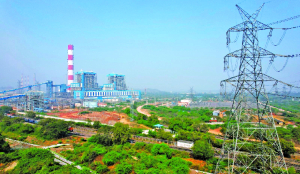
However, today, India has resurged in its economic power and has become the fastest growing economy in the world. In the words of IMF, India is the 'only bright light in the otherwise dark horizon'. India is all set to become the third-largest economy in a few years. The last decade has witnessed a truly transformational change, marked by focused and sustained execution.
This transformation has been built on four key pillars. The first is public investment in physical, digital, and social infrastructure.
The second pillar is inclusive growth, ensuring that the benefits of national growth are shared across society. The third pillar is manufacturing and innovation, while the fourth is simplification.
Together, these pillars, supported by a strong technological base, are enabling robust real growth in the range of 7 to 8 per cent. India achieved a growth rate of 8.2 per cent in the last quarter, proving our mettle and economic buoyancy.
What is working particularly well is that the benefits of growth are being experienced across society. India has therefore emerged as a long-term anchor for global investment, with investors increasingly viewing the country as a driver of sustained growth.
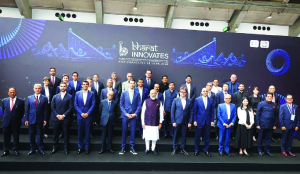
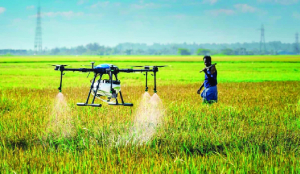
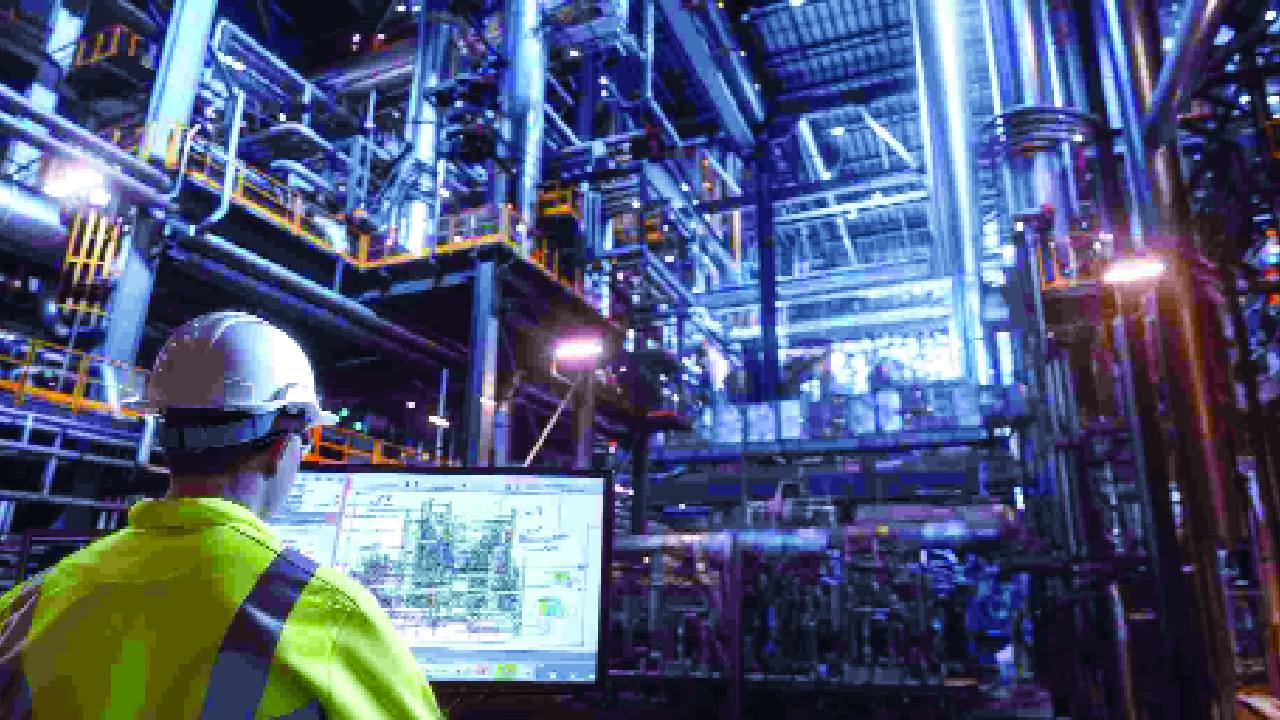
India is also universally recognised as a credible and reliable trade partner, with consistent delivery strengthening global confidence. Rapid AI adoption under Industry 5.0 is transforming Indian industries, while digital public infrastructure is enabling innovation at scale.
As a result, India is emerging as a global hub for technological transformation driven by the application of AI and advanced digital technologies.
The next generation of GST reforms--GST 2.0--will catapult India to parity with advanced economies. Enhanced simplification and improved compliance frameworks for MSMEs will strengthen India's manufacturing capabilities, while enforcing strategic disinvestment and asset monetisation will propel the growth of free enterprise. India's demographic dividend, supported by a large and increasingly skilled workforce, is widely seen as a global advantage. Corporate giants increasingly view India as central to their long-term growth strategies, as stability and resilience make the country a dependable market that combines high growth with long-term reliability. India is also shaping global collaboration by playing a key role in building global platforms and is increasingly perceived as a strategic alternative to China.
Atmanirbhar Bharat transformed the crisis into an opportunity during COVID-19, leading to a leap in economic growth. 250 million people have been lifted above the poverty line.
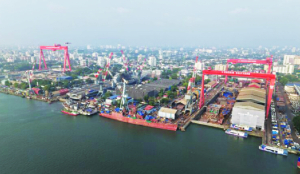
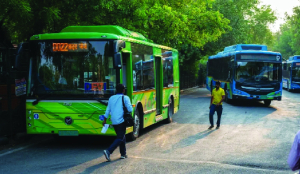
Our infrastructural progress is equally remarkable: from constructing 14 km of road space per day in 2014, we now achieve over 34 km per day. India emerged as the 'Vishwamitra'--the pharmacy of the world-during COVID-19, showcasing our pharmaceutical capabilities on a global scale.
The continued momentum of our 'Make in India' initiative will culminate in achieving 500 GW of clean green energy by 2030. The IMF projects a growth rate of 7 to 7.5 per cent for India over the next two to three years. The government has also built a strong JAM Trinity--Jan Dhan accounts, Aadhaar-enabled payment systems and mobile connectivity.
India has navigated global tariff pressures with considerable astuteness by diversifying its trade partnerships. The country has signed free trade agreements with New Zealand and Oman, CETA with the UK as well as the landmark FTA with the European Union, regarded as the largest trade agreement in India's history; and now the trade pact with USA. It is because of the sagacious economic policies and economic resilience that, despite tariff pressures in certain sectors, trade figures have continued to grow. India has always come out victorious in every crisis, irrespective of global vicissitudes and challenges.
India will continue to rise in economic stature, for economic strength is the true currency of global dominance. Anchored in Atmanirbhar Bharat, the vision of a Viksit Bharat places India firmly on course to become a USD 30-35 trillion economy by 2047.
The author is Director Bharat Ki Soch. He is former Chairman, Haryana Public Service Commission and Chairman, Haryana Electricity Regulatory Commission, former DG ITBP, DG NDRF and Commissioner of Police, Kolkata.; views are personal