How governance transforms Naxal-dominated regions
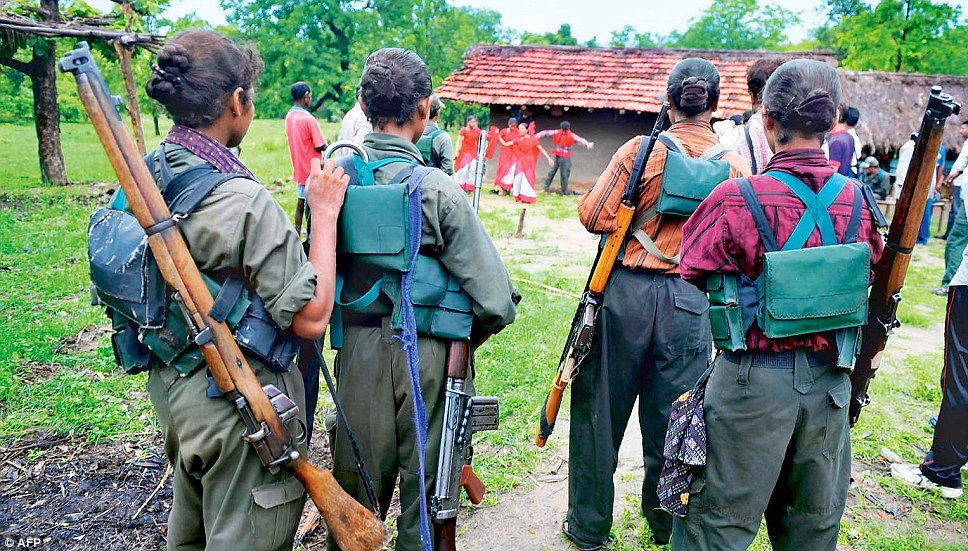
Large parts of central India — most particularly Chhattisgarh, Jharkhand, Odisha, and swathes of Maharashtra — lived a strange dual reality for decades. The Indian state existed on paper, but on the ground, every aspect of life was governed by Maoist diktat and dominance. Roads, schools, and health centres simply ended where the security-risk zones began; officials were afraid to venture into villages just a few kilometres away from district headquarters. In these pockets, the absence of the state had created a vacuum which the Naxals filled with their own parallel structures of taxation, justice, and surveillance. The landscape dramatically changed in 2025, with the Government of India setting a clear target to eradicate the Naxal movement by March 2026.
But when the state finally begins to return —through improved security presence, administrative outreach, or targeted development — the change is not merely institutional, but social, psychological, and deeply political. Whole geographies are pulled from fear-driven survival to a tentative yet hardening sense of citizenship. Grasping what occurs in such moments of state re-entry is essential for framing long-term counter-insurgency and governance policy. In many districts of Bastar, Gadchiroli, and parts of Jharkhand and Odisha, the establishment of forward security camps, road connectivity under schemes like the RCPLWEA, and coordinated civil administration have altered the lived reality of villagers who had known only coercion and invisibility. Police stations that once existed only on paper are now functional; block officials and health workers are able to visit interior villages regularly for the first time in decades. This re-entry of the state is not merely institutional — it is social, psychological, and deeply political. Entire geographies begin shifting from fear-driven survival to a tentative but strengthening sense of citizenship. Understanding what unfolds during this phase of state reassertion is critical, because it determines whether counter-insurgency remains a short-term security exercise or evolves into a durable governance outcome. It is within this fragile transition phase that the Maoists’ long-standing parallel authority starts to erode.
The Naxals had been an unwritten, de facto authority for decades — collectors of taxes, dispensers of justice, and police of movement. Now, as the state recaptures space in erstwhile Naxal-dominated territories, the Jan Adalat system has weakened considerably. Villagers are reclaiming access to formal institutions, and restrictions on trade, mobility, and daily life that were once ruthlessly implemented by the Maoists are gradually dissolving. Compliance born out of fear is now being replaced with hope and optimism.
Permanent security camps are often the first sign of meaningful ‘state entry’ into Maoist operational regions. Their presence restores mobility, and roads that were once patrolled or blocked by Naxal squads become safe to travel. As movement opens up, festivals, weekly haats, and community gatherings start reappearing one after another. A local leadership that had long remained silent in fear finds its voice returning. With freedom of movement, public confidence, and administrative presence returning, it is an ideal time for a strong counter-narrative to take root.
Typical changes include the construction of roads, bridges, mobile towers, and electricity networks — basic infrastructure that had long been absent in Naxal-dominated regions. Anganwadis, health sub-centres, and schools begin functioning again, often for the first time in years. Public Distribution System services and welfare delivery finally became possible, breaking the cycle of deprivation that insurgents had exploited. New schemes — such as Chhattisgarh’s Niyad Nellanar initiative, PMGKY, PMAY, and various skill-training programmes — reach previously cut-off villages and visibly improve daily life. These developmental moves reshape public opinion far more rapidly than security operations alone ever could.
As state authority returns, local markets start to boom. Weekly haats are thriving once more. Traders enter villages without fear, something they had not done in many years. Tribal collection of forest produce becomes organised and remunerated, enabling them to earn proper prices instead of handing over goods to Maoist extortion. Younger people who once saw dalam squads as the only option now look towards jobs in cities, vocational training, or recruitment into security forces. New infrastructure brings small businesses: mechanic shops, mobile repair centres, transport services, and local vendors. A region previously resigned to subsistence finally begins to think in terms of growth.
In most Maoist-affected regions, tribals had long viewed the state as something that was either distant, punitive, or even predatory. State re-entry provides an opportunity to reset that relationship.
How governance transforms Naxal-dominated regions?
Forest rights are being transformed, and community claims are beginning to receive their long-pending approvals. Cultural programmes, sports meets, and local festivals regain their traditional space, reinforcing dignity and identity. Government departments begin visiting villages on a regular schedule — unseen for decades — bringing services and accountability back to the grassroots. This gradual building of trust becomes the most effective antidote to Maoist propaganda.
As state presence begins to solidify, the Maoist military structure starts to disintegrate. Local militia units begin to lose safe zones for training and movement. Senior leaders are pushed deeper into forests or forced to slip across state borders. Recruitment pools shrink dramatically as youth opt for education, employment, and mobility. Internal purges, mistrust, and ideological fatigue also begin to set in within the organisation. The movement thus decays through a gradual and irreversible loss of relevance, not through a spectacular military defeat.
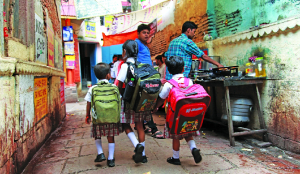
Perhaps the most significant transformation occurs in the mindsets of the people. Villagers are no longer walking 20 kilometres through forests to fetch rice or medicines. They begin asserting their rights — demanding entitlements, wages, and rations that had long been inaccessible. Children finally see teachers inside classrooms; women access health services without fear or dependence on insurgent permission. A generation that grew up with the sound of gunshots begins to grow up with opportunities. When the state returns, democracy becomes visible and no longer merely promised.
Challenges remain even after the state has re-entered. Naxal remnants can continue sporadic attacks to signal their continued existence. Fear does not disappear easily, and community cooperation returns much more gradually. The rehabilitation of surrendered cadres is itself a complex and ongoing task. Most importantly, development must be continuous, not symbolic in nature — one-time interventions cannot replace sustained governance. Sustainability will depend upon staying power, or the consistent, everyday delivery of the state.
This is, essentially, a story of renewal unfolding in the erstwhile Maoist strongholds of India. With the convergence of security, governance, and development, regions once synonymous with fear are rediscovering the rhythms of normal life. Schools reopen, markets return, roads link far-flung villages, and citizens begin engaging with the state confidently rather than hesitantly. Nor is this transformation only administrative in nature. It represents, instead, a trajectory from coercion to citizenship, from silence to aspiration.
The decline of Naxalism, therefore, is not just a security victory. It is the reclamation of dignity, opportunity, and democratic belonging for millions who lived at the margins of the Republic. The task ahead is to ensure that the state’s presence remains steady, empathetic, and accountable. The decline of Naxalism will not ultimately be measured by encounter figures, but by how securely ordinary citizens feel connected to the Republic. Where governance stays, extremism fades. Where dignity returns, insurgency cannot.
The author is a Research Fellow at the India Foundation. She previously served in the Office of the Hon’ble Vice President of India; views are personal